
How Do I Measure ROI From Factory AI?
Learn how to measure ROI from factory AI using baseline losses, operational metrics, adoption indicators, financial savings, and phased review.
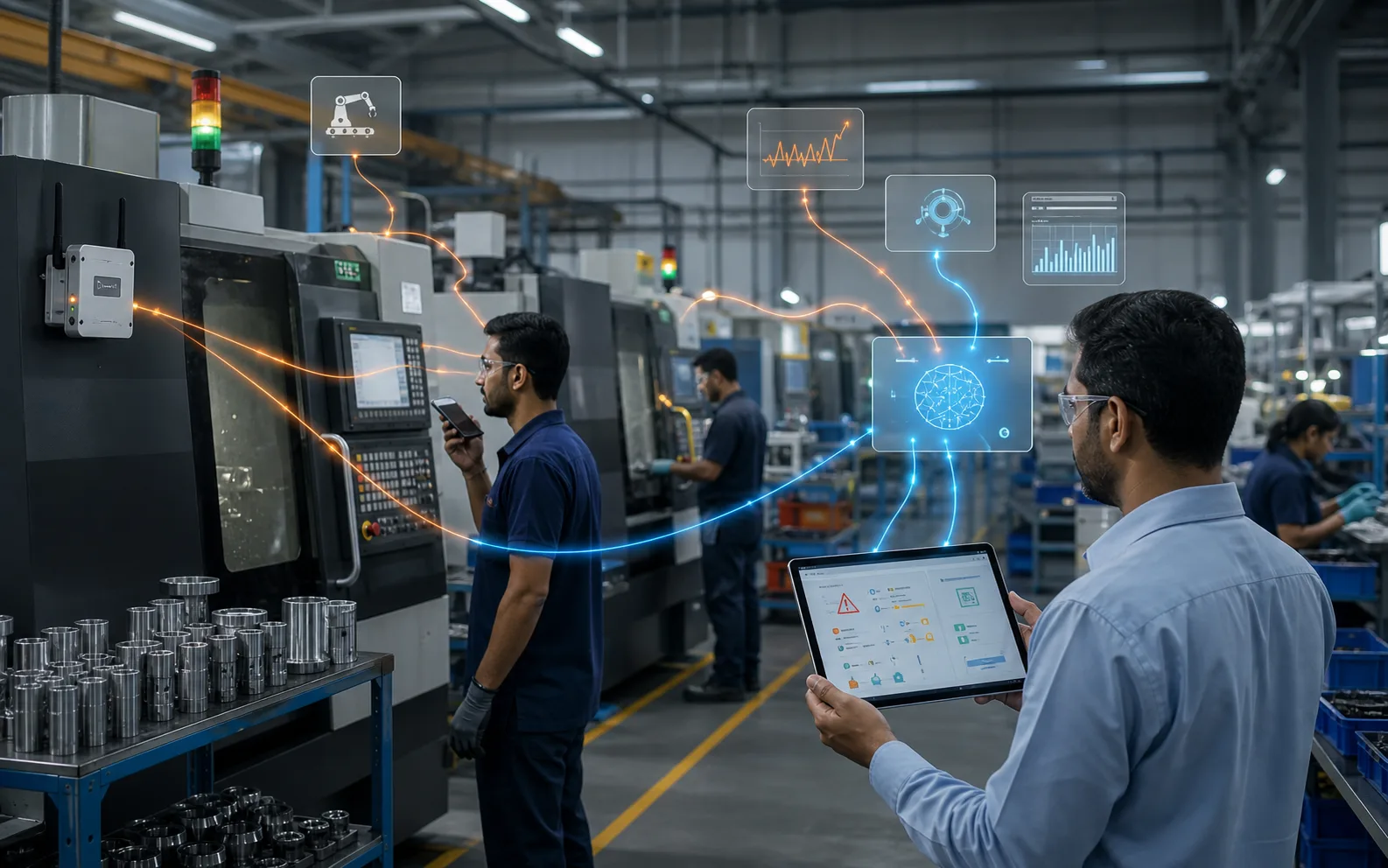
How Do I Measure ROI From Factory AI?
To measure ROI from factory AI, begin with a baseline. You need to know what the factory currently loses through downtime, defects, rework, stockouts, excess inventory, manual reporting, urgent purchases, delayed dispatch, or poor capacity use. Then measure whether AI reduces those losses after implementation.
AI driven factory management should improve decisions. ROI comes when better decisions create measurable savings, higher throughput, stronger delivery, or better working capital control.
The formula is simple, but the discipline behind it matters.
Define the Use Case First
ROI cannot be measured properly if the AI project is vague. Choose a use case: inventory risk, production visibility, quality improvement, predictive maintenance, scheduling, reporting, or dispatch reliability.
Each use case has different metrics.
Build a Baseline
Measure current performance before implementation. How many stockouts happen monthly? What is scrap cost? How many hours are lost to downtime? How much time is spent preparing reports? How often are orders delayed?
A baseline makes improvement visible.
Track Hard Savings
Hard savings include reduced scrap, lower rework, fewer urgent purchases, reduced overtime, lower downtime, better inventory turns, and fewer customer penalties.
These can often be converted into rupees saved or capacity recovered.
Track Productivity Gains
AI may reduce manual follow-ups, duplicate entries, report preparation, and coordination time. Track time saved for supervisors, planners, purchase teams, quality teams, and management.
Productivity gains are real when the team uses freed time for better work.
Track Adoption Metrics
If users do not update data or act on alerts, ROI will not appear. Measure update timeliness, alert closure, dashboard usage, and whether teams stop using parallel manual systems.
Adoption explains ROI.
Review in Phases
Review early adoption after 30 days, process stability after 60 days, and business outcomes after 90 days or more. Some benefits need multiple cycles.
Where AICAN Optiwise Fits
AICAN Optiwise connects production, inventory, purchase, sales, finance, reporting, IoT readiness, and AI workflows, giving manufacturers a clearer basis for measuring improvements across departments.
Learn more at AICAN Optiwise and About AICAN.
Founder’s Note
AICAN’s founder-led view is that ROI should be tied to factory reality. Manufacturers deserve to know whether AI reduced waste, improved control, saved time, or protected delivery.
The best ROI metric is the one your operations team can recognize as real.
FAQ
What is the basic ROI formula?
Compare total AI investment with net financial benefit from savings, productivity gains, and recovered capacity over time.
What metrics should I track?
Track scrap, rework, downtime, stockouts, excess inventory, reporting time, urgent purchases, delivery performance, and adoption metrics.
How soon should ROI appear?
Visibility benefits can appear early, but measurable financial ROI often needs 60 to 90 days or longer.
What if ROI is unclear?
Check whether the use case was too vague, data quality was weak, or users did not adopt the workflow.
Final Thought
Factory AI ROI is measured through operational improvement. If the system reduces a real loss or helps the same team achieve more, the value becomes clear.
Next step: Visit AICAN Optiwise to connect AI driven factory management with measurable ROI.

Related Posts
Is AI Worth the Investment for My Factory?
Learn how to decide if AI is worth the investment for your factory by evaluating use cases, data readiness, costs, risks, ROI, and operational impact.
13 Jun 2026Read more →Manufacturing AI Mistakes to Avoid Before You Start
List manufacturing AI mistakes and controls for unclear use case, messy data, unsafe automation, no owner, weak security and unreviewed recommendations.
13 Jun 2026Read more →What's the Difference Between AI and Regular Automation?
Understand the difference between AI and regular automation in manufacturing, with practical examples for workflows, decisions, alerts, and predictive operations.
13 Jun 2026Read more →What Are the Risks of Using AI in Manufacturing?
Understand the risks of AI in manufacturing, including bad data, wrong recommendations, safety issues, security, job fear, over-automation, and implementation failure.
13 Jun 2026Read more →