
What's the Real Cost of Adding AI to My Plant?
Understand the real cost of adding AI to a manufacturing plant, including software, data readiness, integration, training, change management, and ROI.
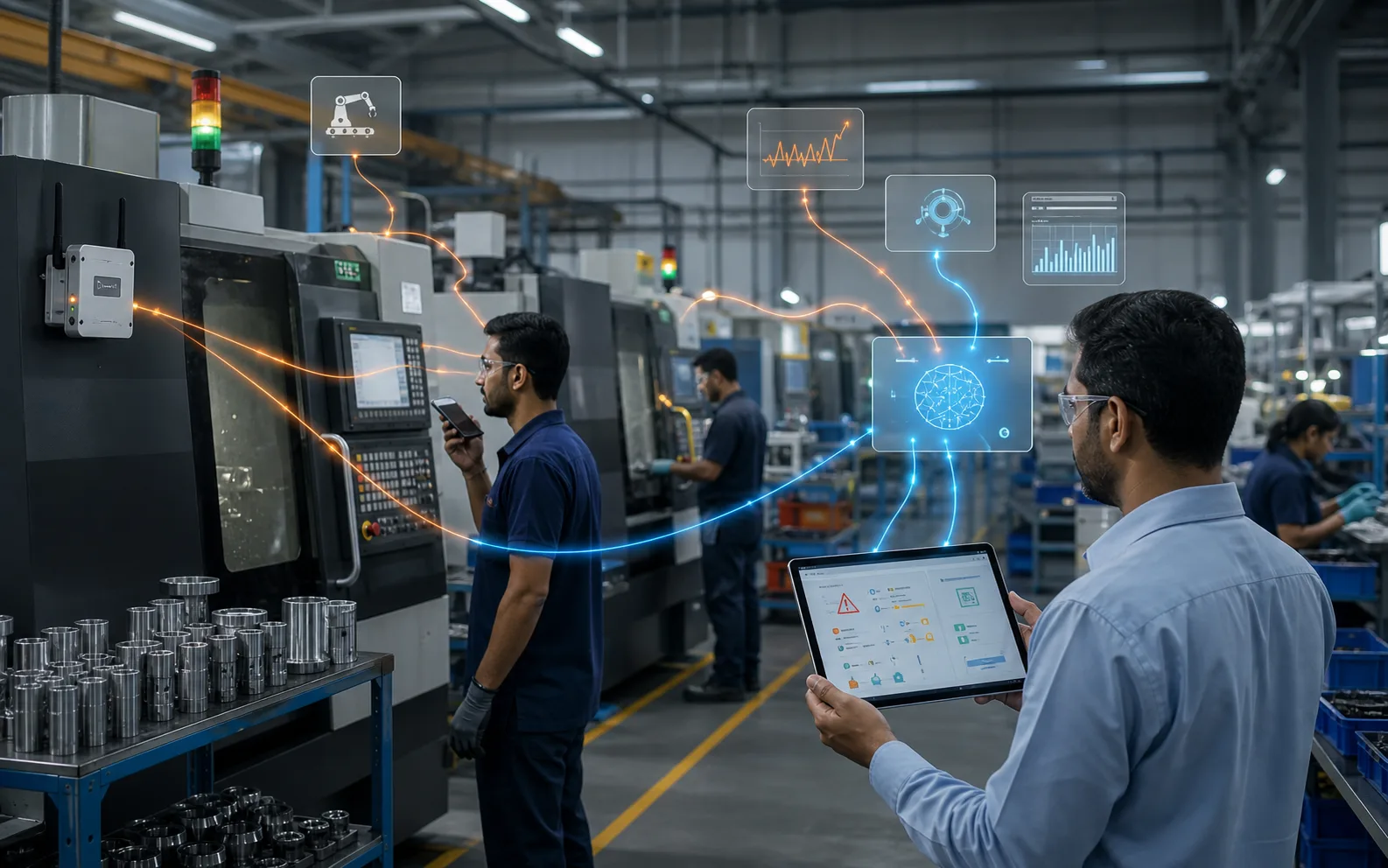
What's the Real Cost of Adding AI to My Plant?
The cost of adding AI to a manufacturing plant is not only the price of software. That is the first mistake many companies make when budgeting.
The real cost includes data readiness, integration, process cleanup, training, change management, review time, and ongoing improvement. If these costs are ignored, the project may look affordable at the proposal stage but feel expensive during implementation.
A better question is not “what does AI cost?” The better question is “what must be ready for AI to create measurable value?”
Software Cost
Software is the visible cost. It may include AI modules, ERP capabilities, analytics tools, dashboards, automation features, or subscription fees.
But software cost depends heavily on the scope. A simple AI reporting assistant costs less than a full predictive maintenance program. Inventory forecasting costs less when clean data already exists. AI-driven planning becomes more expensive when production, sales, purchase, and inventory systems are disconnected.
The more connected your systems are, the more value you can get from AI without unnecessary custom work.
Data Readiness Cost
AI needs usable data. If item names are inconsistent, stock updates are delayed, production entries are incomplete, and downtime reasons are not recorded properly, AI will struggle.
Data readiness may involve cleaning masters, standardizing item codes, defining units of measurement, improving process discipline, and training teams to enter accurate information.
This cost is not glamorous, but it is essential. Poor data makes even expensive AI weak.
Integration Cost
AI becomes more useful when it connects with existing workflows. If your plant uses separate systems for production, inventory, finance, sales, quality, and maintenance, integration becomes a major cost area.
Disconnected systems create duplicate work and incomplete visibility. Integration helps AI understand the full picture: what was ordered, what was purchased, what was produced, what is in stock, what was dispatched, and what money is pending.
Process Redesign Cost
Adding AI often exposes process gaps. Who approves AI recommendations? What happens when an alert is ignored? Which reports become automatic? Which decisions still need human review? Who owns exceptions?
These questions require process redesign. The cost may include leadership time, SOP updates, approval flow changes, and internal training.
Without process redesign, AI may create more notifications without improving decisions.
Training and Adoption Cost
People need to understand how to use AI outputs. A planner should know when to trust a forecast and when to question it. A supervisor should know how to respond to production alerts. A manager should know how to read exception summaries.
Training is not optional because AI changes how teams work. If people do not understand the system, they may ignore it, misuse it, or treat every output as final truth.
Ongoing Cost
AI is not a one-time setup. Models, workflows, dashboards, and data rules need review. As the factory changes, the AI system must adapt.
New products, new vendors, seasonal demand, machine changes, customer commitments, and process improvements all affect AI performance. Budget should include continuous improvement, not just launch.
How to Think About ROI
AI ROI should be linked to measurable business outcomes. These may include lower inventory blockage, fewer stockouts, reduced downtime, faster reporting, better on-time delivery, lower rework, improved purchase planning, and faster management decisions.
The best ROI cases are specific. Instead of saying “AI will improve efficiency,” define where efficiency will improve and how it will be measured.
Where AICAN Optiwise Fits
AICAN Optiwise helps manufacturers build the connected operational base required for practical AI. When production, inventory, purchase, sales, finance, and reporting work together, AI implementation becomes more focused and less chaotic.
AICAN supports manufacturers who want technology investments to create real business outcomes, not just dashboards. A strong ERP foundation helps reduce hidden AI costs by improving data discipline, workflow visibility, and decision control. You can learn more at About AICAN.
Founder’s Note
The real cost of AI is not only money. It is attention. Leadership must be willing to clean processes, improve data, train people, and measure results honestly.
When that discipline exists, AI becomes a practical investment. Without it, AI becomes another tool people talk about but do not truly use.
FAQ
Is AI expensive for manufacturing plants?
It depends on scope, data readiness, integration needs, and process maturity. Focused use cases can start affordably, while complex predictive systems require more investment.
What hidden costs should manufacturers expect?
Data cleanup, integration, training, process redesign, approval setup, and ongoing monitoring are common hidden costs.
How can a plant reduce AI implementation cost?
Start with high-value use cases, improve ERP data quality, avoid unnecessary customization, and train teams properly.
When does AI become worth the cost?
AI becomes worth it when it improves measurable outcomes such as downtime, inventory control, delivery reliability, reporting speed, or planning accuracy.
Final Thought
The real cost of adding AI to your plant is the cost of becoming ready for better decisions. Software matters, but readiness matters more. A connected, disciplined factory can turn AI from expense into advantage.

Related Posts
Is AI Worth the Investment for My Factory?
Learn how to decide if AI is worth the investment for your factory by evaluating use cases, data readiness, costs, risks, ROI, and operational impact.
13 Jun 2026Read more →Manufacturing AI Mistakes to Avoid Before You Start
List manufacturing AI mistakes and controls for unclear use case, messy data, unsafe automation, no owner, weak security and unreviewed recommendations.
13 Jun 2026Read more →What's the Difference Between AI and Regular Automation?
Understand the difference between AI and regular automation in manufacturing, with practical examples for workflows, decisions, alerts, and predictive operations.
13 Jun 2026Read more →What Are the Risks of Using AI in Manufacturing?
Understand the risks of AI in manufacturing, including bad data, wrong recommendations, safety issues, security, job fear, over-automation, and implementation failure.
13 Jun 2026Read more →