
Real Examples of Companies Using AI for Production Planning
Explore realistic examples of how manufacturers use AI for production planning across material readiness, scheduling, forecasting, capacity, and dispatch risk.
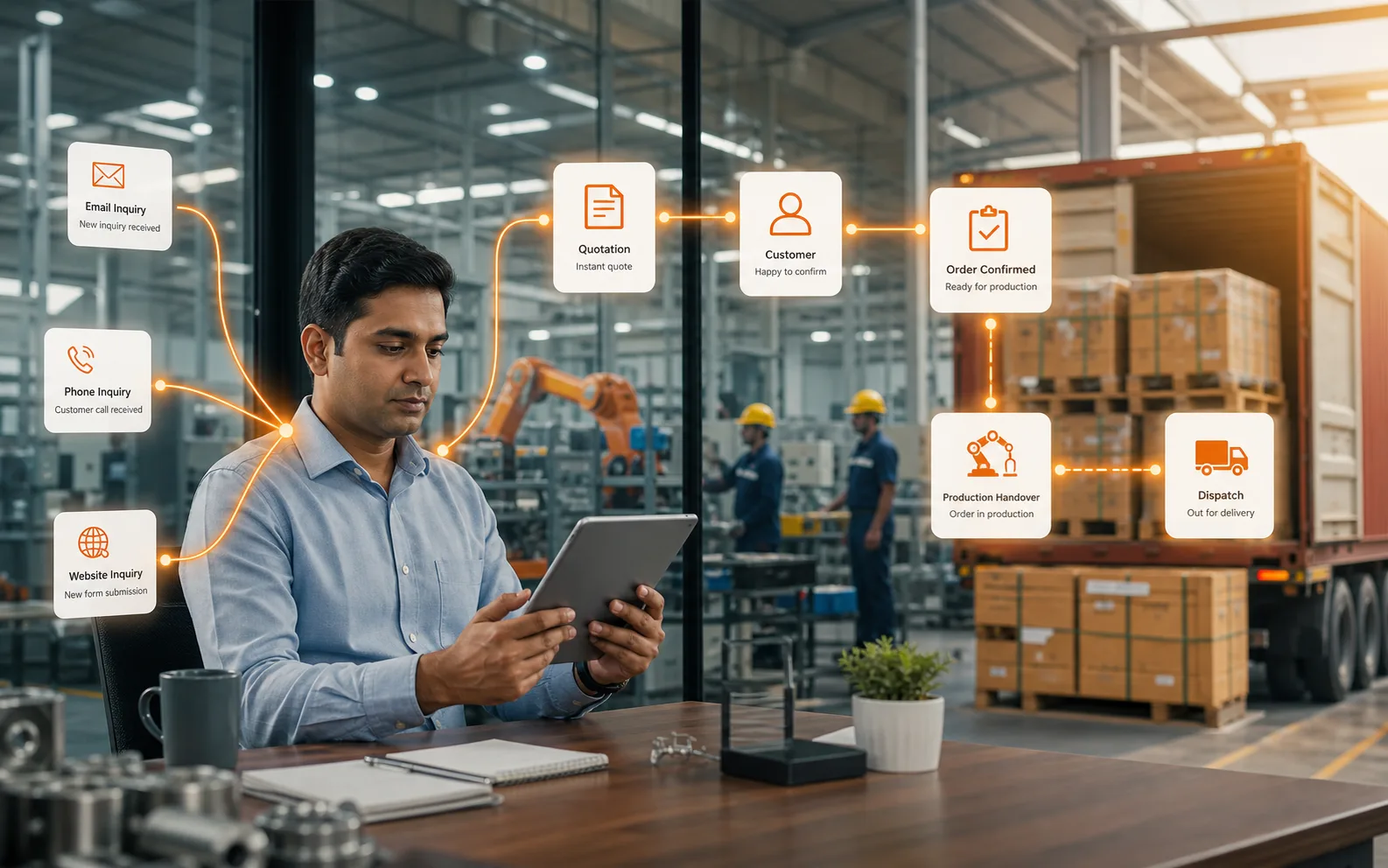
Real Examples of Companies Using AI for Production Planning
Companies use AI for production planning in practical ways: checking material readiness, forecasting demand, identifying capacity bottlenecks, managing urgent orders, reducing inventory waste, and improving dispatch reliability. The exact results vary by industry, data quality, and adoption discipline.
Rather than treating case studies as magic success stories, manufacturers should study the pattern. Successful AI planning usually begins with a clear problem, connected data, trained users, and measurable review.
AI for production planning works when it becomes part of daily operations.
Example 1: Material Readiness Planning
A manufacturer with frequent production delays connects sales orders, BOMs, stock, purchase orders, and expected receipts. AI flags which jobs are ready and which are blocked.
The planning team uses this to reduce last-minute shortages and prioritize purchase follow-up.
Example 2: Capacity Bottleneck Planning
A factory with multiple products uses AI to compare machine load, routing, cycle time, and due dates. The system highlights overloaded work centers before delays happen.
Planners adjust sequencing and review overtime needs earlier.
Example 3: Demand Forecasting
A repeat-order manufacturer uses AI to analyse historical demand, seasonality, and customer order behaviour. Forecasts help the team prepare material and capacity ahead of peaks.
Sales still reviews the forecast for customer context.
Example 4: Rush Order Management
A factory receives urgent customer requests and uses AI to show which current orders, materials, and machines would be affected if the rush order is accepted.
This makes urgent commitments more controlled.
Example 5: Dispatch Risk Visibility
A manufacturer connects production progress, quality holds, packing, and dispatch commitments. AI flags orders likely to miss delivery.
The team communicates earlier and recovers where possible.
Where AICAN Optiwise Fits
AICAN Optiwise supports these planning patterns through connected workflows across production, inventory, purchase, sales, finance, reporting, IoT readiness, and AI. This gives manufacturers the operating base needed to turn AI planning examples into daily execution.
Explore AICAN Optiwise and About AICAN.
Founder’s Note
AICAN’s founder-led view is that examples are useful when they teach repeatable operating lessons. The real lesson is not the headline result; it is the discipline behind the result.
AI planning succeeds when the factory connects data to action.
FAQ
Are AI planning results the same for every company?
No. Results depend on data quality, process discipline, use case, adoption, and factory complexity.
What is a common first example?
Material readiness planning is a common first use case because it directly affects production delays.
Do companies need advanced sensors first?
Not always. Many planning examples start with ERP, inventory, purchase, and production data.
What should I learn from examples?
Look at the problem solved, data used, workflow ownership, user adoption, and measured outcome.
Final Thought
Real AI production planning examples are practical, not dramatic. They show that better planning comes from connected data, clear ownership, and steady execution.
Next step: Visit AICAN Optiwise to map these examples to your factory’s planning challenges.

Related Posts

Is AI Worth the Investment for My Factory?
Learn how to decide if AI is worth the investment for your factory by evaluating use cases, data readiness, costs, risks, ROI, and operational impact.
13 Jun 2026Read more →Manufacturing AI Mistakes to Avoid Before You Start
List manufacturing AI mistakes and controls for unclear use case, messy data, unsafe automation, no owner, weak security and unreviewed recommendations.
13 Jun 2026Read more →What's the Difference Between AI and Regular Automation?
Understand the difference between AI and regular automation in manufacturing, with practical examples for workflows, decisions, alerts, and predictive operations.
13 Jun 2026Read more →What Are the Risks of Using AI in Manufacturing?
Understand the risks of AI in manufacturing, including bad data, wrong recommendations, safety issues, security, job fear, over-automation, and implementation failure.
13 Jun 2026Read more →