
Should I Invest in AI for My Manufacturing Business?
Learn when investing in AI for manufacturing makes sense, how to evaluate readiness, ROI, use cases, risks, and phased adoption.
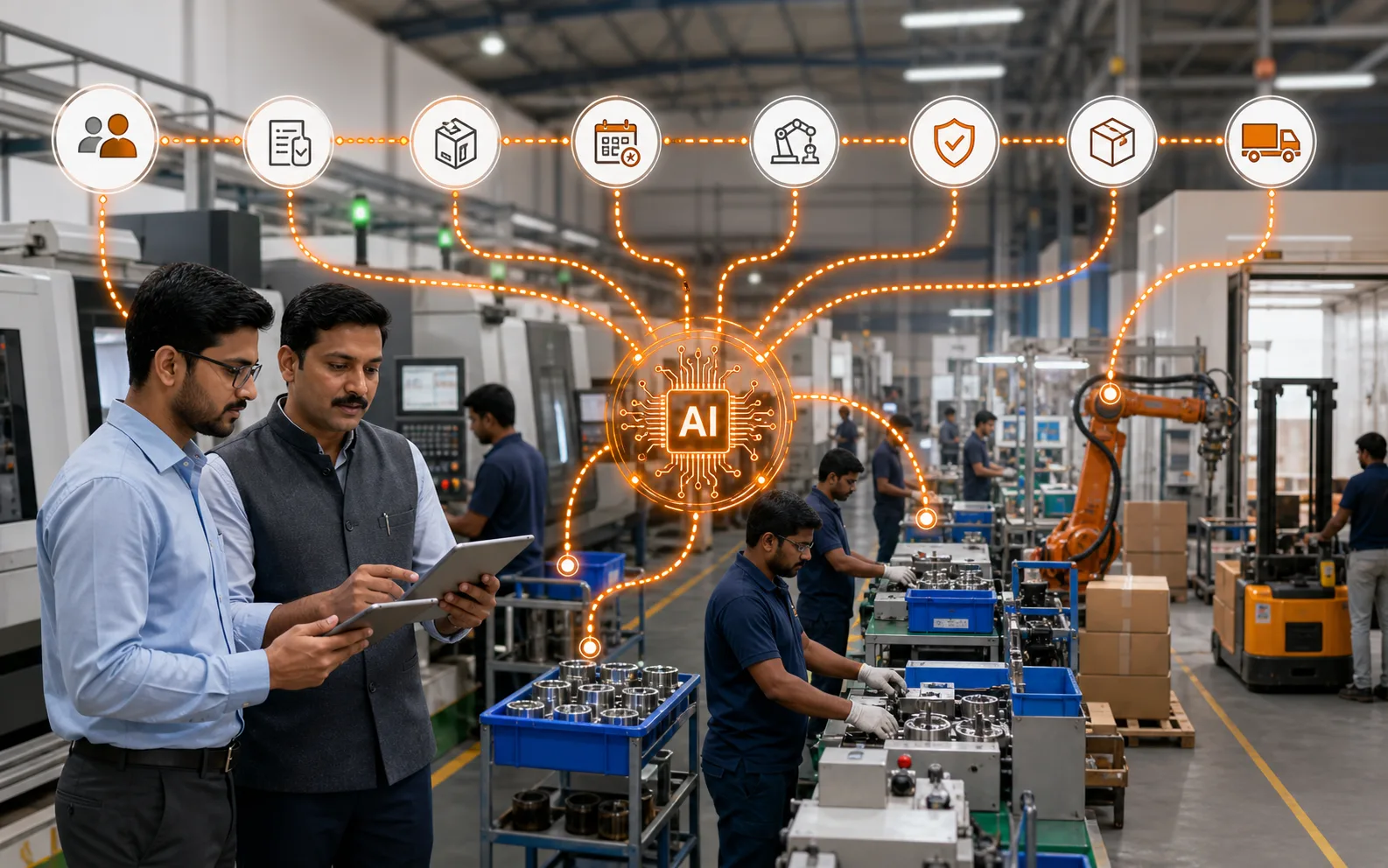
Should I Invest in AI for My Manufacturing Business?
You should invest in AI for your manufacturing business if you have repeated operational problems that cost money, enough data to support better decisions, and leadership commitment to improve workflows. You should not invest only because AI is trending or because competitors mention it.
AI for production planning and factory operations can create value through better scheduling, inventory control, quality visibility, downtime reduction, reporting, and customer reliability. But the investment makes sense only when tied to measurable business outcomes.
The decision should be practical, not emotional.
Start With the Pain Points
List the problems affecting profit and delivery. Are materials often short? Are plans changing daily? Are customers waiting for updates? Is production delayed by unclear priorities? Is quality rework high? Are reports late?
If these problems are frequent and measurable, AI may be worth evaluating.
Check Data Readiness
AI needs reliable data around the first use case. For planning, this may include orders, BOMs, stock, purchase status, routing, machine capacity, and production status.
If the data is messy, the first investment may be in connected workflows and cleanup.
Estimate ROI Conservatively
Compare current losses with expected improvement. Include software, implementation, training, internal time, and support. Use conservative savings assumptions.
A disciplined ROI model prevents disappointment.
Start With a Phased Investment
Do not invest in every AI capability at once. Start with one high-impact workflow, prove value, then expand. This lowers risk and builds team confidence.
AI adoption should grow through evidence.
Consider Strategic Value
Beyond immediate savings, AI can help manufacturers scale, reduce owner dependency, improve customer communication, and compete with better-run factories.
These benefits matter, but they should support, not replace, the hard business case.
Where AICAN Optiwise Fits
AICAN Optiwise helps manufacturers invest in AI through connected workflows across production, inventory, purchase, sales, finance, reporting, IoT readiness, and AI. This makes it possible to start with practical operating problems and expand toward smarter factory management.
Explore AICAN Optiwise and About AICAN to learn more.
Founder’s Note
AICAN’s founder-led belief is that AI investment should be grounded in factory reality. Manufacturers should invest when the system helps them reduce losses, improve control, and make better commitments.
The best investment is the one your team can adopt and your business can measure.
FAQ
When is AI worth investing in?
When it solves repeated measurable problems such as stockouts, planning delays, defects, downtime, or manual reporting.
What should I check before investing?
Check use-case clarity, data readiness, team adoption, implementation support, ROI, and scalability.
Should small manufacturers invest in AI?
Yes, if the first use case is focused and affordable. Small manufacturers should avoid oversized projects.
What if we are not ready?
Start by connecting workflows and cleaning critical data. AI readiness can be built step by step.
Final Thought
AI is worth investing in when it improves the factory decisions that already affect cost, delivery, quality, and growth. Invest with focus, not fear.
Next step: Explore AICAN Optiwise to evaluate a practical AI investment path for your manufacturing business.

Related Posts
Is AI Worth the Investment for My Factory?
Learn how to decide if AI is worth the investment for your factory by evaluating use cases, data readiness, costs, risks, ROI, and operational impact.
13 Jun 2026Read more →Manufacturing AI Mistakes to Avoid Before You Start
List manufacturing AI mistakes and controls for unclear use case, messy data, unsafe automation, no owner, weak security and unreviewed recommendations.
13 Jun 2026Read more →What's the Difference Between AI and Regular Automation?
Understand the difference between AI and regular automation in manufacturing, with practical examples for workflows, decisions, alerts, and predictive operations.
13 Jun 2026Read more →What Are the Risks of Using AI in Manufacturing?
Understand the risks of AI in manufacturing, including bad data, wrong recommendations, safety issues, security, job fear, over-automation, and implementation failure.
13 Jun 2026Read more →