
How Do I Start Small With AI in My Factory?
Learn a practical step-by-step approach for small AI pilots in manufacturing, including use case selection, data readiness, workflow design, measurement, and rollout.
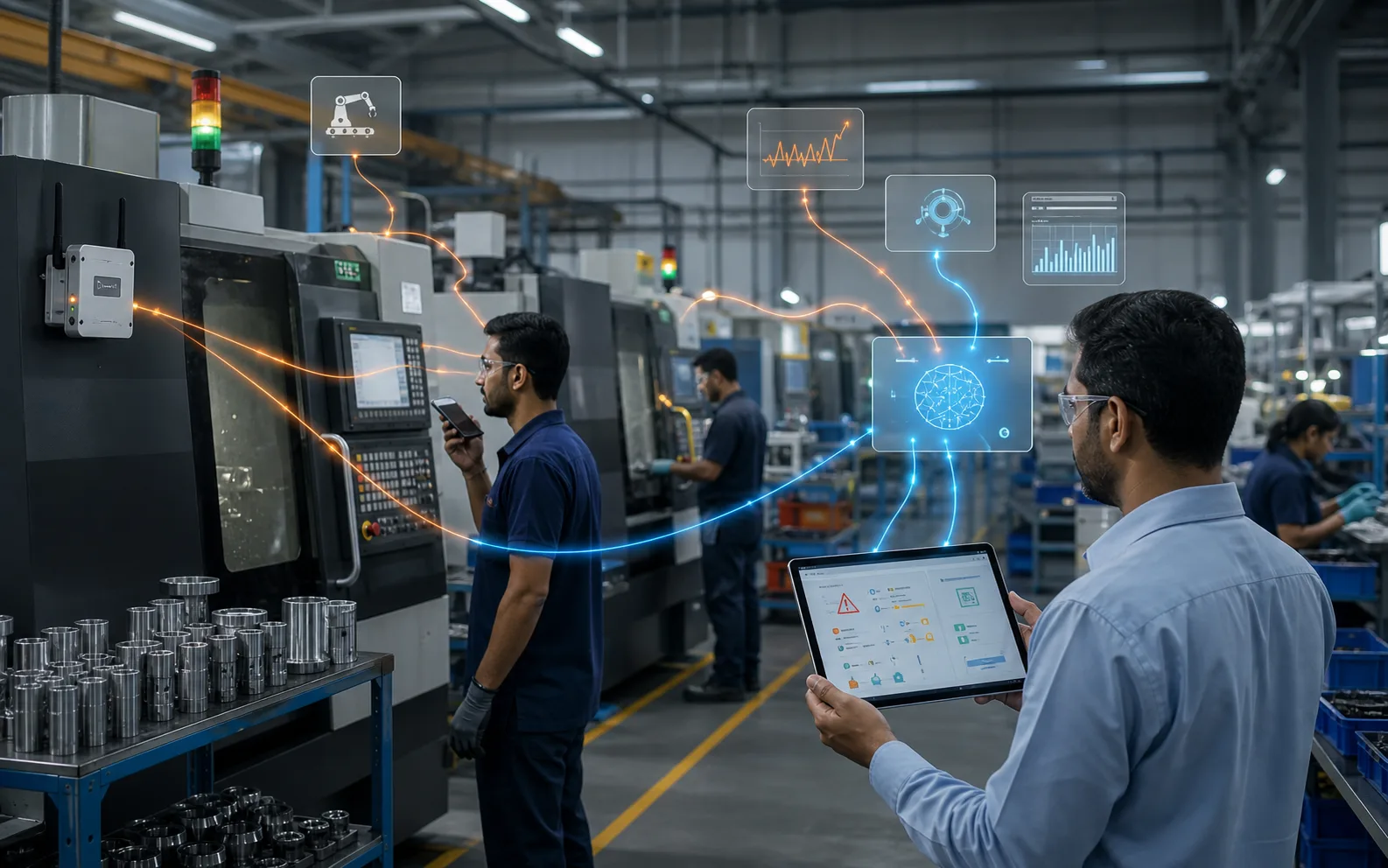
How Do I Start Small With AI in My Factory?
Start small by choosing one real factory problem, using available data, testing AI in a controlled workflow, measuring results, and expanding only after the team trusts the output.
You do not need a full AI transformation program on day one. In fact, starting too big often creates delay, confusion, and wasted money. A small, useful AI pilot can build confidence faster than a large project that takes months before anyone sees value.
Choose One Painful Workflow
Look for work that is repetitive, data-heavy, and important. Good starting points include daily production summaries, inventory shortage alerts, slow-moving stock reports, customer order status updates, maintenance risk lists, or quality defect summaries.
The first use case should be easy to understand and easy to review.
Define the Outcome
Be specific about success. Do you want to reduce report preparation time? Catch stock risks earlier? Improve downtime visibility? Help sales respond faster to customers?
If you cannot define the outcome, the pilot will be hard to judge.
Check the Data
Identify the data needed for the pilot. For inventory alerts, you need stock, consumption, open orders, and lead times. For production summaries, you need work orders, planned output, actual output, and delay reasons.
Clean only what the first use case needs. Do not turn the pilot into an endless data cleanup project.
Keep Humans in the Loop
At the beginning, AI should assist rather than fully automate. Let it prepare summaries, flag risks, and recommend actions. Let people review, approve, and correct.
This creates trust and gives the system feedback.
Measure the Pilot
Track simple results. How much time was saved? How many risks were caught earlier? Did users act on the alerts? Did managers get clearer visibility?
A small pilot should produce evidence, not just opinions.
Expand After Trust
Once one use case works, expand to related workflows. For example, inventory alerts can connect to purchase planning. Production summaries can connect to customer dispatch updates. Maintenance risk can connect to spare planning.
AI adoption should grow from proven value.
Where AICAN Optiwise Fits
AICAN Optiwise helps manufacturers start AI from connected operational workflows. Production, inventory, purchase, sales, finance, and reporting data give small pilots a stronger foundation.
AICAN supports practical adoption where manufacturers can begin with focused improvements and scale with confidence. Learn more at About AICAN.
Founder’s Note
Small does not mean unambitious. Small means responsible.
A focused AI pilot that saves time, improves visibility, or prevents one recurring problem is more valuable than a large project nobody trusts. Start where the work is real.
FAQ
What is the best first AI project for a factory?
Start with reporting, inventory alerts, production summaries, or maintenance risk lists.
How long should a small AI pilot take?
A focused pilot can often be tested in weeks if data is available and scope is clear.
Should AI be fully automated from day one?
No. Human review is better at the beginning, especially for operational decisions.
How do I know when to scale?
Scale when the pilot shows measurable improvement and users trust the workflow.
Final Thought
The best way to start AI is not with a massive promise. Start with one painful workflow, prove value, and let success create the next step.

Related Posts
Is AI Worth the Investment for My Factory?
Learn how to decide if AI is worth the investment for your factory by evaluating use cases, data readiness, costs, risks, ROI, and operational impact.
13 Jun 2026Read more →Manufacturing AI Mistakes to Avoid Before You Start
List manufacturing AI mistakes and controls for unclear use case, messy data, unsafe automation, no owner, weak security and unreviewed recommendations.
13 Jun 2026Read more →What's the Difference Between AI and Regular Automation?
Understand the difference between AI and regular automation in manufacturing, with practical examples for workflows, decisions, alerts, and predictive operations.
13 Jun 2026Read more →What Are the Risks of Using AI in Manufacturing?
Understand the risks of AI in manufacturing, including bad data, wrong recommendations, safety issues, security, job fear, over-automation, and implementation failure.
13 Jun 2026Read more →