
What Support Do I Get After Buying AI Planning Software?
Learn what post-purchase support manufacturers should expect for AI planning software, including training, go-live help, data review, issue resolution, and optimization.
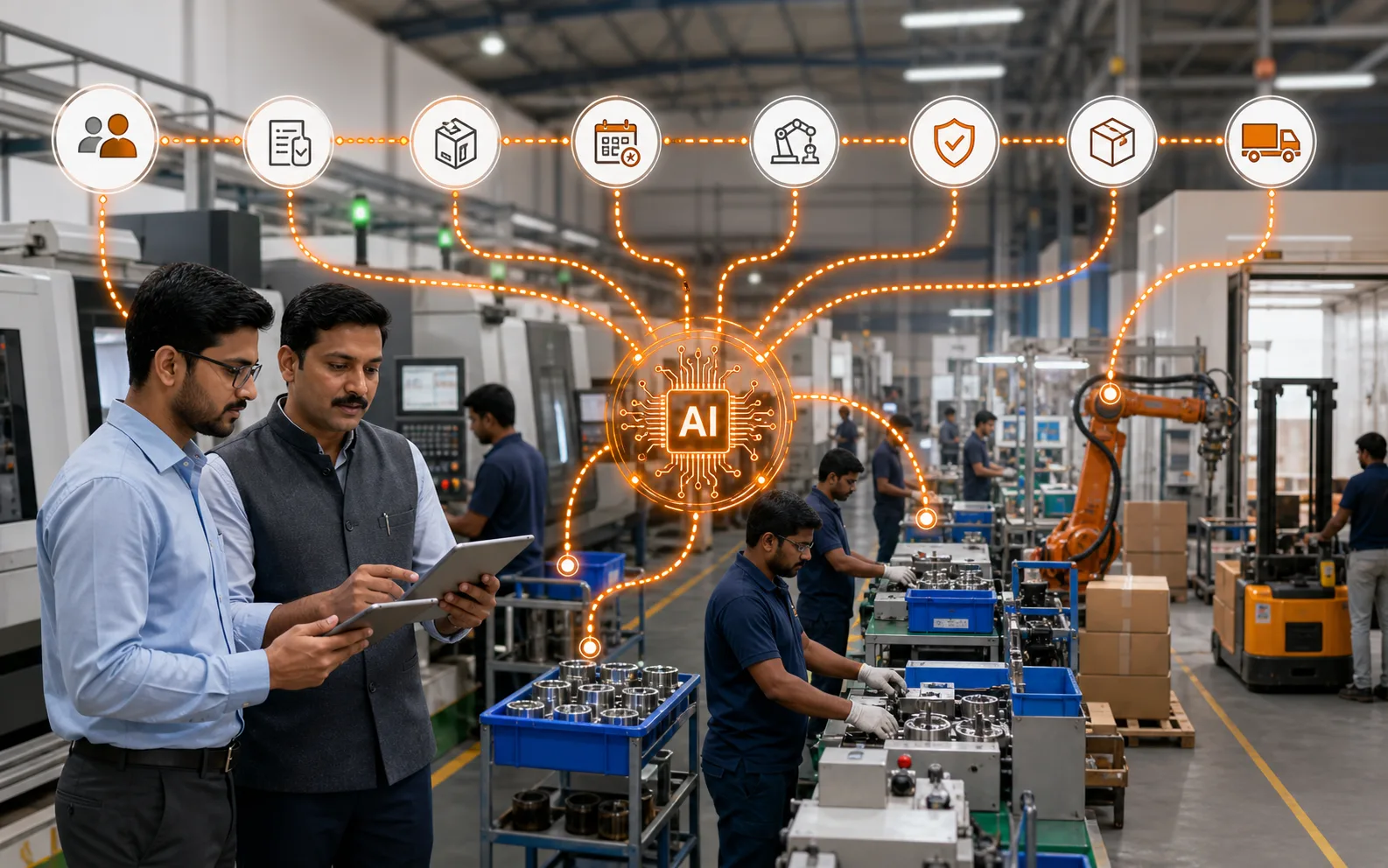
What Support Do I Get After Buying AI Planning Software?
After buying AI planning software, you should expect support that helps your team actually use the system in daily production planning. This includes onboarding, data setup guidance, workflow configuration, role-based training, go-live support, issue resolution, and periodic optimization.
AI for production planning is not a one-time installation. Planning touches sales, inventory, purchase, production, quality, dispatch, and management. Support matters because small adoption gaps can quickly affect schedule reliability.
The best vendor support continues after the contract is signed.
Onboarding and Workflow Setup
Support should begin with understanding how your planning process works today. The vendor should help map orders, BOMs, material checks, capacity constraints, approvals, and reporting needs.
This ensures the system reflects real factory work.
Data Preparation Support
You may need help cleaning item masters, BOMs, stock data, purchase records, production routes, machine details, and opening balances. Poor data setup weakens planning accuracy.
Good support helps you identify what must be clean for the first phase.
Role-Based Training
Planners, stores, purchase, production, quality, dispatch, and management need different training. Training should use real examples from your factory.
Generic demos are not enough.
Go-Live and Stabilization
The first few weeks after go-live are critical. Support should help resolve data issues, user doubts, incorrect alerts, workflow confusion, and report changes.
Stabilization turns software into routine.
Ongoing Optimization
After adoption, support should help review planning outcomes, user behaviour, and improvement opportunities. AI planning should get better as the factory learns.
Where AICAN Optiwise Fits
AICAN Optiwise supports connected workflows across production planning, inventory, purchase, sales, finance, reporting, IoT readiness, and AI. Manufacturers should discuss implementation and post-go-live support with the AICAN team based on scope and complexity.
Learn more at AICAN Optiwise and About AICAN.
Founder’s Note
AICAN’s founder-led belief is that support is part of the product experience. Manufacturing teams need guidance during real operating pressure, not only during demos.
A planning system succeeds when users feel supported enough to trust it.
FAQ
What support should I expect?
Expect onboarding, data setup, configuration, role-based training, go-live support, issue resolution, and optimization reviews.
How long is support needed?
The first 30 to 60 days are especially important, but ongoing support is useful as planning needs evolve.
Who should attend training?
Planning, stores, purchase, production, quality, dispatch, management, and system admins should attend role-specific sessions.
What should I ask vendors?
Ask about response time, support channels, training, issue escalation, data help, and post-go-live reviews.
Final Thought
AI planning software becomes valuable when support helps the team use it confidently. Ask about support before buying, not after problems appear.
Next step: Explore AICAN Optiwise to discuss implementation and support for AI production planning.

Related Posts
Is AI Worth the Investment for My Factory?
Learn how to decide if AI is worth the investment for your factory by evaluating use cases, data readiness, costs, risks, ROI, and operational impact.
13 Jun 2026Read more →Manufacturing AI Mistakes to Avoid Before You Start
List manufacturing AI mistakes and controls for unclear use case, messy data, unsafe automation, no owner, weak security and unreviewed recommendations.
13 Jun 2026Read more →What's the Difference Between AI and Regular Automation?
Understand the difference between AI and regular automation in manufacturing, with practical examples for workflows, decisions, alerts, and predictive operations.
13 Jun 2026Read more →What Are the Risks of Using AI in Manufacturing?
Understand the risks of AI in manufacturing, including bad data, wrong recommendations, safety issues, security, job fear, over-automation, and implementation failure.
13 Jun 2026Read more →