
Do I Need to Replace All My Equipment to Use IoT?
Learn how factories can use IoT with existing machines through retrofit sensors, gateways, meters, operator inputs, and phased modernization.

Do I Need to Replace All My Equipment to Use IoT?
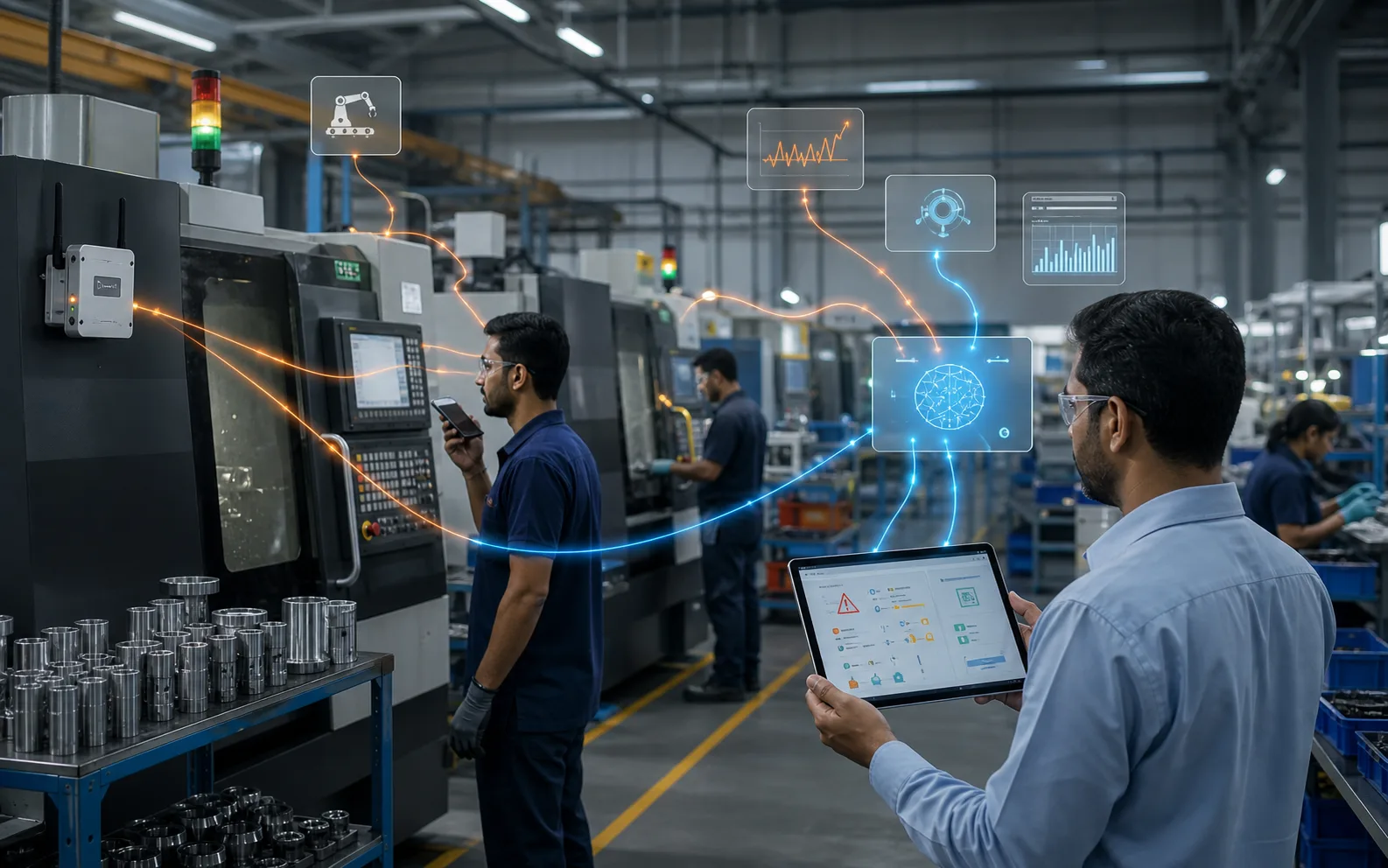
No. In most cases, manufacturers do not need to replace all equipment to start using IoT. Many factories can begin with existing machines by adding retrofit sensors, meters, counters, gateways, or operator input screens.
This is important because machine replacement is expensive. Many older machines still produce reliably. The issue is not always the machine itself. The issue is that the machine is invisible to the rest of the business.
IoT can help bridge that gap. It can make existing equipment easier to monitor, maintain, and connect with production decisions.
Old Machines Can Still Provide Useful Signals
A machine does not need to be new to provide useful data. Even if it has no modern digital interface, the factory can often capture basic signals such as running status, cycle count, energy consumption, temperature, vibration, or stoppage duration.
This can be done using:
- current sensors
- proximity sensors
- vibration sensors
- temperature sensors
- energy meters
- production counters
- industrial gateways
- operator input terminals
The right method depends on the machine and the use case. A simple current sensor may be enough to understand whether a machine is running or idle. A vibration sensor may be useful for critical rotating equipment. An energy meter may be useful for high-load machines.
Retrofit Does Not Mean Compromise
Retrofit IoT is sometimes treated as a temporary workaround. In reality, it can be a strong modernization strategy.
A retrofit approach allows manufacturers to:
- start with critical machines
- avoid large capital replacement
- test value before scaling
- reduce implementation risk
- keep familiar equipment in operation
- build visibility gradually
The key is design discipline. Sensors must be selected properly, installed safely, validated carefully, and connected with the right workflow.
A poorly planned retrofit can produce unreliable data. A well-planned retrofit can give old machines a useful digital layer.
When PLC or Machine Data Is Available
Some machines already have PLCs, controllers, or digital outputs. In those cases, the IoT platform may collect data directly from the machine or through a gateway.
This can provide richer information such as machine state, alarms, cycle data, operating parameters, speed, temperature, or process values.
However, even when PLC data is available, the team should decide which signals matter. Pulling every possible tag can create noise. Start with signals that support the business decision.
When Operator Input Is Still Needed
Machines can show what happened. People often explain why it happened.
For example, a sensor may show that a machine stopped for 22 minutes. It may not know whether the reason was tool change, material shortage, quality hold, maintenance, cleaning, manpower, or setup.
This is why operator input remains important. Simple reason codes and easy screens can turn automatic data into useful context.
The goal is not to add burden. The goal is to remove repeated explanations and make the reason visible to everyone who needs it.
What Equipment Should You Connect First?
Do not connect machines randomly. Start where visibility will create the most value.
Good candidates include:
- bottleneck machines
- equipment with repeated breakdowns
- high-energy machines
- machines linked to quality complaints
- lines with delayed production reporting
- critical utilities such as compressors or chillers
- equipment with high spare cost or long repair time
The first project should solve an expensive problem. Once it proves value, expand to other equipment.
When Replacement May Still Be Needed
IoT can extend visibility, but it cannot fix every mechanical or process limitation.
Equipment replacement may still be needed if a machine is unsafe, unreliable, too slow, too costly to maintain, unable to meet quality requirements, or structurally unsuitable for production demand.
IoT can help make that decision more evidence-based. Instead of replacing based on frustration, the business can review downtime, maintenance cost, energy consumption, rejection, output, and utilization.
Sometimes IoT proves that a machine should be repaired. Sometimes it proves that replacement is justified.
Integration With Existing Systems Matters
Connecting existing equipment is only the first step. The data should also connect with business workflows.
For example:
- machine output should connect with production orders
- downtime should connect with maintenance and planning
- energy should connect with costing
- quality readings should connect with batch records
- material waiting should connect with inventory and purchase
This prevents IoT from becoming a separate technical island.
Where AICAN Optiwise Fits
AICAN Optiwise is useful for manufacturers who want to modernize without losing sight of daily operations. Existing machines, operator inputs, inventory, production, sales, purchase, finance, and reporting all need to work together.
Optiwise helps manufacturers bring operational visibility into one connected system. You can explore AICAN and learn more on About AICAN.
FAQ
Can IoT work on machines without PLCs?
Yes. Retrofit sensors, meters, counters, and operator input can capture useful data from machines that do not have PLCs.
Is retrofit IoT reliable?
It can be reliable when designed and installed properly. Sensor choice, placement, network quality, validation, and maintenance all matter.
Should I replace old machines before starting IoT?
Not automatically. Start by identifying whether the machine still supports production. If it does, IoT can help improve visibility. Replacement should be based on evidence.
What is the simplest retrofit IoT use case?
Machine running/idle/stopped status, production count, downtime capture, and energy monitoring are common starting points.
Can old and new machines be connected in the same system?
Yes. A good implementation can combine PLC data from newer machines with retrofit sensor data from older machines.
Founder’s Note
At AICAN, we know many manufacturers are working with mixed factories: some new machines, some old machines, some manual processes, and a lot of practical knowledge on the floor.
Modernization should work with that reality. The first step is not always replacement. Often, it is visibility.
Final Thought
You do not need a brand-new factory to start using IoT. You need one important problem, the right data capture method, and a system that connects that data to real manufacturing decisions.

Related Posts
Is AI Worth the Investment for My Factory?
Learn how to decide if AI is worth the investment for your factory by evaluating use cases, data readiness, costs, risks, ROI, and operational impact.
13 Jun 2026Read more →Manufacturing AI Mistakes to Avoid Before You Start
List manufacturing AI mistakes and controls for unclear use case, messy data, unsafe automation, no owner, weak security and unreviewed recommendations.
13 Jun 2026Read more →What's the Difference Between AI and Regular Automation?
Understand the difference between AI and regular automation in manufacturing, with practical examples for workflows, decisions, alerts, and predictive operations.
13 Jun 2026Read more →What Are the Risks of Using AI in Manufacturing?
Understand the risks of AI in manufacturing, including bad data, wrong recommendations, safety issues, security, job fear, over-automation, and implementation failure.
13 Jun 2026Read more →