
What Can Actually Go Wrong With Factory Automation?
Factory automation can fail through poor data, weak training, downtime, bad integration, safety gaps, over-automation, and lack of human oversight.
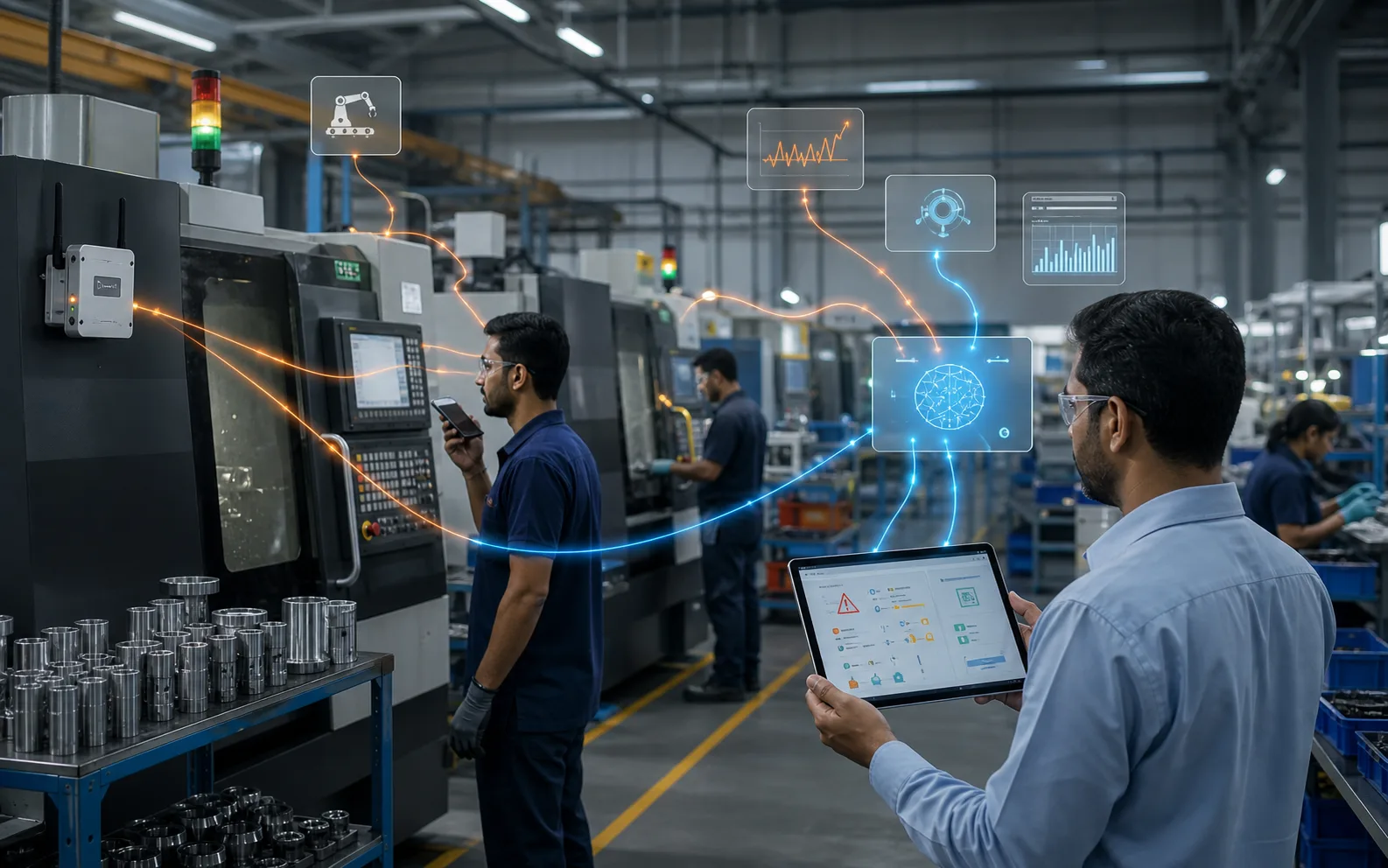
What Can Actually Go Wrong With Factory Automation?
Factory automation can improve productivity, quality, and visibility. But if implemented poorly, it can create new problems.
Automation can fail through weak planning, poor data, bad integration, lack of training, safety gaps, unrealistic expectations, and over-dependence on systems nobody understands.
The answer is not to avoid automation. The answer is to implement it carefully.
Poor Process Understanding
If the current process is unclear, automation may simply make confusion faster.
Before automating, understand how work actually happens on the shop floor, including exceptions and manual adjustments.
Weak Data Quality
Automation depends on accurate data.
Wrong item codes, delayed production entries, inaccurate downtime reasons, and poor machine data can lead to wrong decisions.
Integration Problems
Automation that does not connect with inventory, production, purchase, finance, and reporting creates gaps.
AICAN Optiwise helps reduce this risk by connecting manufacturing workflows in one operating system.
Worker Resistance
If workers feel automation is being forced without explanation, adoption suffers.
Training and communication are essential.
Safety Risks
Automation must be designed with safety in mind.
Machines, sensors, alerts, and human work areas must be reviewed properly.
Over-Automation
Not every decision should be automated.
Human judgment remains important for quality, safety, maintenance, and unusual production conditions.
Where AICAN Optiwise Fits
AICAN Optiwise supports automation with connected visibility across production, inventory, purchase, sales, finance, reports, IoT readiness, and AI workflows. Connected systems help teams detect issues earlier.
Learn more at About AICAN.
Founder’s Note
Automation should reduce risk, not hide it. The safest automation projects keep people informed, trained, and able to intervene.
Factories need smarter systems and smarter implementation.
FAQ
What is the biggest factory automation risk?
Poor planning and weak integration are major risks.
Can automation cause downtime?
Yes, especially if systems are not tested or workers are not trained.
Should all processes be automated?
No. Start with clear, repetitive, measurable workflows.
How can risk be reduced?
Use phased rollout, training, safety review, clean data, and human oversight.
Final Thought
Factory automation can go wrong when technology moves faster than process discipline.
Implement carefully, keep humans in control, and connect systems properly. That is the responsible automation path AICAN supports.

Related Posts
Is AI Worth the Investment for My Factory?
Learn how to decide if AI is worth the investment for your factory by evaluating use cases, data readiness, costs, risks, ROI, and operational impact.
13 Jun 2026Read more →Manufacturing AI Mistakes to Avoid Before You Start
List manufacturing AI mistakes and controls for unclear use case, messy data, unsafe automation, no owner, weak security and unreviewed recommendations.
13 Jun 2026Read more →What's the Difference Between AI and Regular Automation?
Understand the difference between AI and regular automation in manufacturing, with practical examples for workflows, decisions, alerts, and predictive operations.
13 Jun 2026Read more →What Are the Risks of Using AI in Manufacturing?
Understand the risks of AI in manufacturing, including bad data, wrong recommendations, safety issues, security, job fear, over-automation, and implementation failure.
13 Jun 2026Read more →