
What Do Customers Think About AI-Made Products?
Understand customer perception of AI-made products, why quality and transparency matter, and how manufacturers can build trust in AI-supported production.
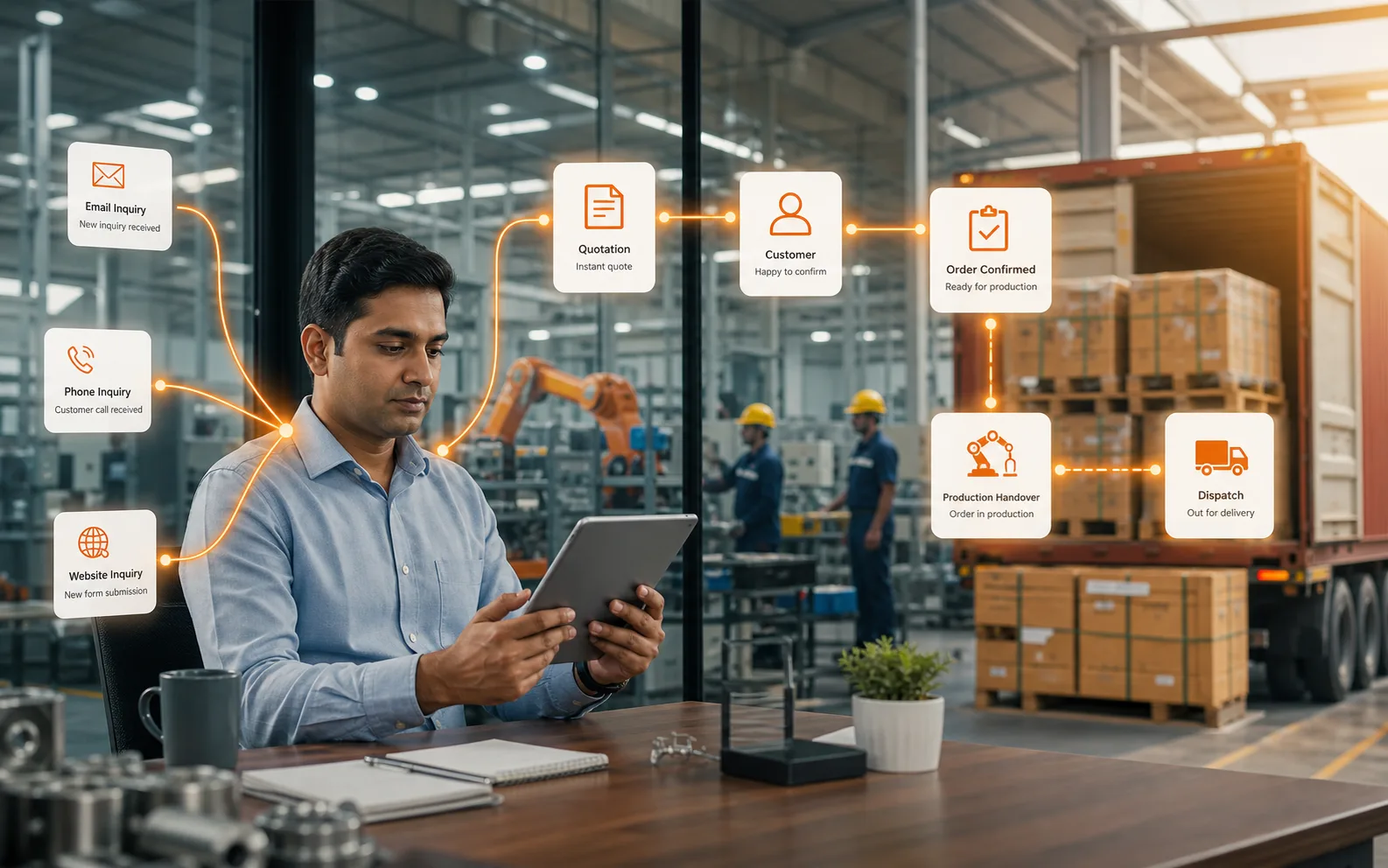
What Do Customers Think About AI-Made Products?
Customers usually do not care whether a product was made with AI, automation, or a traditional process. They care whether it is reliable, consistent, fairly priced, delivered on time, and supported when something goes wrong. AI becomes a concern only when customers believe it may reduce quality, remove accountability, or make the product feel less trustworthy.
For manufacturers, this is an important point. The value of artificial intelligence in manufacturing is not in telling customers, "We use AI." The value is in delivering better products because the factory has stronger control over planning, quality, traceability, and consistency.
Customer perception depends on how AI is used. If AI improves inspection, reduces variation, predicts defects, and improves delivery reliability, customers will see the benefit. If AI is used carelessly and creates mistakes, the damage will be blamed on the manufacturer, not the technology.
Customers Trust Outcomes More Than Technology Claims
Most buyers judge manufacturers by performance. Did the order meet specifications? Was the quality consistent? Did dispatch happen on time? Were issues communicated early? Was documentation accurate?
AI can improve all of these outcomes, but only if the factory has the right workflows. A customer does not need to see every algorithm. They need to experience fewer surprises.
This is especially true for B2B manufacturing. Purchase teams, OEMs, distributors, and industrial buyers are practical. They respond to reliable delivery, clean reporting, and repeatable quality.
Where AI Can Improve Customer Confidence
AI can help manufacturers detect quality patterns earlier, reduce repeat defects, improve production planning, forecast delays, manage inventory risk, and provide better order visibility. These improvements directly affect customer trust.
For example, if the system flags a likely dispatch delay three days earlier, the sales or customer service team can communicate proactively. If quality inspection data shows a recurring defect, the factory can correct it before more batches are affected. If stock planning improves, customers face fewer missed commitments.
Customers may never ask which AI model was used, but they will notice fewer excuses.
When Customers May Be Concerned
Customers may worry if AI is positioned as replacing quality control, reducing human accountability, or making decisions without review. In regulated or high-precision sectors, buyers may also ask how AI-supported decisions are validated.
Manufacturers should be ready to explain that AI supports monitoring, prediction, inspection, and decision-making, while trained teams remain responsible for quality and compliance. This framing builds confidence because it shows AI is part of a controlled process.
Transparency does not mean overexplaining the technology. It means being clear about quality systems, traceability, and responsibility.
AI-Made vs AI-Supported Products
A better phrase for most manufacturers is "AI-supported production." Products are still made through machines, materials, people, processes, and quality systems. AI helps the factory manage these elements better.
This distinction matters. It avoids the impression that products are being produced without human oversight. It also reflects reality. In most factories, AI supports planning, inspection, alerts, reporting, and optimisation rather than physically making the entire product.
How Manufacturers Should Communicate AI Use
Do not make vague claims like "AI-powered quality" unless you can explain what it means. Instead, communicate specific improvements: better traceability, faster issue detection, stronger production visibility, improved delivery planning, or more consistent quality checks.
Customers trust measurable operational improvements more than fashionable language.
Where AICAN Optiwise Fits
AICAN Optiwise helps manufacturers build customer trust by connecting production, inventory, purchase, sales, finance, reporting, IoT readiness, and AI workflows. This makes it easier to manage order status, material readiness, production progress, quality issues, and dispatch commitments from one system.
For customers, the visible benefit is better reliability. For manufacturers, the benefit is cleaner control over promises made to the market. Explore the platform at aican.co.in and the company context at About AICAN.
Founder’s Note
AICAN’s founder-led belief is that AI should help manufacturers become more dependable, not just more digital. Customers do not reward technology for its own sake. They reward consistency, honesty, and timely delivery.
That is why AI in manufacturing should strengthen the basics first: visibility, quality, traceability, and accountability.
FAQ
Do customers prefer AI-made products?
Most customers prefer reliable products. AI can support that reliability, but customer trust depends on quality, delivery, communication, and accountability.
Should manufacturers tell customers they use AI?
Yes, when it is relevant and specific. Explain how AI improves inspection, planning, traceability, or consistency instead of making broad claims.
Can AI reduce product quality?
It can if used carelessly or without human review. When implemented properly, AI helps detect issues earlier and supports stronger quality control.
What phrase should manufacturers use?
"AI-supported manufacturing" is often more accurate than "AI-made products" because people and processes still remain central to production.
Final Thought
Customers do not buy AI. They buy confidence. If AI helps your factory deliver better quality, clearer communication, and more reliable timelines, customers will see the value where it matters most.
Next step: Visit AICAN Optiwise to see how connected manufacturing workflows can help turn AI into better customer reliability.

Related Posts
Is AI Worth the Investment for My Factory?
Learn how to decide if AI is worth the investment for your factory by evaluating use cases, data readiness, costs, risks, ROI, and operational impact.
13 Jun 2026Read more →Manufacturing AI Mistakes to Avoid Before You Start
List manufacturing AI mistakes and controls for unclear use case, messy data, unsafe automation, no owner, weak security and unreviewed recommendations.
13 Jun 2026Read more →What's the Difference Between AI and Regular Automation?
Understand the difference between AI and regular automation in manufacturing, with practical examples for workflows, decisions, alerts, and predictive operations.
13 Jun 2026Read more →What Are the Risks of Using AI in Manufacturing?
Understand the risks of AI in manufacturing, including bad data, wrong recommendations, safety issues, security, job fear, over-automation, and implementation failure.
13 Jun 2026Read more →