
What Happens to My Data With IoT Systems?
Learn what happens to manufacturing data in IoT systems, including collection, storage, dashboards, access, retention, backups, privacy, security, and vendor questions.
What Happens to My Data With IoT Systems?
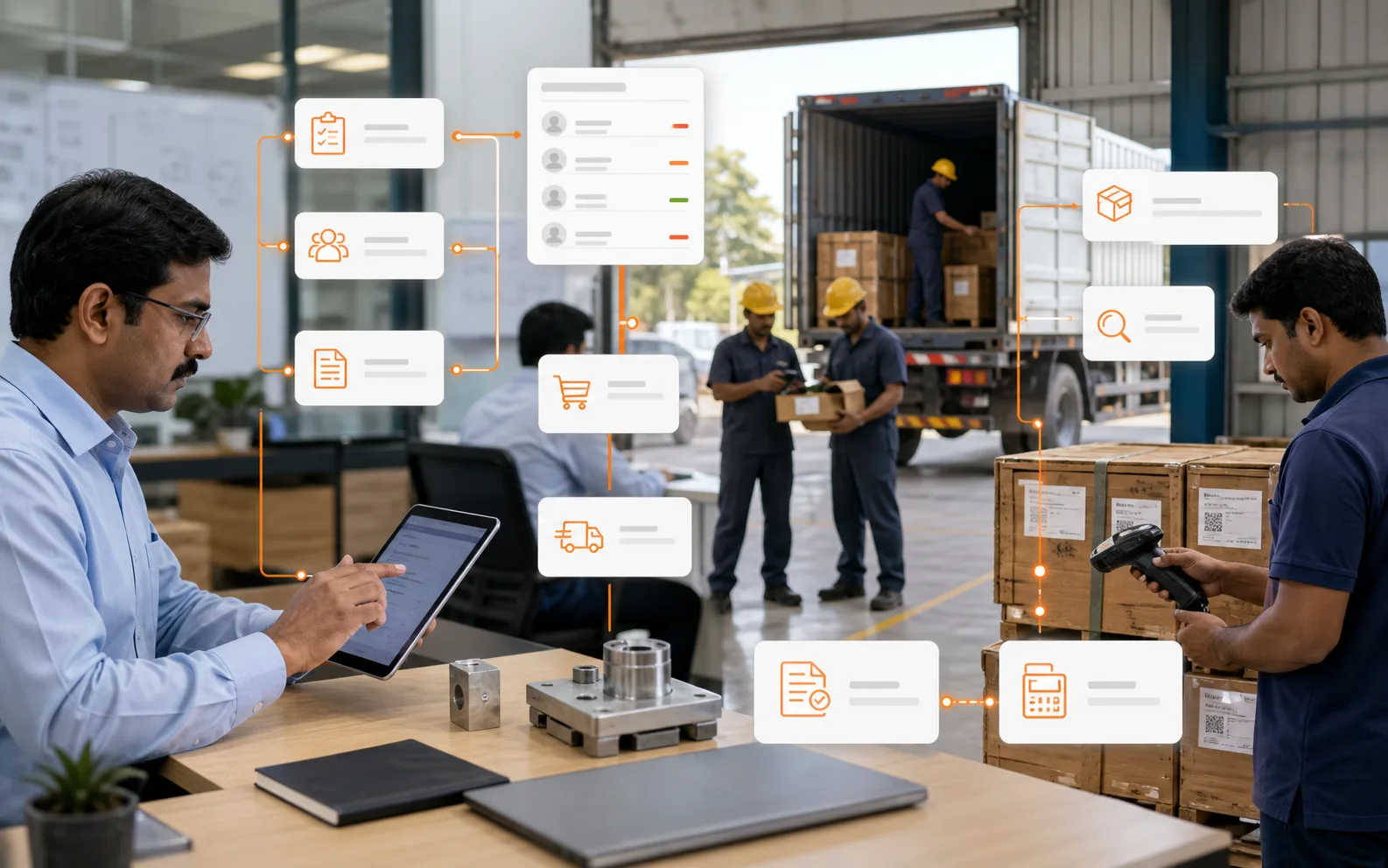
When a factory installs IoT, data starts moving from the shop floor into a digital system.
That sounds simple, but it raises important questions. What data is collected? Where is it stored? Who can see it? Can it be exported? Is it shared with vendors? What happens if the internet goes down? How long is the data kept? How is it protected?
Manufacturers should ask these questions before implementation, not after the system is live.
IoT for Manufacturing can collect machine status, production counts, downtime, process parameters, energy usage, quality signals, inventory movement, and alerts. This data can help factories run better, but it must be handled with discipline.
This guide explains what typically happens to factory data in IoT systems, what manufacturers should check, and how AICAN Optiwise can help connect data to useful factory decisions while keeping ownership and access clear.
What Data IoT Systems Collect
IoT systems collect data from machines, sensors, meters, devices, and sometimes operator inputs.
Common data types include:
- Machine running or stopped status.
- Production counts.
- Cycle time.
- Downtime start and end time.
- Downtime reason.
- Energy consumption.
- Temperature, pressure, vibration, current, flow, or humidity.
- Equipment alarms.
- Quality readings.
- WIP movement.
- Material movement.
- User actions or acknowledgements.
The exact data depends on the use case. A downtime project needs different data from an energy project. A quality-monitoring project needs different data from inventory movement tracking.
A good implementation collects what is useful, not everything possible.
How Data Moves From Machine to System
Factory data usually moves through several layers.
A typical flow may look like this:
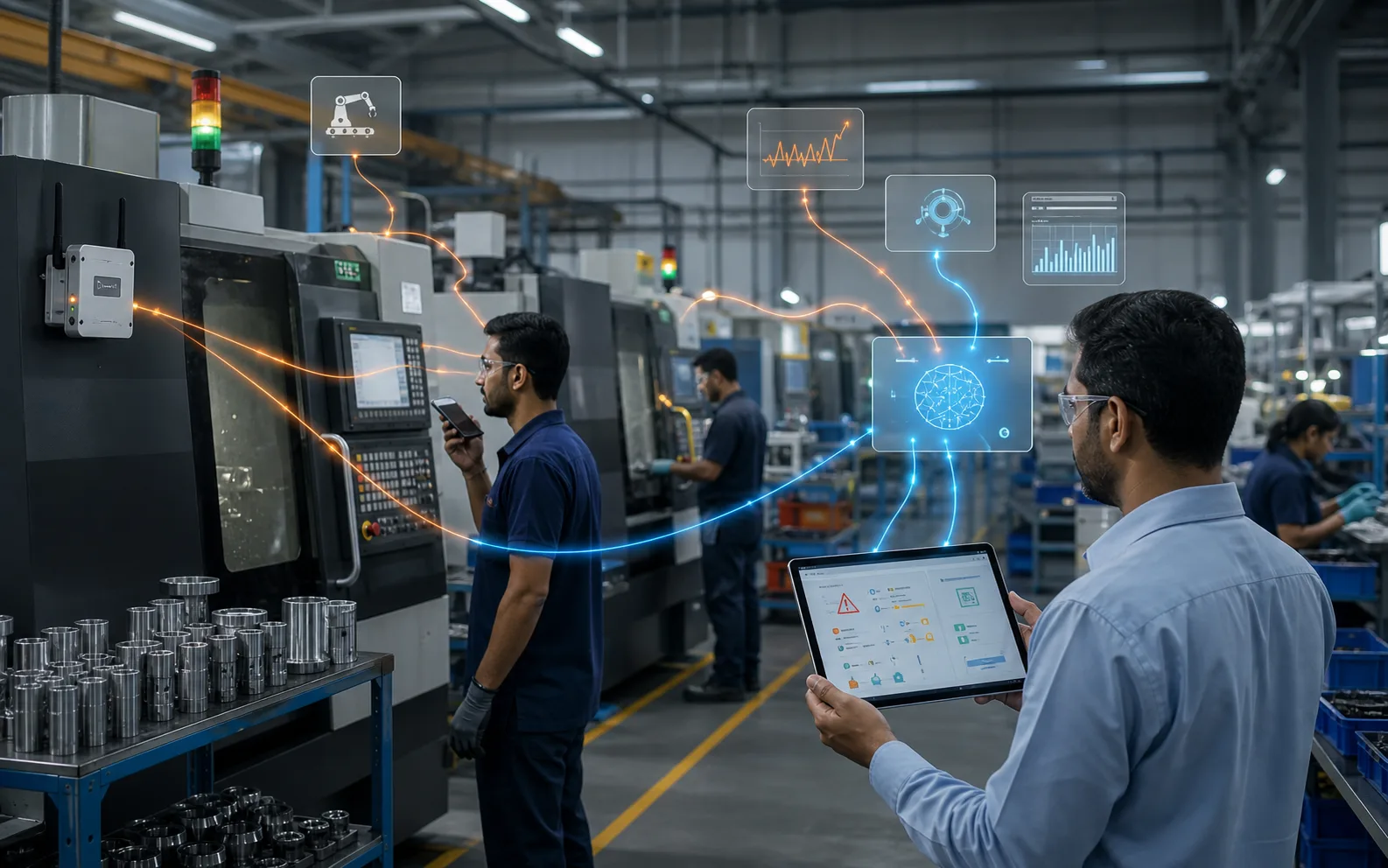
- Machine, sensor, meter, or device captures a signal.
- Gateway or controller receives the signal.
- Data is cleaned, formatted, or timestamped.
- Data is sent to software through local network or internet connection.
- Software stores and processes the data.
- Dashboards, alerts, and reports show the information to users.
Some systems process data locally first. Others send data to cloud platforms. Some use a hybrid approach. The right architecture depends on factory needs, connectivity, security requirements, and software design.
Manufacturers should understand the data flow clearly before approving the project.
Where the Data Is Stored
IoT data may be stored locally, in the cloud, or in a hybrid setup.
Local Storage
Local storage means data is stored on a server, industrial PC, or system inside the factory environment. It may be preferred when internet reliability is weak or when the factory wants more local control.
Cloud Storage
Cloud storage means data is stored on managed servers outside the factory. It can make remote access, scaling, backups, and updates easier, but it requires careful vendor and access review.
Hybrid Storage
Hybrid setups may keep some data locally and sync selected data to cloud systems. This can help when factories need local continuity and centralized reporting.
There is no single right answer for every factory. The important thing is knowing where data lives and who is responsible for it.
Who Owns the Data?
Manufacturers should clarify data ownership before signing or implementing.
Important questions include:
- Does the factory own its operational data?
- Can the factory export the data?
- What happens if the vendor relationship ends?
- Is data used for product improvement or analytics by the vendor?
- Is customer-specific or production-sensitive data separated?
- What terms apply to data retention and deletion?
These questions should be answered in writing where possible.
Factory data can include sensitive operational information: production volumes, machine performance, customer orders, quality issues, downtime, energy usage, and process parameters. It deserves proper handling.
Who Can Access the Data?
Not everyone should see everything.
A good IoT system should support role-based access. That means each user sees what they need for their work.
For example:
- Operators may see current job and machine status.
- Supervisors may see shift production and downtime.
- Maintenance may see machine alerts and breakdown history.
- Quality may see inspection and process signals.
- Stores may see material movement or availability.
- Management may see performance dashboards.
- Administrators may manage users and configuration.
Role-based access reduces confusion and protects information.
How Data Becomes Dashboards and Alerts
Raw IoT data is not useful by itself.
A sensor may send a value every few seconds, but a production manager needs meaning: machine stopped, output below plan, temperature out of range, energy spike, quality hold, or dispatch risk.
Software turns data into:
- Dashboards.
- Alerts.
- Reports.
- Trends.
- Exception lists.
- Maintenance views.
- Quality traceability.
- Production analysis.
This processing step is where factory context matters. Data should be connected to work orders, machines, operations, material, quality checks, maintenance action, and dispatch commitments wherever relevant.
What Happens When Internet Fails?
Factories should ask this early.
If the internet goes down, does the system stop collecting data? Does it store data locally and sync later? Do dashboards pause? Are alerts delayed? Can production continue normally?
A practical IoT system should define what happens during connectivity issues.
Important checks include:
- Local buffering.
- Offline data capture.
- Data sync after reconnection.
- Dashboard status indicators.
- Alert behavior during outage.
- Manual backup process where needed.
Connectivity issues should not create silent data loss.
How Long Data Is Kept
Data retention should match business needs.
Some live status data may not need long storage. Quality traceability data may need longer retention. Downtime history, energy trends, and maintenance records may be useful for analysis over months or years.
Manufacturers should define:
- What data is retained.
- How long it is retained.
- What is archived.
- What is deleted.
- How backups work.
- How data can be retrieved.
Keeping everything forever can increase cost and complexity. Deleting useful traceability too early can create problems. The retention policy should be deliberate.
Data Security Basics
Factory IoT data should be protected with practical controls.
Important security basics include:
- Unique user accounts.
- Strong passwords.
- Multi-factor authentication where supported.
- Role-based permissions.
- Secure communication where appropriate.
- Device inventory.
- Regular access review.
- Vendor access control.
- Logs for important actions.
- Backup and recovery planning.
Manufacturers should also understand how the vendor handles updates, support, and vulnerabilities.
This is not legal advice. Factories should involve qualified IT, cybersecurity, or legal support where required, especially when sensitive data, customer requirements, or regulatory obligations are involved.
What to Ask Vendors
Before choosing an IoT system, ask:
- What data is collected?
- Where is the data stored?
- Who owns the data?
- Who can access it?
- Can we export our data?
- How is data protected?
- What happens if internet connectivity fails?
- How are backups handled?
- How long is data retained?
- How are users and permissions managed?
- How is vendor remote access controlled?
- What happens if we stop using the system?
Good vendors should answer these questions clearly.
Where AICAN Optiwise Fits
AICAN Optiwise helps manufacturers turn factory data into practical visibility across production, inventory, quality, maintenance, and dispatch.
For IoT systems, this matters because raw data is only the beginning. The value comes when data is connected to factory workflows and shown to the right people in the right form.
Optiwise can help manufacturers work toward:
- Role-based factory visibility.
- Connected production, downtime, quality, inventory, and dispatch data.
- Dashboards and alerts that support daily decisions.
- Better traceability of operational events.
- Clearer use of shop-floor signals in management review.
AICAN builds practical manufacturing systems for teams that need useful visibility, not uncontrolled data piles. Learn more at About AICAN.
FAQ
What data does an IoT system collect in a factory?
It may collect machine status, production count, downtime, energy usage, process parameters, alarms, quality readings, inventory movement, WIP status, and user actions depending on the use case.
Is factory IoT data stored locally or in the cloud?
It can be stored locally, in the cloud, or in a hybrid setup. The right model depends on connectivity, security, access, backup, and business requirements.
Who owns the data from IoT systems?
Manufacturers should clarify ownership with the vendor before implementation. Ideally, the factory should understand its rights to access, export, retain, and delete operational data.
What happens if internet connectivity fails?
A well-designed system may buffer data locally and sync later. Manufacturers should confirm offline behavior, alert handling, and data-loss prevention before rollout.
Is IoT data sensitive?
Yes, it can be. Production volumes, machine performance, quality issues, downtime, energy usage, and customer-related production status may be commercially sensitive.
How does AICAN Optiwise use factory data?
AICAN Optiwise helps connect factory data with production, inventory, quality, maintenance, and dispatch workflows so teams can use it for decisions, alerts, traceability, and daily control.
Founder’s Note
Data should not feel mysterious to a manufacturer.
If a system is collecting shop-floor data, the factory should know what is collected, where it goes, who can see it, and how it helps decisions. Confusion around data creates mistrust.
At AICAN, we believe factory data should be useful, visible to the right roles, and tied to real operations. Data has value only when it helps people run the factory better.
Final Thought
With IoT systems, your data becomes part of the factory’s operating layer.
Treat it with the same seriousness as machines, material, quality, and customer commitments. Know what is collected, where it is stored, who can access it, and how it supports action. That is how data becomes an asset instead of a concern.

Related Posts
Is AI Worth the Investment for My Factory?
Learn how to decide if AI is worth the investment for your factory by evaluating use cases, data readiness, costs, risks, ROI, and operational impact.
13 Jun 2026Read more →Manufacturing AI Mistakes to Avoid Before You Start
List manufacturing AI mistakes and controls for unclear use case, messy data, unsafe automation, no owner, weak security and unreviewed recommendations.
13 Jun 2026Read more →What's the Difference Between AI and Regular Automation?
Understand the difference between AI and regular automation in manufacturing, with practical examples for workflows, decisions, alerts, and predictive operations.
13 Jun 2026Read more →What Are the Risks of Using AI in Manufacturing?
Understand the risks of AI in manufacturing, including bad data, wrong recommendations, safety issues, security, job fear, over-automation, and implementation failure.
13 Jun 2026Read more →