
What Is Cold Chain Monitoring?
Learn what cold chain monitoring means for food and FMCG businesses, including temperature tracking, alerts, storage, transport, ERP integration, and quality review.
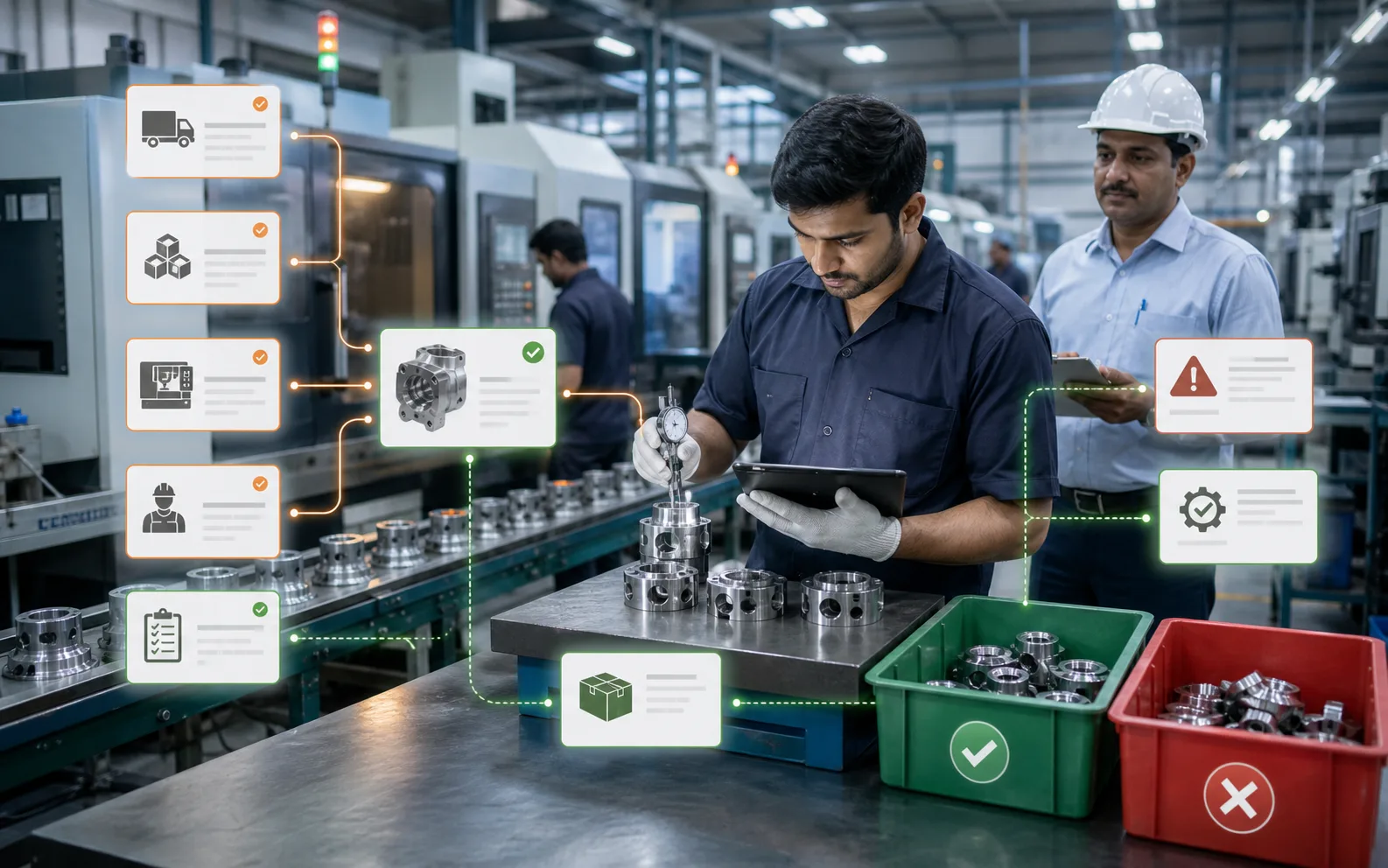
What Is Cold Chain Monitoring?
Cold chain monitoring is the process of tracking temperature-controlled storage and movement for products that must stay within defined temperature ranges. It helps food, dairy, frozen, beverage, pharma, and other temperature-sensitive businesses protect product quality from factory to warehouse to transport to customer.
A cold chain failure can turn good stock into risky stock. The product may look fine from the outside, but a temperature excursion can affect shelf life, safety, texture, taste, or customer acceptance.
Cold chain monitoring uses sensors, data loggers, IoT devices, manual checks, alarms, and software dashboards to keep temperature history visible and reviewable.
AICAN Optiwise helps manufacturers connect inventory, batch tracking, dispatch, quality checkpoints, and reporting so cold chain data can support operational decisions.
What cold chain monitoring tracks
Cold chain monitoring usually tracks temperature, but the full process can include more.
Depending on the business, it may monitor:
- Storage temperature
- Transport temperature
- Humidity where relevant
- Door opening events
- Power failure
- Equipment runtime
- Refrigerated vehicle status
- Cold room alerts
- Data logger readings
- Shipment location where integrated
The goal is to know whether the product remained within the defined condition range.
Where cold chain risk appears
Cold chain risk can appear at many points:
- Raw material receiving
- Cold storage
- Production staging
- Finished goods storage
- Loading area
- Refrigerated transport
- Distributor warehouse
- Retail delivery
- Returns handling
If monitoring covers only the factory cold room but not transport, the company still has a blind spot.
Why cold chain monitoring matters
Cold chain monitoring supports:
- Product quality
- Shelf-life protection
- Customer acceptance
- Complaint investigation
- Recall readiness
- Dispatch confidence
- Insurance or claim support where relevant
- Better logistics decisions
For short-shelf-life products, cold chain visibility can make the difference between controlled distribution and recurring loss.
Alerts should trigger action
Temperature data is useful only if someone acts on it.
A good monitoring process defines:
- Acceptable temperature range
- Alert limit
- Escalation limit
- Responsible person
- Response time
- Documentation requirement
- Quality review requirement
- Product disposition process
For example, if a refrigerated vehicle crosses the temperature limit, the system should alert the responsible team and help document what happened.
Connect cold chain data with batches
Cold chain monitoring becomes more useful when linked to batch and dispatch records.
The company should be able to answer:
- Which batch was in the affected cold room?
- Which shipment had the temperature excursion?
- Which customer received the product?
- How long was the product outside range?
- Was quality review completed?
- Is remaining stock affected?
ERP provides this context by connecting inventory, batch, dispatch, customer, and quality records.
Cold chain monitoring in transport
Transport is often the hardest part to control because the product leaves the factory. Refrigerated vehicles, data loggers, GPS-linked sensors, and delivery checks can help.
Useful transport data includes:
- Vehicle ID
- Shipment or invoice reference
- Product batch details
- Start temperature
- Temperature trend during transit
- Excursion events
- Delivery time
- Receiver acknowledgement
This data helps resolve customer disputes and improve logistics planning.
Reports that matter
Useful cold chain reports include:
- Temperature excursion report
- Cold room performance
- Shipment temperature history
- Batch-wise cold chain history
- Vehicle-wise exception report
- Response time report
- Customer complaint-linked temperature records
- Product loss due to cold chain failure
These reports help teams improve both quality and cost control.
Where Optiwise fits
Optiwise can help food and FMCG manufacturers connect cold chain monitoring with inventory, batch traceability, dispatch, quality checkpoints, sales, finance, and reporting.
A practical implementation can support:
- Batch-wise stock in cold storage
- Temperature event visibility
- Dispatch traceability
- Quality review workflows
- Customer delivery context
- Exception reports
- Management dashboards
AICAN helps manufacturers use digital systems to make cold chain issues visible early and reviewable later.
Founder’s Note
Cold chain monitoring is not just about a temperature reading. It is about protecting the promise made to the customer. At AICAN, we believe temperature data should connect with batches, dispatches, quality decisions, and accountability. That is when monitoring becomes useful for the business, not just a graph on a screen. Learn more at About AICAN.
FAQs
What is cold chain monitoring?
Cold chain monitoring is tracking the temperature-controlled storage and transport of products that must remain within defined temperature ranges.
Why is cold chain monitoring important?
It protects product quality, shelf life, customer trust, complaint investigation, and recall readiness for temperature-sensitive products.
What does cold chain monitoring track?
It may track temperature, humidity, door events, equipment status, transport temperature, power failure, shipment status, and alerts.
Should cold chain data connect with ERP?
Yes. ERP connects cold chain events to batches, inventory, dispatch, customers, and quality review, making the data more actionable.
What happens if temperature goes out of range?
The company should follow its defined SOP: alert responsible users, document the event, assess product impact, review quality risk, and decide product disposition.

Related Posts
Is AI Worth the Investment for My Factory?
Learn how to decide if AI is worth the investment for your factory by evaluating use cases, data readiness, costs, risks, ROI, and operational impact.
13 Jun 2026Read more →Manufacturing AI Mistakes to Avoid Before You Start
List manufacturing AI mistakes and controls for unclear use case, messy data, unsafe automation, no owner, weak security and unreviewed recommendations.
13 Jun 2026Read more →What's the Difference Between AI and Regular Automation?
Understand the difference between AI and regular automation in manufacturing, with practical examples for workflows, decisions, alerts, and predictive operations.
13 Jun 2026Read more →What Are the Risks of Using AI in Manufacturing?
Understand the risks of AI in manufacturing, including bad data, wrong recommendations, safety issues, security, job fear, over-automation, and implementation failure.
13 Jun 2026Read more →