
What Sensors Do I Need for Smart Manufacturing?
Learn which sensors manufacturers may need for smart manufacturing, including current, proximity, vibration, temperature, pressure, flow, energy, barcode, RFID, and quality sensors.
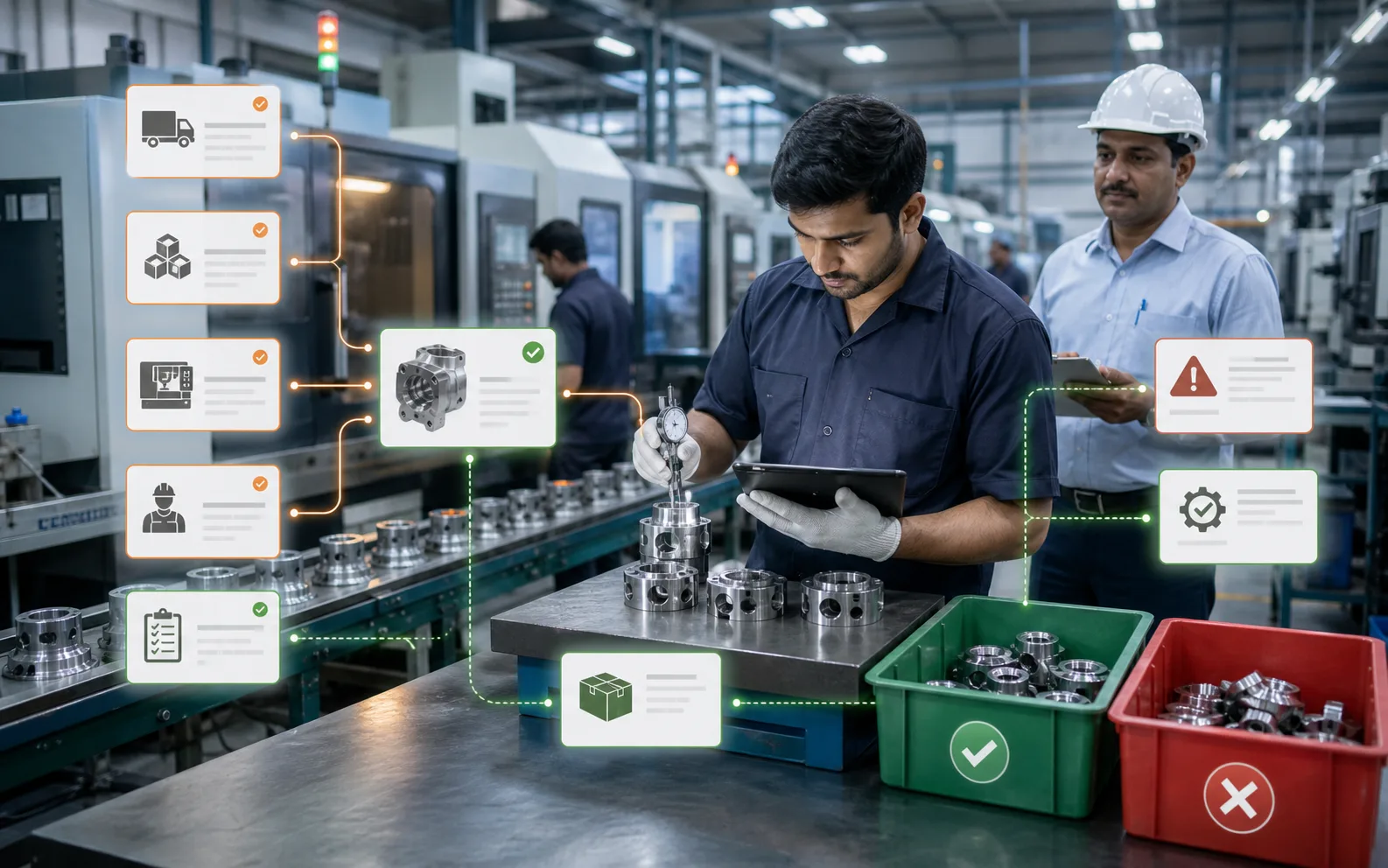
What Sensors Do I Need for Smart Manufacturing?
The sensors you need for smart manufacturing depend on what you want to measure.
That sounds obvious, but it is the mistake many factories make. They start with a sensor list instead of a factory problem. Then they collect data that looks technical but does not help production, maintenance, quality, energy, or dispatch decisions.
A better approach is simple: decide the use case first, then choose sensors.
If the goal is machine status, you may need current sensors or machine signals. If the goal is production counting, you may need proximity sensors, counters, PLC data, or barcode scans. If the goal is condition monitoring, you may need vibration, temperature, current, pressure, or other process signals. If the goal is inventory movement, you may need barcode, RFID, weighing, or level sensors.
This guide explains common sensor types for IoT for Manufacturing, where they fit, what to consider before choosing them, and how AICAN Optiwise can help connect sensor data to factory workflows.
Start With the Use Case
Before choosing sensors, answer five questions:
- What problem are we solving?
- What signal tells us the problem is happening?
- How accurate does the data need to be?
- How often do we need the data?
- Who will act on it?
For example, if the problem is late awareness of machine stoppage, you may only need a reliable running or stopped signal. If the problem is quality variation, you may need process parameters. If the problem is energy waste, you need energy monitoring.
Sensor selection should follow the decision you want to improve.
Current Sensors
Current sensors measure electrical current and can often help determine whether a machine is running, idle, loaded, or abnormal.
They are useful for:
- Machine status monitoring.
- Runtime tracking.
- Idle time detection.
- Energy-related analysis.
- Basic condition monitoring.
Current sensors are often helpful for older machines where direct digital data is not available.
Proximity and Photoelectric Sensors
Proximity and photoelectric sensors detect movement, presence, position, or passing objects.
They are useful for:
- Cycle counting.
- Part counting.
- Conveyor movement.
- Stroke counting.
- Object detection.
- Packaging line monitoring.
These sensors are common in production count monitoring, especially where machine controller data is not easily available.
Vibration Sensors
Vibration sensors are useful for condition monitoring on rotating or moving equipment.
They can help identify abnormal behavior in:
- Motors.
- Pumps.
- Compressors.
- Fans.
- Gearboxes.
- Spindles.
- Bearings.
Vibration data can support maintenance teams, but it should be used carefully. Not every vibration reading is meaningful without the right machine context, baseline, and interpretation.
Temperature Sensors
Temperature sensors are used when heat affects process performance, product quality, safety, or equipment health.
They may be useful for:
- Furnaces.
- Ovens.
- Moulding machines.
- Motors.
- Bearings.
- Storage areas.
- Cold rooms.
- Chemical or food processes.
Temperature monitoring can support both quality control and maintenance.
Pressure Sensors
Pressure sensors are important in processes where pressure affects output, safety, or quality.
They may be used for:
- Hydraulic systems.
- Pneumatic systems.
- Compressors.
- Boilers.
- Process lines.
- Injection moulding.
- Filtration systems.
Pressure trends can reveal leaks, blockages, unstable process conditions, or equipment issues.
Flow Sensors and Level Sensors
Flow sensors measure movement of liquids, gases, or air. Level sensors measure quantity in tanks, bins, silos, or containers.
They are useful for:
- Utility monitoring.
- Chemical dosing.
- Water usage.
- Air consumption.
- Tank level monitoring.
- Material availability.
- Bulk inventory tracking.
These sensors help when material or utility consumption affects cost, production continuity, or quality.
Energy Meters
Energy meters are essential when the goal is electrical consumption visibility.
They can help monitor:
- Machine-wise energy use.
- Department-wise consumption.
- Peak demand.
- Idle power usage.
- Power factor.
- Abnormal consumption.
Energy meters are useful for factories where electricity cost is significant or where energy waste is suspected but not traceable.
Barcode and RFID Devices
Barcode scanners and RFID readers are not sensors in the same way as temperature or vibration devices, but they are important for smart manufacturing data capture.
They are useful for:
- Material movement.
- WIP tracking.
- Job identification.
- Batch traceability.
- Finished goods movement.
- Dispatch verification.
- Tool or asset tracking.
Barcode is often simpler and lower cost. RFID can be useful when fast or non-line-of-sight reading is needed.
Quality and Measurement Devices
Quality instruments can also feed smart manufacturing systems.
Examples include:
- Weighing scales.
- Gauges.
- Vision systems.
- Testing machines.
- Lab instruments.
- Measurement probes.
- Inspection devices.
Connecting quality data helps trace results to machines, batches, shifts, or process conditions.
Environmental Sensors
Environmental sensors monitor the condition around production or storage.
They may include:
- Humidity sensors.
- Air quality sensors.
- Dust sensors.
- Gas sensors.
- Light sensors.
- Noise sensors.
These are useful when environment affects quality, worker safety, storage conditions, or compliance needs.
Do You Always Need New Sensors?
No.
Many machines already have useful signals available through PLCs, controllers, HMIs, meters, or existing devices. In those cases, the first step may be integration, not new sensors.
Before buying sensors, check:
- Does the machine already capture the data?
- Can the controller share it safely?
- Is the existing signal reliable?
- Is external sensing easier or safer?
- Will connecting affect warranty or safety?
Sometimes the best sensor is the one already inside the machine.
How to Choose the Right Sensor
Choose sensors based on:
- Use case.
- Machine type.
- Required accuracy.
- Operating environment.
- Installation feasibility.
- Maintenance needs.
- Data frequency.
- Safety constraints.
- Cost of failure.
- Integration method.
A cheap sensor that gives unreliable data is expensive in practice. A high-end sensor that captures data nobody uses is also wasteful.
Where AICAN Optiwise Fits
AICAN Optiwise helps manufacturers connect sensor and shop-floor data with production, maintenance, quality, inventory, and dispatch workflows.
Sensor data becomes valuable when it supports a decision. Machine status should connect to job status. Downtime signals should connect to reason capture. Energy data should connect to cost review. Quality parameters should connect to batch or product traceability.
Optiwise can help manufacturers work toward:
- Use-case-led sensor planning.
- Machine and production visibility.
- Downtime and alert workflows.
- Energy and utility visibility where relevant.
- Quality and process data context.
- Dashboards that turn sensor data into action.
AICAN builds practical manufacturing systems that help factories use data without drowning in it. Learn more at About AICAN.
FAQ
What sensors are needed for smart manufacturing?
Common sensors include current sensors, proximity sensors, photoelectric sensors, vibration sensors, temperature sensors, pressure sensors, flow sensors, level sensors, energy meters, barcode devices, RFID readers, and quality measurement devices.
Do I need sensors on every machine?
No. Start with machines or processes where better visibility will reduce downtime, improve quality, track production, reduce energy waste, or improve delivery.
Can older machines use sensors?
Yes. Older machines can often use external sensors such as current sensors, proximity sensors, counters, vibration sensors, or operator input devices to capture useful data.
Are vibration sensors necessary for every machine?
No. Vibration sensors are most useful for rotating or critical equipment where condition monitoring can support maintenance. They are not required for every use case.
Can smart manufacturing use existing machine data?
Yes. If PLCs, controllers, HMIs, meters, or machine systems already capture useful data, integration may be better than adding new sensors.
How does AICAN Optiwise use sensor data?
AICAN Optiwise helps connect sensor and shop-floor data with production, downtime, maintenance, quality, inventory, and dispatch workflows so the data supports factory decisions.
Founder’s Note
Sensor selection should not begin in a catalogue.
It should begin on the shop floor, with the problem visible. Which machine stops without warning? Which process affects quality? Which energy use is unclear? Which production count is unreliable?
At AICAN, we believe useful data starts with useful questions. Once the question is clear, choosing the right sensor becomes much easier.
Final Thought
Smart manufacturing does not require every possible sensor. It requires the right signals for the right decisions.
Start with the factory problem, choose sensors that capture reliable data, connect that data to workflows, and review whether it improves action. That is how sensors create value instead of noise.

Related Posts
Is AI Worth the Investment for My Factory?
Learn how to decide if AI is worth the investment for your factory by evaluating use cases, data readiness, costs, risks, ROI, and operational impact.
13 Jun 2026Read more →Manufacturing AI Mistakes to Avoid Before You Start
List manufacturing AI mistakes and controls for unclear use case, messy data, unsafe automation, no owner, weak security and unreviewed recommendations.
13 Jun 2026Read more →What's the Difference Between AI and Regular Automation?
Understand the difference between AI and regular automation in manufacturing, with practical examples for workflows, decisions, alerts, and predictive operations.
13 Jun 2026Read more →What Are the Risks of Using AI in Manufacturing?
Understand the risks of AI in manufacturing, including bad data, wrong recommendations, safety issues, security, job fear, over-automation, and implementation failure.
13 Jun 2026Read more →