
Loading Optiwise
Loading Optiwise
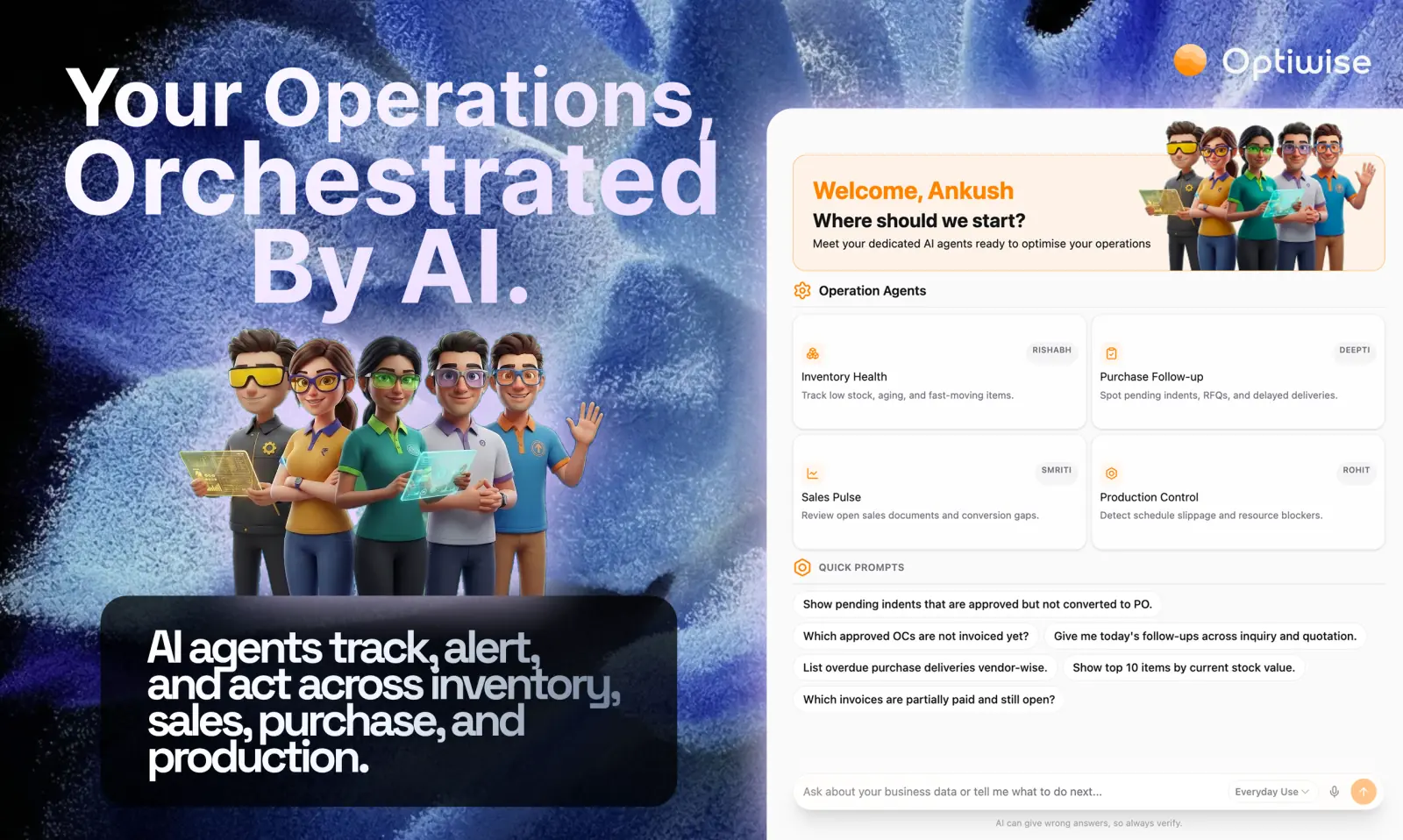
Concept illustration below; not a product screen or customer result.
Create linked records, forms, views and task rules in Optiwise without writing code. Keep your custom work connected to customers, items and factory operations.
We help you turn a separate operational register into a linked Optiwise module. For example, a tooling-request record can hold its request number, item reference, required date, drawing attachment and responsible person. Link the request to existing items and people instead of typing their names into another spreadsheet. Decide which fields belong on the request and which belong on each child line before building the form.
Our no-code tools provide relational fields, parent and child records, formulas, rollups and multiple views. Stores can work from the due-request list while a supervisor sees the requests assigned to their team. Configure role access and required fields around who creates, reviews and completes the work. A saved view changes how a user sees records; changing the shared form changes the form used by the team.
If a request has no matching item, resolve that item reference rather than creating another spelling of the same tool. The administrator maintains the relation and access rules; the requester supplies the drawing and required quantity. An event-condition-action rule can create a follow-up for the responsible person when the request changes state. Test that rule with a missing attachment and a reassigned owner so the next person receives useful work.
The result is a request with its linked item, status and accountable follow-up. Use that record to decide whether to issue an available tool, prepare a purchase requirement or ask for technical clarification. Our implementation costs ₹0. Subscription and any optional add-ons remain separate. Bring one existing register to a walkthrough and we will map its fields, references and next action.
Built by manufacturers, for manufacturers. Bring the material, machine or request behind your question. We will follow its inputs, action and resulting record.