
Should I Use AI for Quality Control or Maintenance First?
Decide whether your manufacturing business should begin AI adoption with quality control or maintenance based on data readiness, business impact, risk, and ROI.
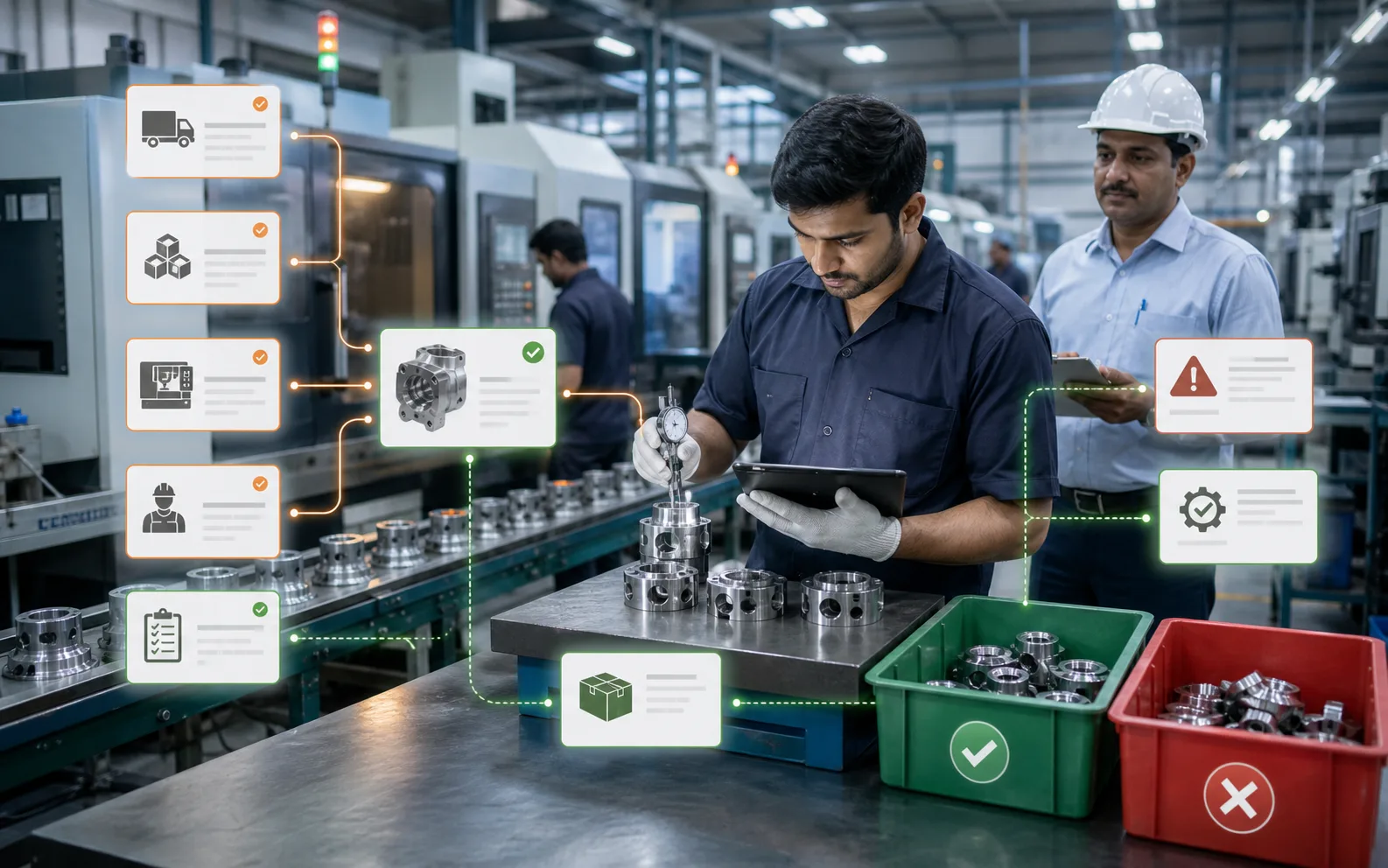
Should I Use AI for Quality Control or Maintenance First?
Both quality control and maintenance are strong AI use cases in manufacturing. The right starting point depends on where your factory loses more money, where your data is cleaner, and where your team can act on AI insights quickly.
There is no universal answer. A plant with frequent machine stoppages may benefit from maintenance first. A plant with repeated defects, rework, or customer complaints may benefit from quality control first. The best choice is the one where AI can improve a visible business problem without requiring too much complexity at the start.
When Quality Control Should Come First
Quality control is a strong starting point when your factory has recurring defects, high rework, customer complaints, batch rejection, or supplier-related issues.
AI can help identify defect patterns, compare rejection reasons, detect repeat problems, and summarize inspection trends. If quality data is already recorded in a structured way, AI can produce useful insights quickly.
Quality AI is especially valuable when small defects become expensive later in the process. Early detection prevents waste, delay, and reputation damage.
When Maintenance Should Come First
Maintenance should come first when downtime is a major cost. If critical machines stop production, delay customer orders, or consume expensive emergency repairs, predictive maintenance can deliver strong value.
AI can study downtime history, maintenance records, spare consumption, production load, and machine behavior to identify risk patterns. Even simple warning signals can help teams inspect earlier and plan downtime better.
Compare Data Readiness
The best use case is often the one with better data. If quality records are detailed but maintenance records are vague, start with quality. If machine downtime is well tracked but defect data is inconsistent, start with maintenance.
AI needs reasons, not just totals. “Rejected” is less useful than defect type, line, product, batch, supplier, and shift. “Machine stopped” is less useful than stoppage reason, duration, asset, spare used, and corrective action.
Compare Business Impact
Ask which problem hurts the business more right now. Does downtime block dispatch? Does poor quality create rework and customer escalation? Does maintenance cost keep rising? Does scrap affect margins?
The first AI project should be tied to a pain that leadership and teams already recognize.
Compare Actionability
AI insight matters only if someone can act. If the quality team can quickly investigate defect alerts, quality may be a good start. If maintenance can respond to risk alerts with inspection and spare planning, maintenance may be better.
Do not start where alerts will be ignored.
Where AICAN Optiwise Fits
AICAN Optiwise helps manufacturers connect production, quality, inventory, purchase, maintenance-related records, sales, finance, and reporting so AI use cases can be judged in business context.
AICAN supports practical AI adoption by helping manufacturers choose focused, measurable starting points. Learn more at About AICAN.
Founder’s Note
The right first AI use case is not the one that sounds most advanced. It is the one your factory can use, measure, and trust.
Quality and maintenance both matter. Start where the pain is clear, the data is usable, and the team is ready to act.
FAQ
Is quality control easier than predictive maintenance?
It can be easier if inspection data is already structured. Maintenance may be easier if downtime and machine history are better recorded.
Can a factory do both at once?
Yes, but smaller teams should usually start with one focused pilot before expanding.
Which gives faster ROI?
The faster ROI comes from the area with clearer pain, better data, and quicker action.
What if both data sets are poor?
Start by improving records for the highest-impact problem before implementing AI deeply.
Final Thought
Choose quality control first if defects are your biggest visible loss. Choose maintenance first if downtime is your biggest operational threat. The best AI starting point is the one that solves a real problem now.

Related Posts
How Sensors Help With Quality Control in Manufacturing
Explain quality-control sensors through measured property, tolerance, calibration evidence, sampling, false alerts and human disposition.
11 Jun 2026Read more →
Track Quality Issues in ERP: Inspection to Disposition
Follow an inspection issue through stock hold, approved rework or scrap, quantity reconciliation and corrective-action checks, with a 50-part example.
28 May 2026Read more →How Can IoT Improve My Quality Control Process?
Learn how IoT improves quality control by connecting inspection data, batch traceability, machine conditions, process parameters, and corrective action.
13 May 2026Read more →
Predictive Maintenance Software: A Growing Manufacturing Tech Career
Learn why predictive maintenance software is creating manufacturing tech careers in IoT, analytics, AI, machine data, and ERP-connected operations.
3 May 2026Read more →