
How Can IoT Improve My Quality Control Process?
Learn how IoT improves quality control by connecting inspection data, batch traceability, machine conditions, process parameters, and corrective action.

How Can IoT Improve My Quality Control Process?
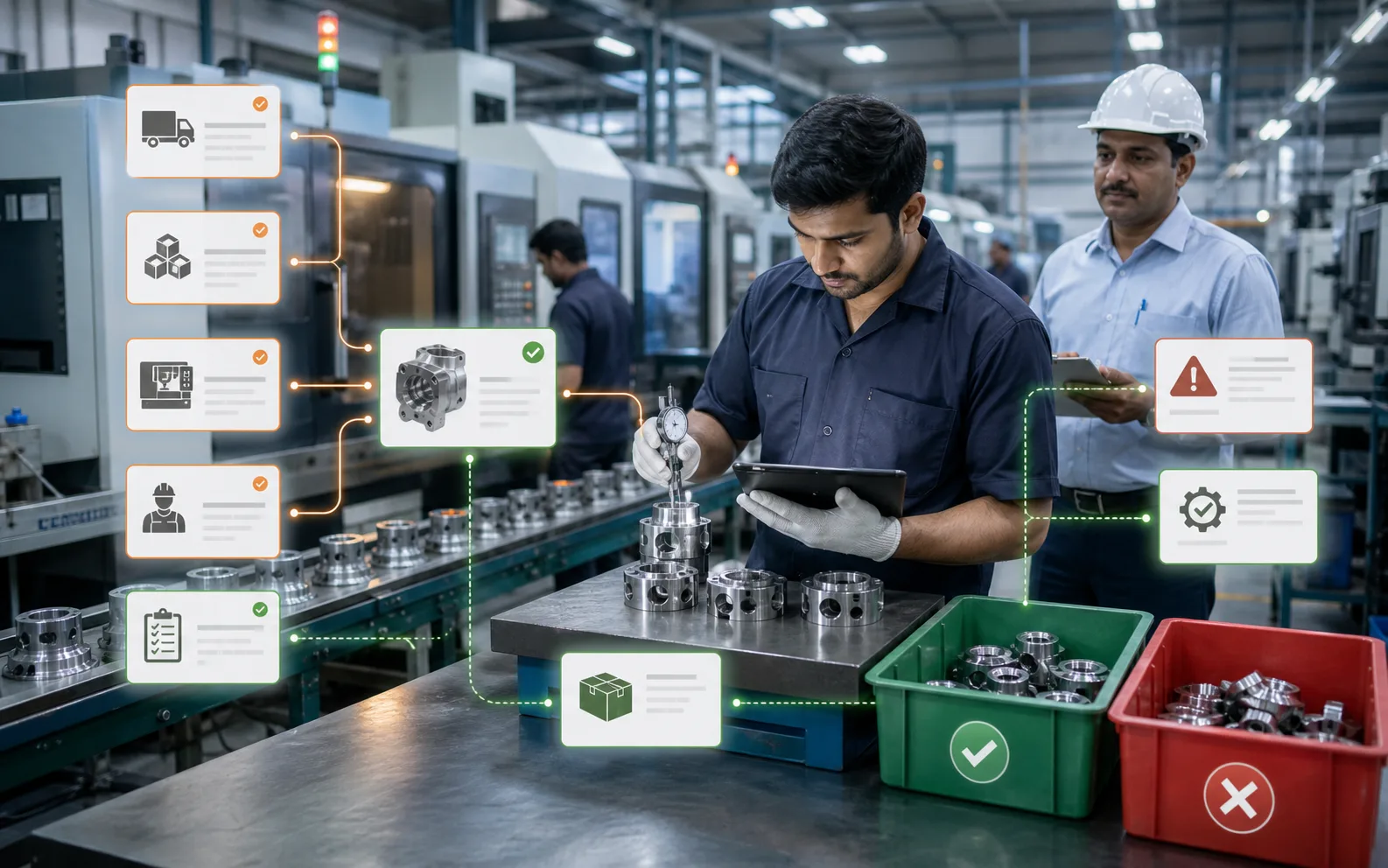
IoT improves quality control by connecting inspection results with the process conditions that created them. That connection is important because a defect is rarely just a defect. It has a machine, shift, operator, material lot, setting, temperature, pressure, tool condition, or timing behind it.
Traditional quality control often catches problems after they happen. IoT helps quality teams catch signals earlier, investigate faster, and prevent repeated defects.
The goal is not to replace quality judgment. The goal is to give quality teams better evidence.
Connect Quality Results With Production Context
A rejection report is useful, but it is incomplete if it stands alone.
A stronger quality record includes:
- product or item code
- batch or lot number
- machine used
- operator or shift
- material lot
- production order
- inspection result
- rejection reason
- process condition
- corrective action
When this context is connected, the quality team can see patterns that would otherwise remain hidden.
Capture Process Conditions During Production
Many quality issues are linked to process conditions. Depending on the industry, IoT may capture:
- temperature
- pressure
- humidity
- speed
- vibration
- torque
- current
- cycle time
- energy use
- flow rate
- machine setting changes
If defects increase when temperature crosses a range or cycle time changes, the team has a stronger starting point for investigation.
This is especially useful in processes where quality depends on consistency.
Improve Batch Traceability
Traceability matters when customers ask what happened, which batches are affected, and what corrective action was taken.
IoT and digital workflows can help connect:
- raw material lot
- production batch
- machine history
- process readings
- inspection results
- operator notes
- rework or scrap decision
- dispatch details
This reduces investigation time. Instead of searching registers and spreadsheets, teams can follow the batch trail.
Catch Quality Drift Earlier
Quality problems often begin as drift before becoming rejection.
A dimension may slowly move toward tolerance limit. A machine may gradually run hotter. A tool may wear. Pressure may vary. Cycle time may increase. Rejection may rise slowly across a shift.
IoT helps detect these trends earlier. The system can alert teams before the process moves fully out of control.
Early action may include tool inspection, setting correction, maintenance check, operator coaching, material review, or process adjustment.
Reduce Rework and Scrap
Rework and scrap reduce productivity, consume energy, waste material, and hurt delivery schedules.
IoT helps reduce rework by making root causes clearer. If the team can identify which machine, condition, shift, or material lot caused the issue, corrective action becomes more precise.
This also helps avoid overcorrection. Without data, teams may blame the wrong cause and make unnecessary changes.
Link Quality With Maintenance
Some quality issues are maintenance issues in disguise. Tool wear, vibration, heat, pressure instability, poor lubrication, misalignment, and inconsistent speed can affect output quality.
When quality data connects with machine condition data, maintenance and quality teams can work from the same evidence.
For example, if rejection increases along with vibration or temperature, maintenance has a clearer reason to inspect the asset.
Make Quality Reviews More Factual
Quality review meetings can become opinion-heavy when data is scattered. IoT makes reviews more factual.
A practical quality review can include:
- top rejection reasons
- rejection by machine
- rejection by product
- rejection by shift
- defect trend over time
- process readings during affected batches
- corrective action status
- repeat issue history
This helps the team focus on repeat losses rather than isolated complaints.
Where AICAN Optiwise Fits
AICAN Optiwise helps manufacturers connect quality control with production, inventory, purchase, sales, finance, and reporting. Quality problems affect the whole business, from material usage to customer commitments.
Optiwise supports connected manufacturing workflows so quality data does not remain isolated. You can explore AICAN and learn more on About AICAN.
FAQ
Can IoT prevent all quality defects?
No. IoT cannot prevent every defect, but it can help detect drift, identify patterns, and support faster corrective action.
What quality data should we collect first?
Start with inspection result, rejection reason, batch, product, machine, shift, material lot, and key process conditions.
Does IoT replace quality inspectors?
No. It supports inspectors by giving them better process history and traceability.
Is quality traceability useful for small manufacturers?
Yes. Even small manufacturers benefit when customer complaints can be investigated quickly and accurately.
Should quality data connect with ERP?
Yes, especially when quality affects inventory, production orders, dispatch, costing, or customer response.
Founder’s Note
At AICAN, we see quality as more than inspection. Quality is a connected operating outcome. Material, machines, people, process conditions, and planning all influence it.
When those signals come together, manufacturers can respond with evidence instead of guesswork.
Final Thought
IoT improves quality control by making the process behind the defect visible.
Better visibility leads to faster investigation, better corrective action, and fewer repeated mistakes.

Related Posts
How Sensors Help With Quality Control in Manufacturing
Explain quality-control sensors through measured property, tolerance, calibration evidence, sampling, false alerts and human disposition.
11 Jun 2026Read more →Track Quality Issues in ERP: Inspection to Disposition
Follow an inspection issue through stock hold, approved rework or scrap, quantity reconciliation and corrective-action checks, with a 50-part example.
28 May 2026Read more →
Predictive Maintenance Software: A Growing Manufacturing Tech Career
Learn why predictive maintenance software is creating manufacturing tech careers in IoT, analytics, AI, machine data, and ERP-connected operations.
3 May 2026Read more →AI Quality Inspection vs Human Inspection
Compare AI quality inspection and human inspection in manufacturing, including accuracy, consistency, judgement, cost, speed, and the best hybrid approach.
11 Apr 2026Read more →