
Benefits Of Erp System | Optiwise
Learn the practical benefits of an ERP system for SME manufacturers, including inventory control, production visibility, purchase planning, sales tracking, reporting, and better decisions.

Benefits of ERP System for SME Manufacturers
An ERP system becomes valuable when it reduces the daily confusion of running a business. For a manufacturer, that confusion usually comes from disconnected information: purchase has one file, stores has another, production has a whiteboard, sales has WhatsApp updates, finance has pending invoices, and the owner has to connect everything manually.
ERP brings these workflows into one system so teams can work from shared data.
AICAN Optiwise is built for SME manufacturers who need practical visibility across purchase, inventory, production, QC, sales, dispatch, and reporting.
What Is an ERP System?
ERP stands for Enterprise Resource Planning. An ERP system helps a business manage core processes such as purchase, inventory, production, sales, finance-related workflows, approvals, and reporting.
For manufacturers, ERP should not be limited to accounting. It should connect the factory and the office.
Benefit 1: Better Inventory Control
Inventory is one of the biggest areas where ERP helps. It gives visibility into stock quantity, location, value, movement, reorder levels, slow-moving items, and stock under QC.
Without ERP, stock data often depends on manual updates and delayed reconciliation.
With ERP discipline, owners can see what is available, what is reserved, what is pending, and what needs action.
Benefit 2: Improved Purchase Planning
ERP connects purchase requirements with stock levels, production needs, supplier orders, and approvals. This helps purchase teams avoid both overbuying and last-minute panic buying.
A good ERP can show pending purchase orders, supplier delays, expected receipts, and material shortages.
Benefit 3: Production Visibility
Manufacturing ERP helps teams track work orders, BOM, material issue, production output, WIP, rejection, rework, and QC status.
This reduces the need for constant follow-up calls. Management can see what is planned, what is running, what is delayed, and what is completed.
Benefit 4: Better Sales Order Fulfilment
Sales promises should be backed by inventory and production visibility. ERP helps sales teams understand available stock, pending production, dispatch status, and customer order ageing.
This improves customer communication and reduces overpromising.
Benefit 5: Faster Reporting
Manual reporting wastes time and still creates doubt. ERP reports are generated from system transactions, which makes them faster and more consistent.
Owners can review dashboards, pending approvals, stock reports, purchase delays, production progress, and dispatch status without waiting for every department.
Benefit 6: Reduced Duplicate Work
When departments work in separate files, the same data is entered multiple times. ERP reduces duplication by connecting workflows. A sales order can inform production. A purchase receipt can update inventory. A dispatch can connect with invoicing workflows.
This saves time and reduces errors.
Benefit 7: Better Accountability
ERP creates a transaction trail. It shows who created a document, who approved it, when material moved, which order is pending, and where delays are happening.
This does not mean ERP should be used to blame people. It should be used to create clarity and ownership.
Benefit 8: Scalable Operations
As SMEs grow, informal coordination becomes harder. ERP helps standardize processes so the business does not depend only on a few people’s memory.
This is important when adding products, users, branches, warehouses, or production lines.
ERP Benefits Depend on Implementation
ERP does not create discipline automatically. The business must clean master data, define workflows, train users, and review reports regularly.
A poorly implemented ERP can become another data entry burden. A well-implemented ERP becomes the operating backbone of the business.
How Optiwise Helps
Optiwise by AICAN helps SME manufacturers connect purchase, inventory, production, QC, sales, dispatch, and reporting. It is designed around practical manufacturing operations rather than only back-office record keeping.
The aim is to help owners see the business clearly and help teams act faster.
Founder’s Note
At AICAN, we believe ERP should remove confusion from daily work. SMEs do not need software that looks impressive but stays unused. They need a system that connects real workflows and helps people make better decisions. Optiwise is built with that belief.
FAQs
What are the main benefits of an ERP system?
ERP improves inventory control, purchase planning, production visibility, sales order tracking, reporting, and accountability.
Is ERP useful for small manufacturers?
Yes, especially when the business has growing stock, production, purchase, and sales coordination challenges.
Does ERP replace people?
No. ERP supports people with better data, workflow control, and reporting.
Why do ERP implementations fail?
Common reasons include poor master data, unclear workflows, weak training, and lack of management review.
Where can I learn more?
Visit AICAN Optiwise and About AICAN.

Related Posts
Kanban System | Optiwise
Learn how a Kanban system works in manufacturing, where it helps, where it fails, and how Optiwise connects Kanban signals with inventory, purchase, and production planning.
12 Jun 2026Read more →Erp In Operations Management | Optiwise
Learn how ERP improves operations management by connecting planning, inventory, purchase, production, quality, dispatch, finance, and reporting.
12 Jun 2026Read more →ERP for FMCG Companies in India
A practical guide to ERP for FMCG companies in India, covering distributor orders, batch tracking, expiry, inventory, production, schemes, costing, and reporting.
11 Jun 2026Read more →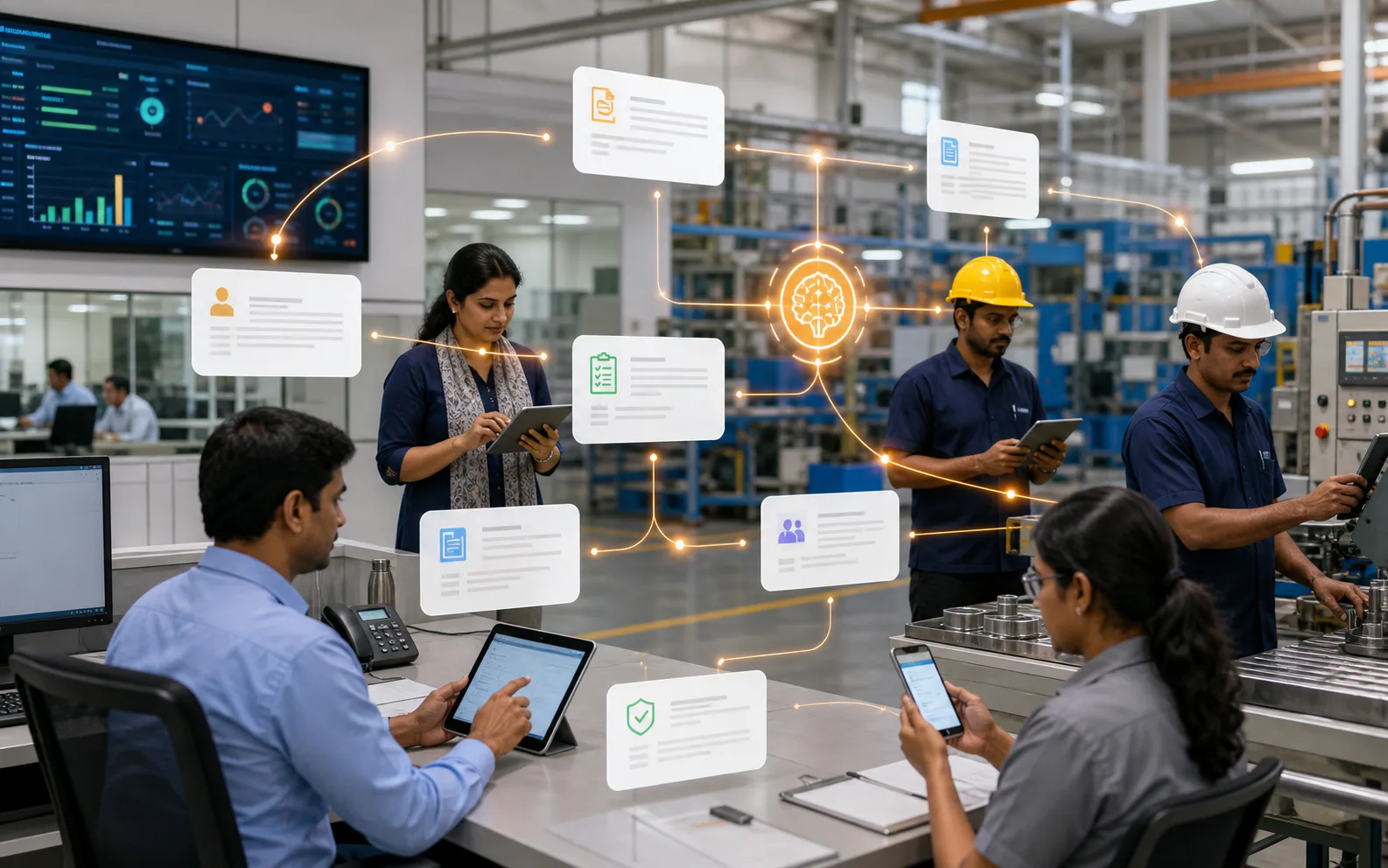
Optiwise, Odoo, Acumatica and Business Central for Manufacturing
Compare manufacturing workflows in Optiwise, Odoo, Acumatica and Dynamics 365 Business Central. See what your factory can run in Optiwise.
11 Jun 2026Read more →