
Best IoT Platform for Factories
Learn what factories should look for in an IoT platform, including machine connectivity, downtime tracking, alerts, dashboards, ERP integration, security, and AI readiness.

Best IoT Platform for Factories
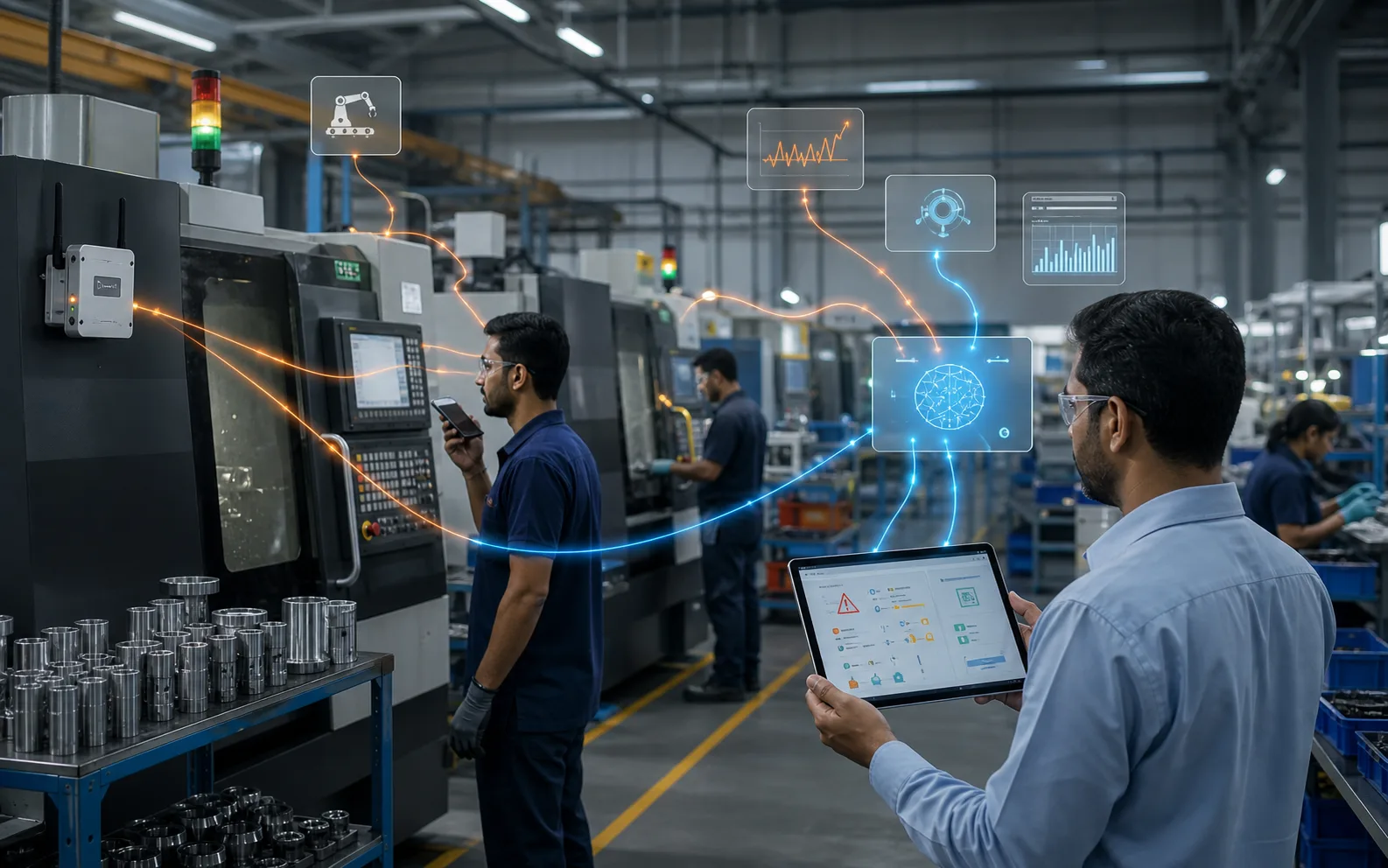
The best IoT platform for factories should connect machines, sensors, operators, and business systems so teams can monitor production in real time. It should help track machine status, downtime, utilization, alarms, energy, maintenance signals, and OEE.
But IoT should not be isolated from ERP. Machine data becomes more valuable when it connects to work orders, inventory, production plans, maintenance, dispatch, and finance.
A good IoT platform turns machine signals into operational decisions.
Machine Connectivity
The platform should support different machine types, controllers, sensors, and data collection methods. Some factories have modern machines; others have older equipment.
A practical platform should allow phased connectivity.
Real-Time Dashboards
Dashboards should show machine status, running, idle, stopped, alarm, setup, and maintenance states.
Supervisors need a clear view during the shift.
Downtime and Utilization Tracking
The platform should track run time, idle time, downtime, reason codes, and utilization.
Downtime without reasons is not enough for improvement.
Alerts and Escalations
Alerts should notify teams when machines stop unexpectedly, remain idle too long, exceed thresholds, or show abnormal behavior.
Alerts should have owners and escalation paths.
ERP Integration
IoT data should connect with ERP work orders, production plans, inventory, maintenance, and reports.
This turns machine data into business context.
Security and Reliability
Factory IoT systems should protect data, manage access, and operate reliably. Security matters because machine and production data is business-sensitive.
Where AICAN Optiwise Fits
AICAN Optiwise helps manufacturers connect machine and shopfloor visibility with ERP workflows across production, inventory, purchase, sales, finance, and reporting.
AICAN supports AI-ready factory operations where IoT data can improve decisions. Learn more at About AICAN.
Founder’s Note
IoT is useful when it helps people act. A dashboard full of signals is not enough.
The best platform tells the factory what changed, why it matters, and who should respond.
FAQ
What is a factory IoT platform?
It is software and connectivity infrastructure that captures machine and sensor data for monitoring, alerts, and analysis.
What should an IoT platform track?
Machine status, run time, idle time, downtime, alarms, utilization, energy, and maintenance signals.
Why integrate IoT with ERP?
ERP integration links machine data to work orders, production plans, inventory, maintenance, and business impact.
Is IoT only for large factories?
No. Small factories can start with critical machines and expand gradually.
Final Thought
The best IoT platform for factories connects machine data with action. Choose a system that supports visibility, alerts, ERP integration, and future AI readiness.

Related Posts
Is AI Worth the Investment for My Factory?
Learn how to decide if AI is worth the investment for your factory by evaluating use cases, data readiness, costs, risks, ROI, and operational impact.
13 Jun 2026Read more →Manufacturing AI Mistakes to Avoid Before You Start
List manufacturing AI mistakes and controls for unclear use case, messy data, unsafe automation, no owner, weak security and unreviewed recommendations.
13 Jun 2026Read more →What's the Difference Between AI and Regular Automation?
Understand the difference between AI and regular automation in manufacturing, with practical examples for workflows, decisions, alerts, and predictive operations.
13 Jun 2026Read more →What Are the Risks of Using AI in Manufacturing?
Understand the risks of AI in manufacturing, including bad data, wrong recommendations, safety issues, security, job fear, over-automation, and implementation failure.
13 Jun 2026Read more →