
Can AI Help with Safety in Manufacturing?
Learn how AI supports manufacturing safety through incident analysis, risk alerts, training, PPE monitoring, maintenance insights, and compliance documentation.
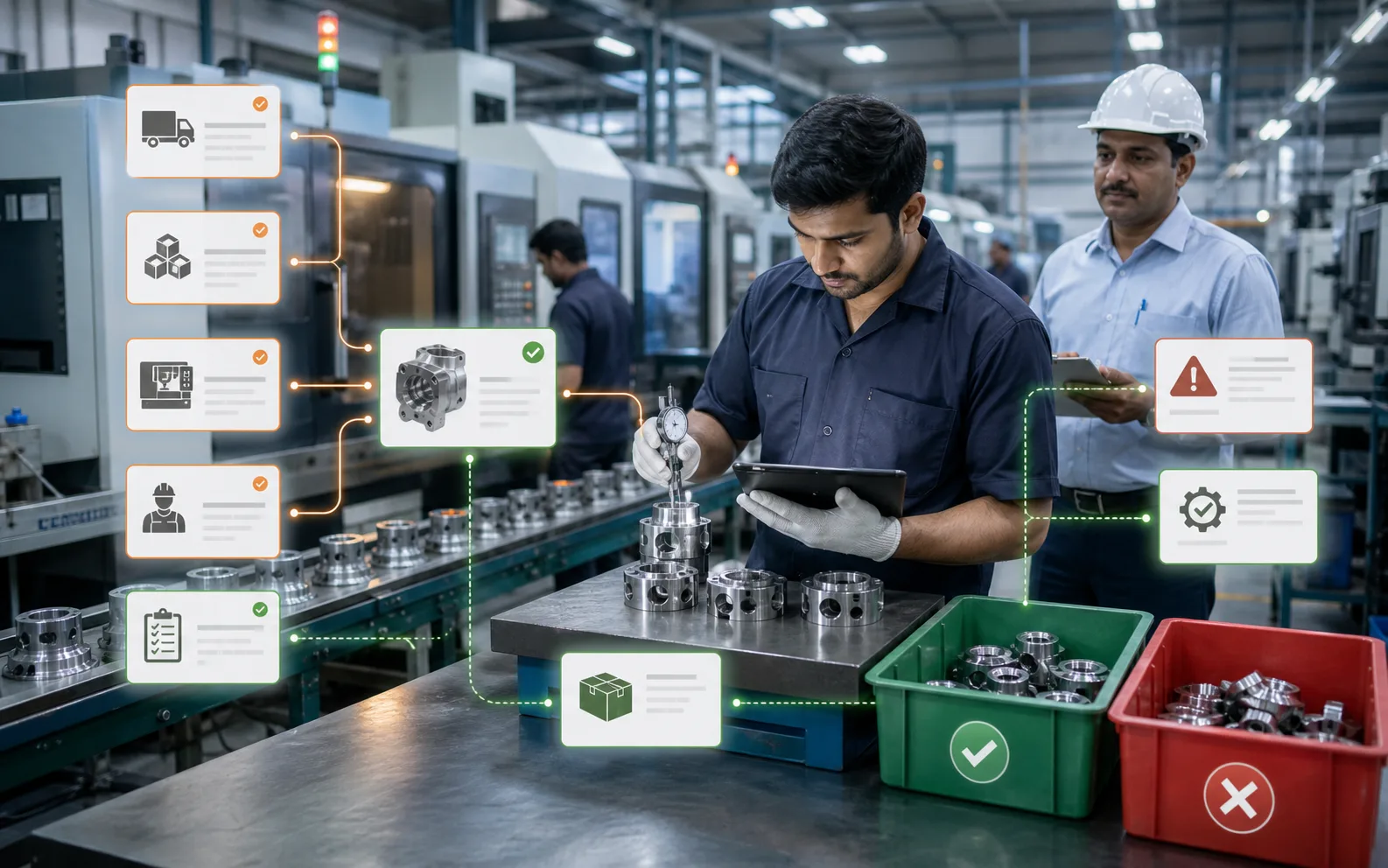
Can AI Help with Safety in Manufacturing?
AI can help with safety in manufacturing by identifying risk patterns, improving training, summarizing incidents, and supporting faster corrective action. It does not replace safety leadership, supervision, or compliance discipline.
In safety, AI should be treated as a support system. Human responsibility remains essential.
Safety Starts with Better Visibility
Many safety issues are not invisible. They are simply not reviewed properly.
A factory may record near misses, minor incidents, maintenance risks, PPE violations, unsafe conditions, and training gaps. But if those records are scattered or reviewed only during audits, the factory loses the chance to act early.
AI can help summarize and group safety information so leaders see patterns faster.
AI Can Analyze Incident Reports
AI can review incident and near-miss reports to identify repeated causes.
For example, it may show that incidents are concentrated around:
- A specific machine
- A shift
- A work area
- A material handling step
- A maintenance activity
- A training gap
- A repeated unsafe behavior
This helps safety teams focus on prevention instead of only documentation.
AI Can Improve Safety Training
AI can help create:
- Safety SOPs
- Toolbox talk notes
- Role-based safety checklists
- Refresher quizzes
- Incident-based learning material
- Work instructions
- Visual inspection checklists
This is useful because safety training often becomes generic. AI can help make it more specific to the factory’s actual risks.
AI Can Support PPE Monitoring
In some factories, computer vision can monitor PPE usage such as helmets, gloves, safety glasses, masks, or restricted-area compliance.
This can be useful, but it must be implemented carefully. Workers should know how monitoring is used, what data is stored, and how privacy is handled.
PPE AI should support safety culture, not create fear.
AI Can Connect Maintenance and Safety
Machine health and safety are connected. A machine with abnormal vibration, overheating, repeated stoppages, or poor guarding can create safety risk.
AI can help connect maintenance signals with safety reviews.
For example, if a machine repeatedly overheats, the issue may not only be a downtime risk. It may also be a safety risk for operators.
AI Can Help with Compliance Documentation
Safety audits often require documents, training records, corrective actions, inspection logs, and incident summaries. AI can help organize and draft these documents faster.
However, audit-critical information must always be reviewed by responsible people.
What AI Should Not Do in Safety
AI should not make high-risk safety decisions without human oversight. It should not be used to punish workers without context. It should not replace supervisors walking the floor.
Safety improves when AI supports a culture of prevention, not when it becomes a hidden surveillance tool.
Data Needed for Safety AI
Useful data includes:
- Incident reports
- Near-miss records
- Safety observations
- Training logs
- Maintenance alerts
- Machine downtime
- PPE records
- Inspection checklists
- Corrective actions
- Audit findings
The more structured the data, the more useful AI becomes.
Where AICAN Optiwise Fits
AICAN Optiwise helps manufacturers connect shopfloor workflows, production, maintenance signals, quality, documentation, and management visibility. This matters because safety risk is often connected to operations.
A rushed production schedule, poor maintenance, unclear work instructions, or delayed corrective action can all affect safety. AI inside connected workflows can help teams see risk earlier.
Learn more at AICAN Optiwise and About AICAN.
Founder’s Note
AICAN’s view is that safety is not a separate checklist at the end of operations. It is part of how a factory runs every day.
Optiwise is built around connected factory visibility because better visibility supports better control. AI can help safety teams find patterns, but leadership and shopfloor discipline turn those patterns into safer work.
FAQ
Can AI prevent all safety incidents?
No. AI can help identify risk and improve response, but it cannot replace safety systems, training, supervision, and leadership.
Can AI monitor PPE?
Yes, with computer vision, but it requires careful implementation, clear policy, and respect for privacy.
What is the easiest safety AI use case?
Incident summaries, safety training content, corrective action tracking, and near-miss analysis are practical starting points.
Should AI safety alerts be automatic?
Alerts can be automatic, but high-risk actions should be reviewed by responsible people.
Can small manufacturers use AI for safety?
Yes. They can start with safety documentation, training, incident analysis, and maintenance-risk summaries.
Final Thought
AI helps manufacturing safety when it makes risks visible earlier and helps teams learn from incidents faster. It should support human responsibility, not replace it.
Next step: Explore AICAN Optiwise if your factory wants safety, production, maintenance, and workflow visibility connected in one operating system.

Related Posts
Is AI Worth the Investment for My Factory?
Learn how to decide if AI is worth the investment for your factory by evaluating use cases, data readiness, costs, risks, ROI, and operational impact.
13 Jun 2026Read more →Manufacturing AI Mistakes to Avoid Before You Start
List manufacturing AI mistakes and controls for unclear use case, messy data, unsafe automation, no owner, weak security and unreviewed recommendations.
13 Jun 2026Read more →What's the Difference Between AI and Regular Automation?
Understand the difference between AI and regular automation in manufacturing, with practical examples for workflows, decisions, alerts, and predictive operations.
13 Jun 2026Read more →What Are the Risks of Using AI in Manufacturing?
Understand the risks of AI in manufacturing, including bad data, wrong recommendations, safety issues, security, job fear, over-automation, and implementation failure.
13 Jun 2026Read more →