
Can AI Help Me Reduce Manufacturing Labor Costs?
Learn how AI can reduce manufacturing labor costs through productivity gains, less manual coordination, better scheduling, fewer errors, and smarter workforce use.
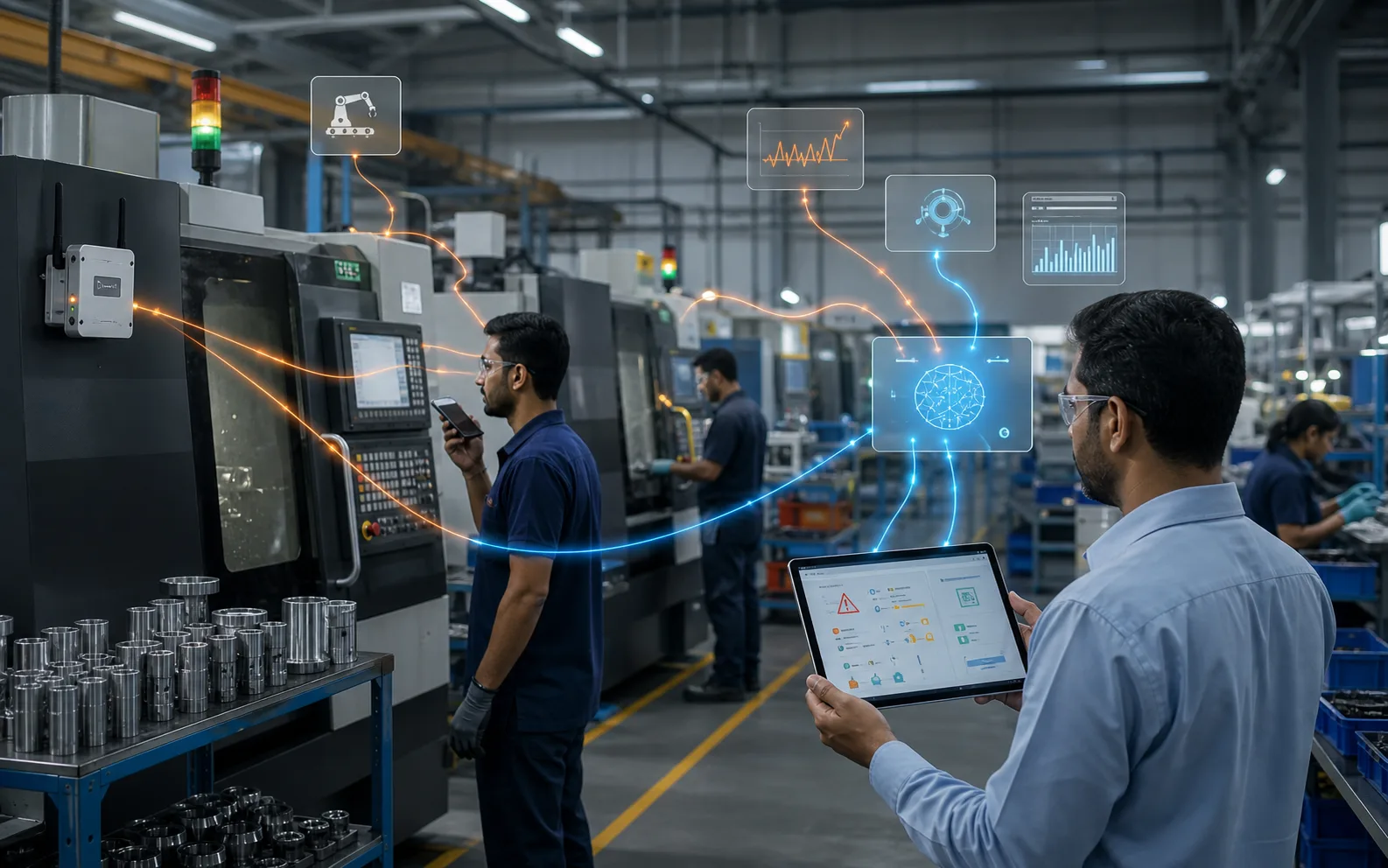
Can AI Help Me Reduce Manufacturing Labor Costs?
AI can help reduce manufacturing labor costs, but the most sustainable savings usually come from productivity improvement rather than simply reducing headcount. In many factories, people spend too much time chasing updates, entering duplicate data, correcting mistakes, preparing reports, and reacting to avoidable delays. AI helps by reducing this wasteful work.
Artificial intelligence in manufacturing should be viewed as a way to get more output and better control from the same team. It can help supervisors manage priorities, planners avoid chaos, store teams reduce manual checking, purchase teams follow up faster, and managers focus on exceptions instead of routine reporting.
The result is not always fewer people. Often, it is fewer wasted hours.
Where Labor Cost Gets Hidden
Labor cost is not only wages. It includes overtime caused by poor planning, idle time caused by material shortages, rework caused by defects, repeated follow-ups, and the owner’s time spent solving problems that should have been visible earlier.
If a supervisor spends half the day asking for updates, that is labor cost. If workers wait because material is not ready, that is labor cost. If quality rework consumes skilled operators, that is labor cost.
AI reduces cost by attacking these hidden inefficiencies.
AI Reduces Manual Coordination
Connected AI-ready systems can automatically highlight production delays, stock risks, pending purchase actions, quality exceptions, and dispatch risk. This reduces the need for repeated calls, WhatsApp follow-ups, and manual status meetings.
Teams still coordinate, but they coordinate around visible facts instead of incomplete information.
AI Improves Scheduling and Workforce Utilization
Poor schedules create overtime and idle time. AI can help match order priorities, material readiness, machine capacity, and manpower availability. This helps factories use available labor more effectively.
When workers are assigned to the right job at the right time, output improves without simply adding more people.
AI Reduces Rework and Error Handling
Every defect creates labor cost. Someone must inspect, sort, repair, reprocess, report, and explain. AI-supported quality analytics can help reduce repeat defects and identify risk earlier.
Fewer errors mean labor is spent on production rather than correction.
Use AI Responsibly With Workers
If AI is introduced only as a cost-cutting weapon, workers will resist. If it is introduced as a way to reduce confusion, improve planning, and help teams work better, adoption improves.
Labor cost reduction should come from better systems, not fear.
Where AICAN Optiwise Fits
AICAN Optiwise connects production, inventory, purchase, sales, finance, reporting, IoT readiness, and AI workflows so manufacturers can reduce manual coordination and improve team productivity. With clearer visibility, teams spend less time chasing information and more time acting on the right priorities.
Explore aican.co.in and About AICAN to understand AICAN’s manufacturing-first approach.
Founder’s Note
AICAN’s founder-led belief is that labor savings should come from making work cleaner, not making people feel disposable. Good manufacturing technology should help teams use their skill better and reduce the burden of repetitive coordination.
The strongest factories are not only leaner. They are clearer.
FAQ
Can AI reduce labor costs without layoffs?
Yes. AI can reduce overtime, manual follow-ups, idle time, rework, and reporting effort, improving productivity without necessarily reducing headcount.
Which labor costs does AI reduce first?
Manual coordination, duplicate data entry, status chasing, rework handling, and time lost due to poor planning are common early areas.
Will workers resist AI cost reduction?
They may resist if AI feels threatening. Clear communication, training, and practical benefits reduce resistance.
How should savings be measured?
Track overtime, output per worker, rework hours, reporting time, idle time, and supervisor coordination time before and after implementation.
Final Thought
AI reduces labor cost best when it removes wasted effort. The goal is a factory where people spend less time chasing, correcting, and waiting, and more time producing value.
Next step: Explore AICAN Optiwise to see how connected workflows can improve workforce productivity in your factory.

Related Posts
Is AI Worth the Investment for My Factory?
Learn how to decide if AI is worth the investment for your factory by evaluating use cases, data readiness, costs, risks, ROI, and operational impact.
13 Jun 2026Read more →Manufacturing AI Mistakes to Avoid Before You Start
List manufacturing AI mistakes and controls for unclear use case, messy data, unsafe automation, no owner, weak security and unreviewed recommendations.
13 Jun 2026Read more →What's the Difference Between AI and Regular Automation?
Understand the difference between AI and regular automation in manufacturing, with practical examples for workflows, decisions, alerts, and predictive operations.
13 Jun 2026Read more →What Are the Risks of Using AI in Manufacturing?
Understand the risks of AI in manufacturing, including bad data, wrong recommendations, safety issues, security, job fear, over-automation, and implementation failure.
13 Jun 2026Read more →