
How Can Computer Vision Fix Quality Control Problems in My Factory?
Learn how computer vision can improve manufacturing quality control by detecting defects earlier, standardizing inspection, and connecting visual checks to factory workflows.
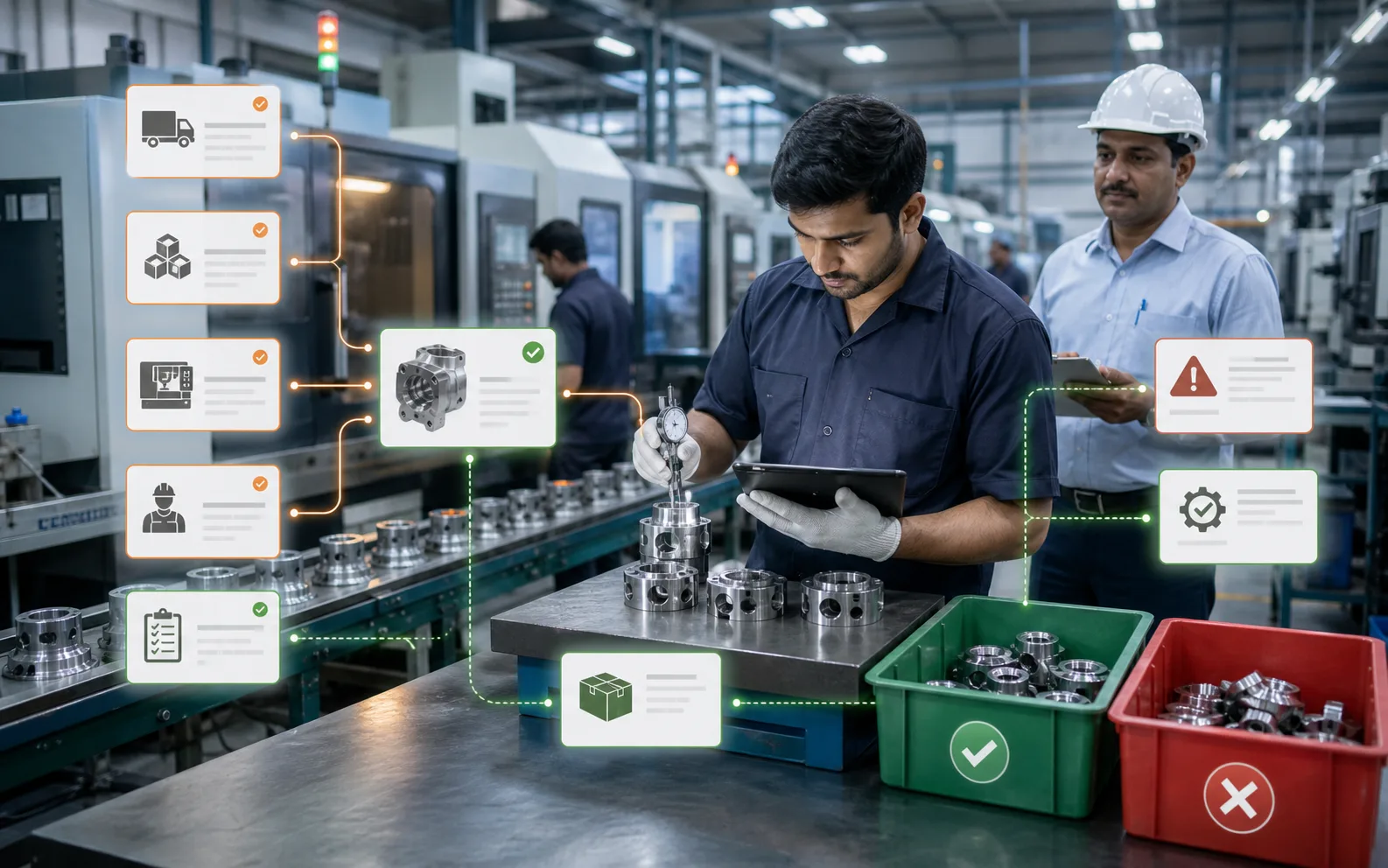
How Can Computer Vision Fix Quality Control Problems in My Factory?
Computer vision can help quality control by making visual inspection more consistent, faster, and easier to track.
In many factories, quality issues are found late. A scratch, missing label, wrong alignment, colour mismatch, surface defect, incomplete assembly, or packaging error may pass through several steps before someone notices. By then, the cost of correction is higher and the argument about root cause becomes harder.
Computer vision uses cameras, lighting, image processing, and decision logic to inspect products during production. It does not remove the need for quality people. It gives them better visibility and earlier evidence.
For manufacturers evaluating AICAN Optiwise, the value of computer vision is strongest when inspection results connect to production, rejection, downtime, and improvement workflows.
Quality problems often start before final inspection
Final inspection catches defects after value has already been added.
If a defect started at an earlier station, the factory may have already spent material, labour, machine time, packing effort, and dispatch planning before the issue is detected. This creates rework, scrap, delivery pressure, and finger-pointing between departments.
Computer vision helps move detection closer to the point where the defect occurs.
For example, a camera can check whether a label is present immediately after labelling, whether a cap is seated after assembly, or whether a surface defect appears before packaging. Earlier detection reduces the number of bad pieces moving forward.
Vision systems standardize inspection criteria
Human inspection can vary.
One inspector may be stricter than another. Fatigue affects attention. Lighting changes. Speed pressure increases during dispatch. Some defects are obvious; others are subtle. This does not mean human inspectors are careless. It means visual inspection is demanding work.
Computer vision can apply the same inspection rule repeatedly when the visual condition is well defined. It can check presence, absence, position, dimension, colour, code readability, surface marks, fill level, or assembly completeness.
The system must still be tuned carefully. A bad rule can create false rejects or missed defects. But once validated, the rule is consistent.
Lighting is as important as the camera
Many vision projects fail because lighting is treated casually.
A camera can only inspect what it can see. Reflections, shadows, dust, transparent materials, shiny surfaces, colour variation, and moving parts can all affect image quality. Good lighting design often matters more than buying an expensive camera.
Factories should test the vision setup under real production conditions: normal speed, normal operators, normal material variation, and normal environmental changes.
Computer vision can reduce missed defects
Vision systems are useful for repetitive checks where the inspection condition can be defined clearly.
Examples include missing components, wrong orientation, label placement, print defects, broken edges, colour mismatch, contamination, surface scratches, assembly gaps, fill level, and packaging errors.
A system can check every part without getting tired. That can reduce missed defects, especially on fast lines or repetitive visual tasks.
However, computer vision is not automatically better for every defect. Some defects require touch, judgement, context, or destructive testing. The right inspection method depends on the defect type.
Vision inspection creates useful records
Manual inspection often produces limited traceability.
A vision system can record images, timestamps, defect types, rejection counts, line information, and inspection history. This helps quality teams investigate patterns. They can see whether defects increased after a machine change, material batch, shift change, tool wear, or process adjustment.
Quality control improves when inspection data becomes part of the factory’s learning system.
False rejects must be managed
A vision system that rejects too many good products creates frustration.
False rejects slow production, increase rework, and damage trust in the system. False accepts are also dangerous because defects pass through. The goal is a balanced, validated inspection rule.
During setup, teams should review rejected images, classify error types, adjust thresholds, and define escalation rules. Operators should understand when to accept, recheck, or escalate a result.
Computer vision should connect to production action
Inspection data should not sit alone.
If defects rise, the system should help production and quality teams act. The dashboard should show defect trend, location, product, machine, time, and possible related events. Maintenance may need to check a fixture. Production may need to adjust a station. Quality may need to hold a batch.
AICAN Optiwise can help connect quality signals with production visibility and decision workflows.
Start with one defect type
The best first computer vision project is focused.
Pick one defect or inspection problem that is frequent, costly, visible, and clearly definable. Validate whether a camera can see it reliably. Test lighting. Define accept and reject criteria. Run a pilot. Review false rejects and missed defects.
Once one inspection works, expand carefully.
Where AICAN Optiwise fits
AICAN Optiwise helps manufacturers connect quality, production, and operational data so computer vision results can become actionable. Instead of treating vision as an isolated inspection machine, Optiwise can support dashboards, alerts, and review routines.
AICAN builds for manufacturers that want practical digital systems grounded in factory reality. Learn more at About AICAN.
Founder’s Note
Quality control improves when defects are seen early and discussed with evidence. Computer vision is valuable because it can give the factory that evidence repeatedly, without fatigue. But the real improvement happens when quality, production, and maintenance teams use the evidence together.
FAQs
Can computer vision detect all defects?
No. It works best for defects that can be seen clearly and defined consistently.
Does computer vision replace quality inspectors?
Not usually. It supports inspectors by handling repetitive visual checks and providing records for review.
What is the first step in a vision quality project?
Choose one specific defect, collect real samples, test camera and lighting, and validate detection accuracy.
Why do vision systems create false rejects?
Poor lighting, wrong thresholds, product variation, camera position, dust, and unclear defect definitions can cause false rejects.
How does AICAN Optiwise help quality control?
It can connect inspection signals with dashboards, alerts, and production context so quality issues are easier to act on.

Related Posts
How Sensors Help With Quality Control in Manufacturing
Explain quality-control sensors through measured property, tolerance, calibration evidence, sampling, false alerts and human disposition.
11 Jun 2026Read more →
Track Quality Issues in ERP: Inspection to Disposition
Follow an inspection issue through stock hold, approved rework or scrap, quantity reconciliation and corrective-action checks, with a 50-part example.
28 May 2026Read more →How Can IoT Improve My Quality Control Process?
Learn how IoT improves quality control by connecting inspection data, batch traceability, machine conditions, process parameters, and corrective action.
13 May 2026Read more →
Predictive Maintenance Software: A Growing Manufacturing Tech Career
Learn why predictive maintenance software is creating manufacturing tech careers in IoT, analytics, AI, machine data, and ERP-connected operations.
3 May 2026Read more →