
Do I Need to Hire IT People to Run Our ERP?
A practical guide for manufacturers evaluating whether they need internal IT staff to run ERP, cloud ERP support, user administration, data ownership, and vendor support.
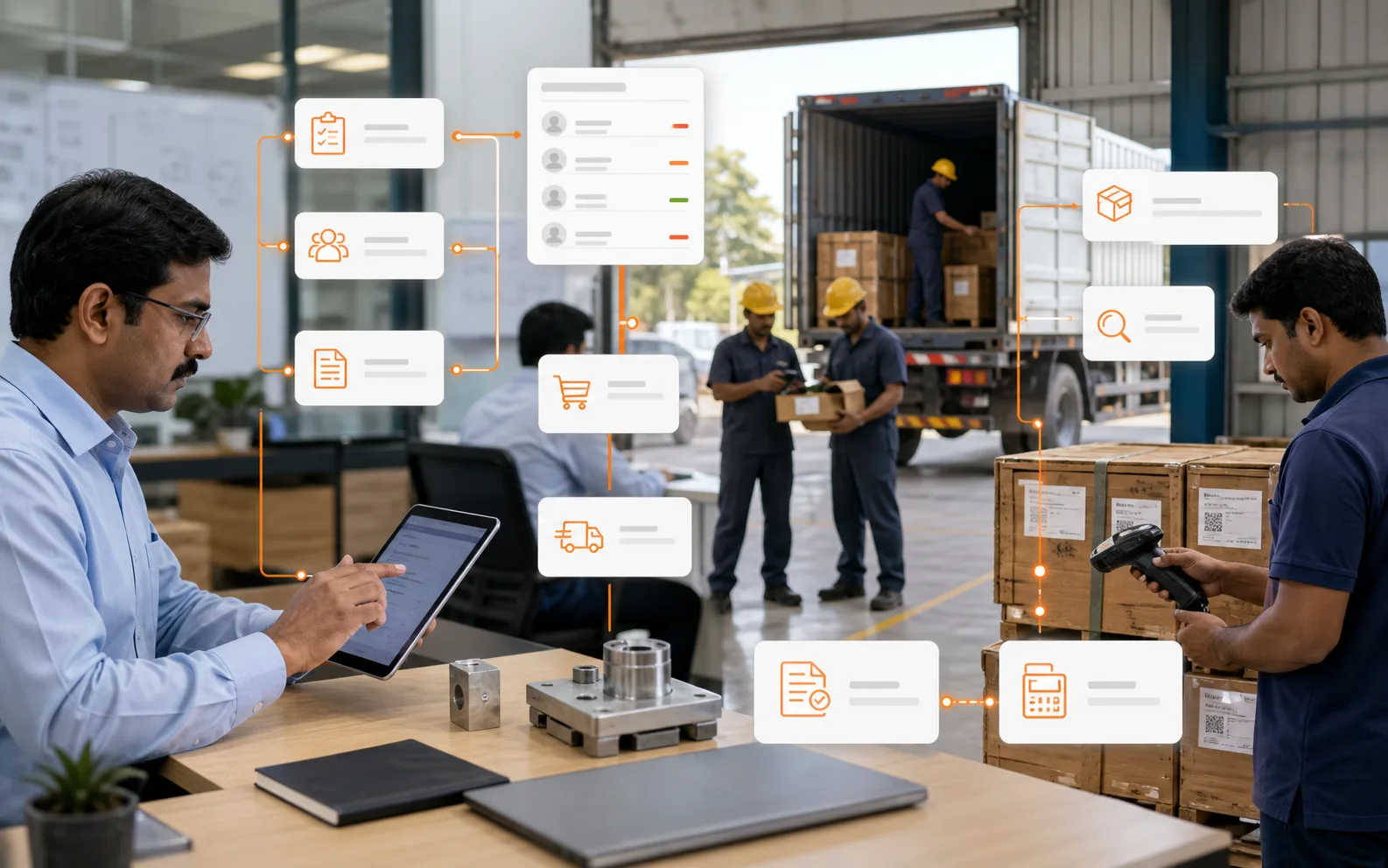
Do I Need to Hire IT People to Run Our ERP?
Introduction
Many small manufacturers worry that ERP will require an IT department.
That fear is understandable.
Older ERP systems often needed servers, local maintenance, technical administration, backups, upgrades, and dedicated IT support.
Modern cloud ERP is different.
Most small and mid-sized manufacturers do not need a full internal IT team just to run ERP.
But they do need internal ownership.
That distinction matters.
IT Support vs ERP Ownership
Cloud ERP reduces technical burden.
The vendor usually handles hosting, updates, security, backups, and platform maintenance.
But the business still needs someone responsible for users, roles, data quality, workflow discipline, and issue coordination.
This person does not have to be a programmer.
They need to understand the business and ensure the system is used correctly.
For example, someone must manage new users, permission changes, item data updates, report requests, and process questions.
That is operational administration, not traditional IT.
When IT Skills Become Useful
IT support may be useful when the business needs advanced integrations, custom reports, device connections, API workflows, data migration, or network support for shopfloor devices.
If the ERP includes IoT, barcode devices, QR workflows, or integrations with accounting and other platforms, technical coordination becomes more important.
AICAN Optiwise is cloud-based and built for manufacturers with ERP, AI agents, IoT, mobile workflows, and integrations. Vendor support can reduce the need for in-house technical staff, especially for MSMEs.
But every business should still appoint an internal ERP owner.
A Real Manufacturing Scenario
A small factory delayed ERP because the owner believed they needed to hire IT staff first.
After choosing a cloud ERP, they appointed an operations coordinator as the internal ERP owner.
The vendor handled technical support. The internal owner handled users, data discipline, and department follow-ups.
The system ran successfully without a dedicated IT department.
The key was not hiring IT.
The key was assigning ownership.
Frequently Asked Questions
Do I need IT staff for cloud ERP?
Usually not for basic operation. The vendor handles most technical infrastructure, but internal ownership is still needed.
Who should own ERP internally?
An operations-aware person with authority, discipline, and cross-department understanding is often ideal.
When do manufacturers need IT support?
For integrations, IoT devices, network setup, custom reports, API work, or advanced data projects.
Can ERP run without technical users?
Yes, if the ERP is cloud-based, vendor-supported, and designed for business users.
Conclusion
You may not need to hire IT people to run ERP.
But you do need someone inside the business who owns the system operationally.
Cloud ERP reduces technical complexity. Internal ownership creates adoption.
A Final Thought
ERP does not need to become an IT burden.
But it cannot be ownerless.
Someone must care about data, users, workflows, and daily usage.
Manufacturers looking for cloud ERP with support can explore AICAN Optiwise at aican.co.in.
— Vedant Awasthi

Related Posts

Kanban System | Optiwise
Learn how a Kanban system works in manufacturing, where it helps, where it fails, and how Optiwise connects Kanban signals with inventory, purchase, and production planning.
12 Jun 2026Read more →Erp In Operations Management | Optiwise
Learn how ERP improves operations management by connecting planning, inventory, purchase, production, quality, dispatch, finance, and reporting.
12 Jun 2026Read more →ERP for FMCG Companies in India
A practical guide to ERP for FMCG companies in India, covering distributor orders, batch tracking, expiry, inventory, production, schemes, costing, and reporting.
11 Jun 2026Read more →
Optiwise, Odoo, Acumatica and Business Central for Manufacturing
Compare manufacturing workflows in Optiwise, Odoo, Acumatica and Dynamics 365 Business Central. See what your factory can run in Optiwise.
11 Jun 2026Read more →