
Do It Right The First Time Drift | Optiwise
Learn what DRIFT means in manufacturing, why first-time-right quality matters, and how AICAN Optiwise helps reduce rework, rejection, delays, and hidden costs.
Do It Right the First Time: Why DRIFT Matters in Manufacturing
Rework looks harmless until it becomes normal.
A part is produced slightly wrong, then corrected. A batch fails inspection, then gets reprocessed. A dispatch is delayed because packing labels were incorrect. A customer returns material because a specification was missed. Everyone works extra, the order eventually moves, and the business tells itself the problem is solved.
But the cost remains.
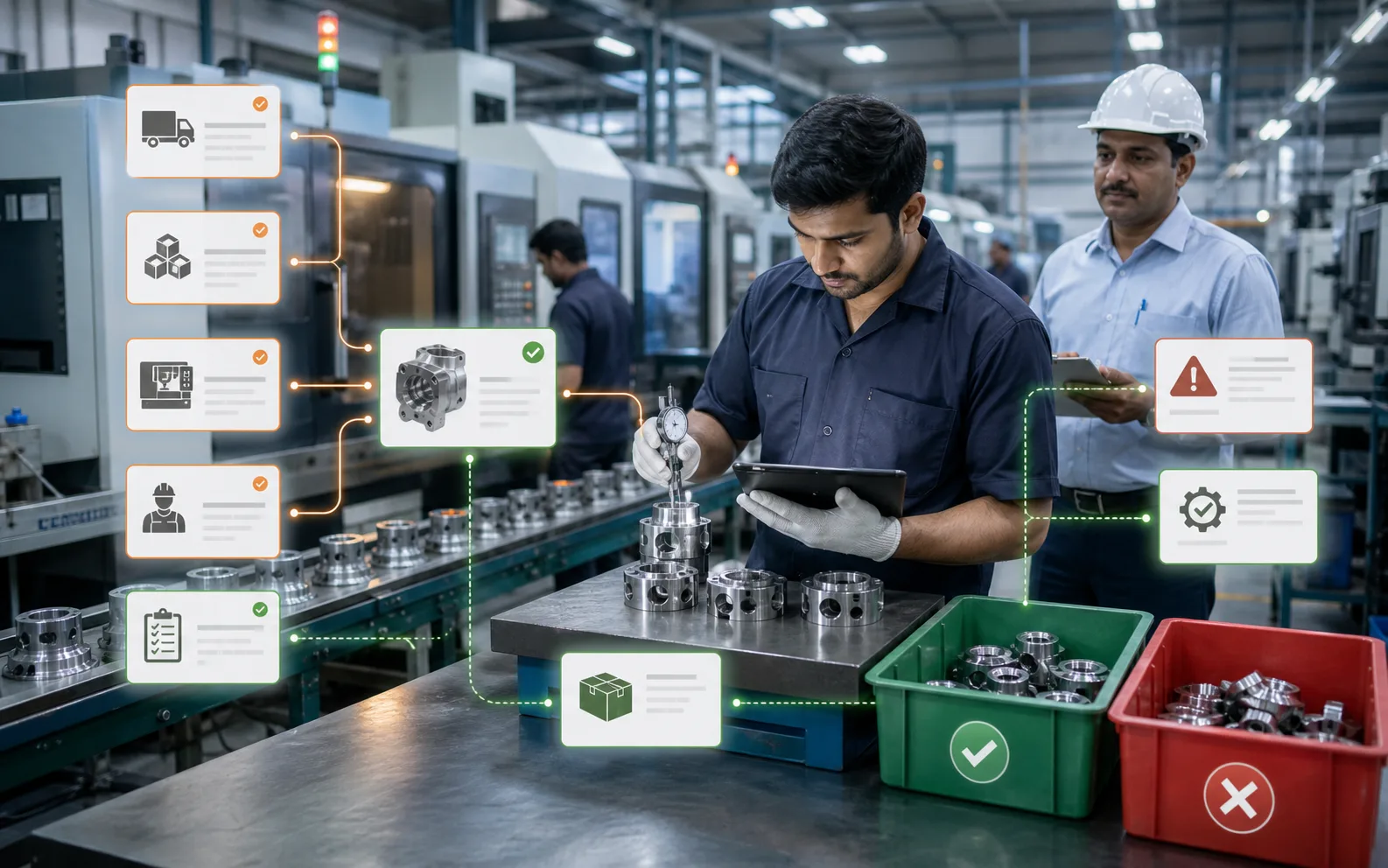
DRIFT stands for Do It Right the First Time. It is a quality and operations principle that says work should be done correctly at the first attempt instead of relying on inspection, correction, rework, or customer complaints to fix mistakes later.
For manufacturers, DRIFT is not just a quality slogan. It affects cost, delivery, capacity, customer trust, and cash flow.
AICAN Optiwise helps manufacturers improve first-time-right discipline by connecting production, quality, inventory, documents, and reporting.
What Does DRIFT Mean?
DRIFT means Do It Right the First Time.
The idea is simple: prevent errors before they happen instead of detecting and correcting them later.
In manufacturing, this can apply to:
- Raw material issue
- Machine setup
- BOM accuracy
- Work instructions
- Quality checks
- Labelling
- Packing
- Dispatch documentation
- Invoice details
- Customer specifications
Doing it right the first time reduces waste across the full workflow.
Why First-Time-Right Matters
Every correction has cost.
Rework consumes labour. Reprocessing consumes machine time. Re-inspection consumes quality team time. Delayed dispatch affects customer trust. Wrong documents delay payment. Rejected material blocks inventory and cash.
The visible cost may be small. The hidden cost is often large.
A factory that depends on correction loses capacity that could have been used for new orders.
Example
A manufacturer produces 1,000 parts. Quality rejects 80 because the wrong drill size was used. The parts can be reworked, so nothing is scrapped.
At first, this looks manageable.
But the factory now spends extra machine time, labour, inspection time, and scheduling effort. The next order waits. Delivery slips. The team gets used to rework as part of the process.
DRIFT asks why the wrong drill size was used and how the process can prevent it next time.
What Causes First-Time Failures?
Wrong or outdated BOMs.
Unclear work instructions.
Poor machine setup.
Untrained operators.
Incorrect material issue.
Weak incoming inspection.
Missing quality checkpoints.
Rushed dispatch.
Manual document errors.
Poor communication between sales, production, and quality.
Many first-time failures are system problems, not individual carelessness.
How to Improve DRIFT
Start by measuring first-time-right performance. Track how often jobs pass without rework, rejection, correction, or customer return.
Identify repeat issues. A recurring defect is a process signal.
Standardise work instructions. Operators should not depend only on memory.
Keep BOMs and drawings updated.
Control material issue. Wrong input creates wrong output.
Use quality checkpoints at the right stage, not only at the end.
Record rework reasons.
Review customer complaints and internal rejection together.
Train teams on root cause, not blame.
DRIFT and ERP
ERP supports DRIFT when it connects the data behind mistakes.
If a rejection happens, the business should know which order, material, operator, machine, batch, supplier, process, and specification were involved.
Without traceability, quality improvement becomes guesswork.
Optiwise by AICAN helps manufacturers maintain clearer operational records across production, quality, inventory, and dispatch.
DRIFT Beyond Production
Do it right the first time also applies outside the shop floor.
A purchase order should have the right item, rate, tax, and delivery terms.
A sales order should capture customer requirements clearly.
A delivery challan should match the material moved.
An invoice should carry the correct GST and customer details.
A report should be based on accurate entries.
Quality is an operating habit, not a department.
Founder’s Note
Rework quietly teaches a factory to accept waste. The team becomes skilled at fixing mistakes instead of preventing them.
At AICAN, we believe systems should help manufacturers see where errors begin. Optiwise is built to support better first-time-right discipline through clearer workflows and traceability.
FAQs
What does DRIFT mean?
DRIFT means Do It Right the First Time. It focuses on preventing mistakes instead of correcting them later.
Why is DRIFT important in manufacturing?
It reduces rework, rejection, delays, wasted capacity, customer complaints, and hidden cost.
Is DRIFT only a quality concept?
No. It applies to production, purchase, inventory, dispatch, billing, and documentation.
How can manufacturers improve first-time-right performance?
They can track rework reasons, standardise instructions, keep BOMs updated, improve material control, and use quality checkpoints.
How does Optiwise help?
Optiwise connects production, inventory, quality, documents, and reports so manufacturers can trace issues and improve process discipline.

Related Posts

Kanban System | Optiwise
Learn how a Kanban system works in manufacturing, where it helps, where it fails, and how Optiwise connects Kanban signals with inventory, purchase, and production planning.
12 Jun 2026Read more →Erp In Operations Management | Optiwise
Learn how ERP improves operations management by connecting planning, inventory, purchase, production, quality, dispatch, finance, and reporting.
12 Jun 2026Read more →ERP for FMCG Companies in India
A practical guide to ERP for FMCG companies in India, covering distributor orders, batch tracking, expiry, inventory, production, schemes, costing, and reporting.
11 Jun 2026Read more →
Optiwise, Odoo, Acumatica and Business Central for Manufacturing
Compare manufacturing workflows in Optiwise, Odoo, Acumatica and Dynamics 365 Business Central. See what your factory can run in Optiwise.
11 Jun 2026Read more →