
Will IoT Require Significant Changes to My Factory Layout?
Learn whether IoT implementation requires factory layout changes, what installation may involve, and how manufacturers can minimize production disruption.
Will IoT Require Significant Changes to My Factory Layout?
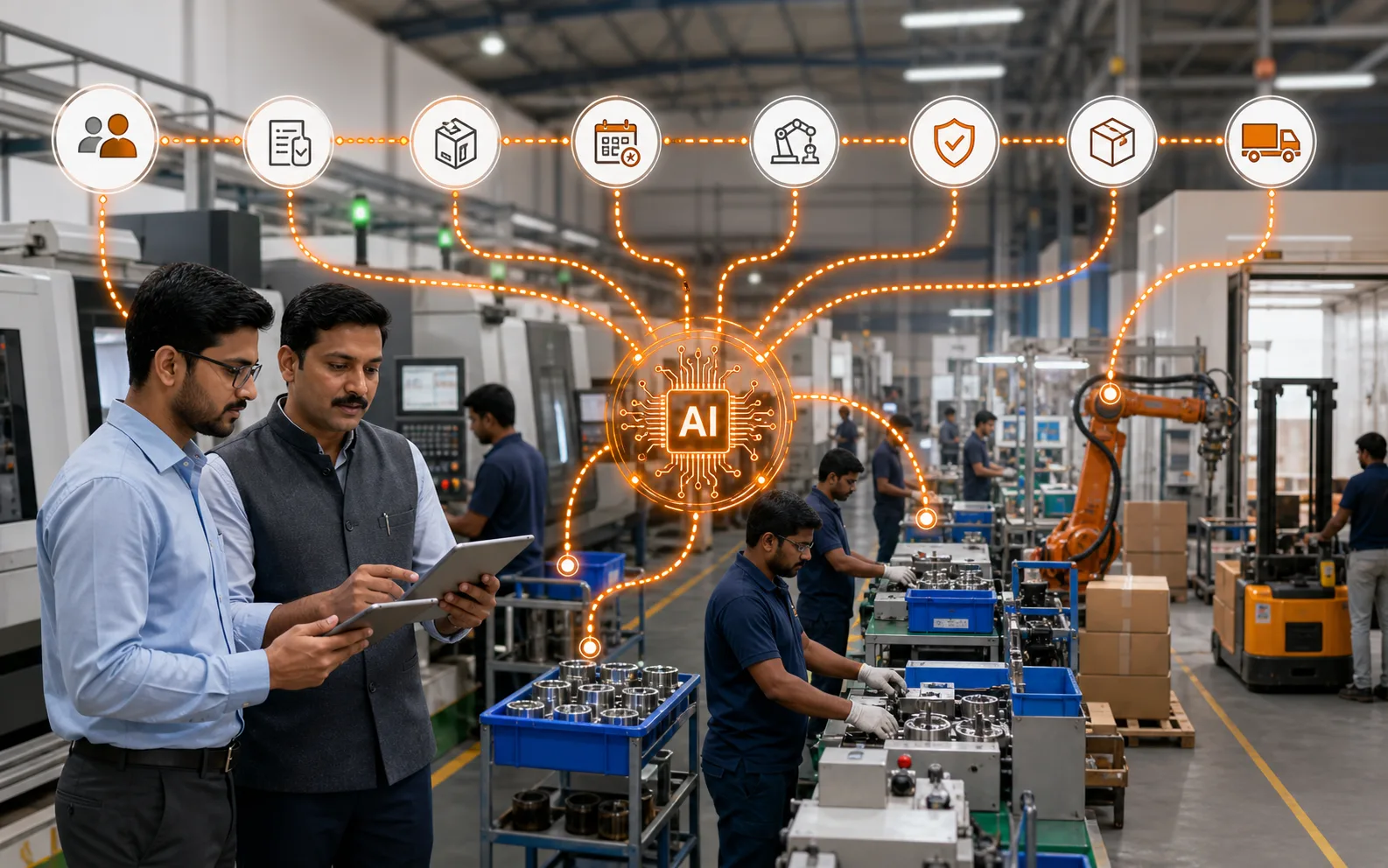
In most cases, IoT does not require major factory layout changes. Many IoT projects can be implemented by adding sensors, meters, gateways, operator screens, network points, or software integrations around the existing layout.
That said, some preparation may be needed. Devices need safe mounting, power, connectivity, protection from dust or heat, and access for maintenance. The goal is to collect useful data without disrupting production more than necessary.
A good IoT implementation should fit the factory, not force the factory to rebuild itself.
Most IoT Projects Are Retrofit-Friendly
Many manufacturing IoT projects begin with existing equipment. The implementation may involve:
- attaching sensors to selected machines
- installing energy meters
- placing gateways in suitable locations
- connecting to PLCs where available
- adding operator input screens
- improving network coverage
- configuring dashboards and alerts
These changes usually do not require moving machines or redesigning the floor.
What May Need Physical Preparation
Even without layout changes, the factory may need preparation.
Common requirements include:
- safe sensor mounting points
- cable routing
- device enclosures
- power supply availability
- gateway placement
- network coverage
- protection from vibration, heat, oil, dust, or moisture
- access for inspection and replacement
These are installation details, not full layout changes. But they should be planned carefully.
Network Coverage Can Affect Placement
IoT devices need to communicate reliably. If the factory has weak Wi-Fi, poor cabling, or difficult areas, network planning becomes important.
The solution may include wired connections, industrial routers, gateways, cellular connectivity, edge devices, or local buffering.
The layout may not change, but the connectivity plan must respect the layout.
Operator Screens Should Fit Workflow
If operators need to enter downtime reasons, quality checks, or maintenance observations, screens or terminals should be placed where they are practical.
A screen placed too far from the machine may not be used. A screen that interrupts the operator’s workflow may create resistance.
Good implementation studies how people work before placing input points.
Production Disruption Should Be Minimized
Installation may require short planned stops, especially when sensors are mounted, meters are installed, panels are accessed, or PLC connections are made.
A good plan should define:
- which machines are affected
- when installation will happen
- whether production must pause
- safety approvals required
- who will validate readings
- rollback steps if something fails
The disruption should be controlled and communicated.
When Layout Changes Might Be Needed
Some projects may require more physical changes, especially if the factory wants advanced automation, conveyors, robotics, automated material handling, or major process redesign.
But basic IoT visibility, downtime monitoring, energy tracking, condition monitoring, and production dashboards usually do not require major layout changes.
Do not confuse IoT visibility projects with full automation projects.
Start With a Site Survey
A site survey helps identify practical requirements before implementation.
The survey should check:
- machine locations
- available signals
- panel access
- electrical safety
- network coverage
- sensor mounting points
- operator workflow
- environmental conditions
- maintenance access
This reduces surprises during installation.
Where AICAN Optiwise Fits
AICAN Optiwise helps manufacturers modernize operations without losing sight of daily production reality. A connected system should support production, inventory, purchase, sales, finance, and reporting while respecting factory constraints.
Optiwise is built for practical adoption, not unnecessary disruption. You can explore AICAN and learn more on About AICAN.
FAQ
Do machines need to be moved for IoT?
Usually no. Most IoT visibility projects can be installed around existing equipment.
Will production need to stop during installation?
Some installation steps may require planned stoppage, especially for electrical work or sensor mounting. This should be scheduled carefully.
Does IoT require new wiring?
Sometimes. It depends on sensor type, gateway location, power availability, and network design.
Can IoT work in dusty or hot environments?
Yes, but devices must be selected and protected for the environment.
Is IoT the same as factory automation?
No. IoT focuses on connected data and visibility. Automation may require larger physical changes, but IoT often does not.
Founder’s Note
At AICAN, we believe technology should fit the way factories actually operate. Manufacturers should not be forced into unnecessary disruption just to gain visibility.
The best systems respect the floor, the people, and the production schedule.
Final Thought
IoT usually does not require a major layout change. It requires thoughtful installation.
Map the machines, plan the connectivity, place devices safely, train users, and validate the data. That is enough to start making the factory more visible.

Related Posts
Is AI Worth the Investment for My Factory?
Learn how to decide if AI is worth the investment for your factory by evaluating use cases, data readiness, costs, risks, ROI, and operational impact.
13 Jun 2026Read more →Manufacturing AI Mistakes to Avoid Before You Start
List manufacturing AI mistakes and controls for unclear use case, messy data, unsafe automation, no owner, weak security and unreviewed recommendations.
13 Jun 2026Read more →What's the Difference Between AI and Regular Automation?
Understand the difference between AI and regular automation in manufacturing, with practical examples for workflows, decisions, alerts, and predictive operations.
13 Jun 2026Read more →What Are the Risks of Using AI in Manufacturing?
Understand the risks of AI in manufacturing, including bad data, wrong recommendations, safety issues, security, job fear, over-automation, and implementation failure.
13 Jun 2026Read more →