
Energy Efficiency Improvements with AI
Learn how AI improves energy efficiency in manufacturing through consumption analysis, machine monitoring, load planning, leak detection, and operational visibility.

Energy Efficiency Improvements with AI
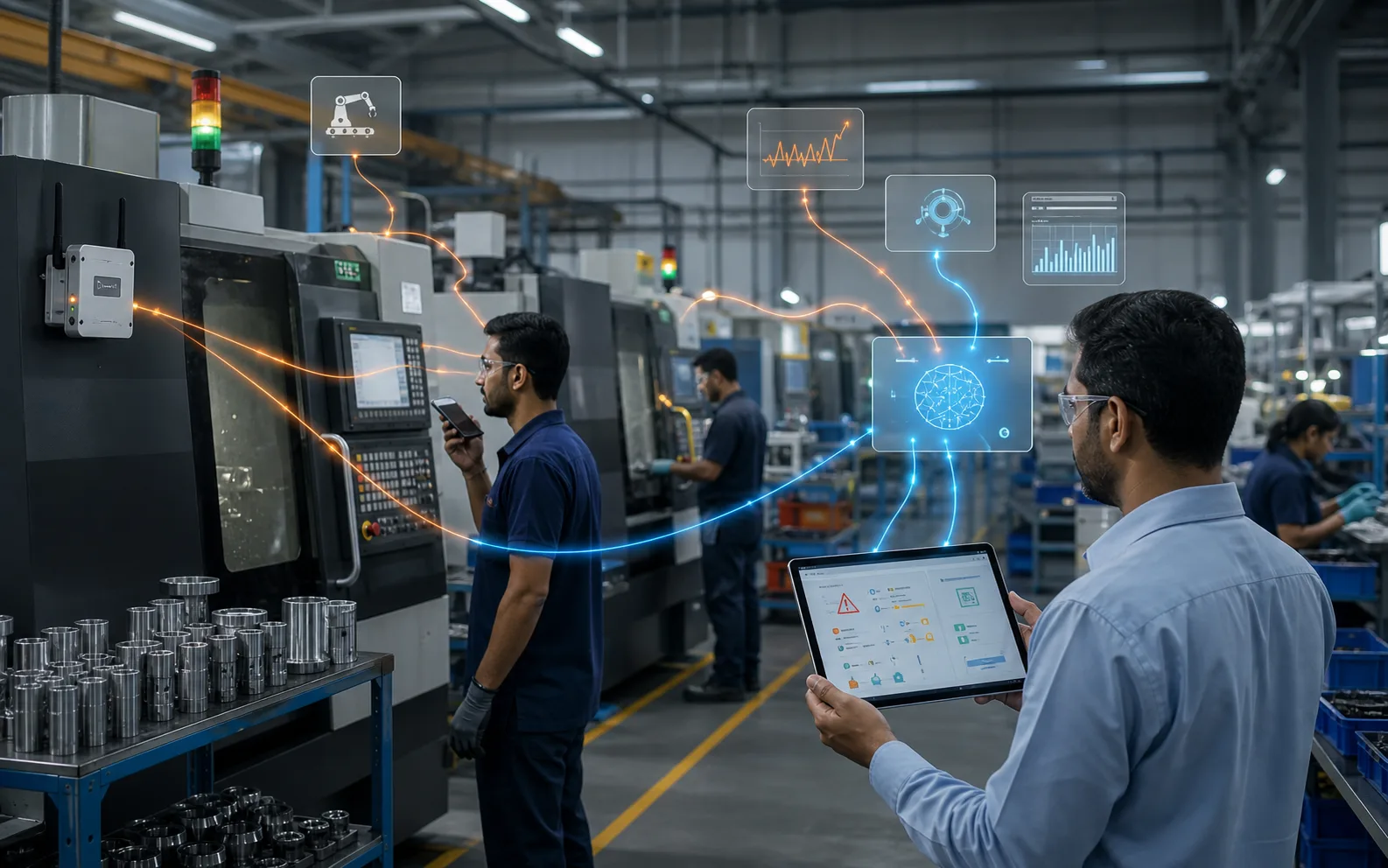
AI can improve energy efficiency in manufacturing by helping teams see where energy is being wasted. In many factories, energy cost is treated as a monthly bill. By the time the bill arrives, the waste has already happened.
AI helps manufacturers move from monthly review to daily or real-time energy visibility.
Why Energy Waste Happens in Factories
Energy waste often hides inside normal operations.
Common causes include:
- Machines running idle
- Compressed air leaks
- Inefficient production scheduling
- Motors running under poor load conditions
- Equipment overheating
- Poor maintenance
- Unbalanced peak load
- Utilities running during non-production time
- Old process settings
- Lack of machine-level visibility
Without data, teams may not know where the waste begins.
AI Can Analyze Energy Consumption Patterns
AI can review energy usage by machine, line, shift, product, or time period. It can identify unusual spikes, idle consumption, and patterns that repeat.
For example, AI may show that one machine consumes more energy after maintenance, or that energy use remains high during breaks when machines should be idle.
AI Can Support Peak Load Management
Electricity cost may increase during peak demand periods. AI can help analyze load patterns and suggest better scheduling where possible.
This does not mean production should always be moved. It means managers can see the cost impact of certain production decisions.
AI Can Detect Abnormal Machine Behavior
Energy consumption can indicate machine health. A machine drawing more power than usual may have friction, wear, misalignment, overload, or maintenance issues.
AI can connect energy data with maintenance and production data to identify machines that need attention.
AI Can Improve Utility Efficiency
AI can help review utilities such as compressors, chillers, pumps, fans, ovens, and HVAC systems.
For example, compressed air systems often waste energy through leaks or poor operating patterns. AI can help flag unusual consumption.
AI Can Link Energy to Production Cost
Energy data becomes more useful when linked with production output. Instead of only knowing total energy cost, manufacturers can estimate energy per unit, per batch, or per product family.
This supports better costing and process improvement.
Data Needed
Useful data includes:
- Energy meter readings
- Machine runtime
- Production output
- Shift timings
- Machine status
- Maintenance records
- Utility data
- Temperature or process readings
- Product or batch details
The more connected the data, the more useful AI becomes.
Where AICAN Optiwise Fits
AICAN Optiwise helps manufacturers connect production, shopfloor, inventory, quality, dispatch, and finance visibility. Energy insights become stronger when connected to production output, machine usage, downtime, and costing.
Optiwise is built as an AI-native operating system with ERP, workflows, reports, IoT readiness, and AI agents for manufacturing teams.
Learn more at AICAN Optiwise and About AICAN.
Founder’s Note
AICAN’s view is that energy efficiency should not be reviewed only after the bill arrives. Manufacturers need visibility while operations are happening.
Optiwise is built to connect operational signals so teams can understand where time, material, and energy are being lost.
FAQ
Can AI reduce electricity bills?
AI can help identify waste and optimization opportunities, but savings depend on action taken by the factory.
What energy data is needed?
Machine-level or area-level energy data, runtime, production output, and utility data are useful.
Can small manufacturers use AI for energy efficiency?
Yes. They can start with meter readings, machine runtime, and production output analysis.
Does AI require smart meters?
Smart meters help, but basic analysis can start with available energy and production data.
Is energy AI the same as maintenance AI?
They overlap. Abnormal energy use can indicate maintenance issues.
Final Thought
AI improves energy efficiency by making energy waste visible earlier and tying it to production reality. The savings come when teams act on the insight.
Next step: Explore AICAN Optiwise if your factory wants energy, production, and operational visibility connected in one system.

Related Posts
Is AI Worth the Investment for My Factory?
Learn how to decide if AI is worth the investment for your factory by evaluating use cases, data readiness, costs, risks, ROI, and operational impact.
13 Jun 2026Read more →Manufacturing AI Mistakes to Avoid Before You Start
List manufacturing AI mistakes and controls for unclear use case, messy data, unsafe automation, no owner, weak security and unreviewed recommendations.
13 Jun 2026Read more →What's the Difference Between AI and Regular Automation?
Understand the difference between AI and regular automation in manufacturing, with practical examples for workflows, decisions, alerts, and predictive operations.
13 Jun 2026Read more →What Are the Risks of Using AI in Manufacturing?
Understand the risks of AI in manufacturing, including bad data, wrong recommendations, safety issues, security, job fear, over-automation, and implementation failure.
13 Jun 2026Read more →