
Gst Invoice Software | Optiwise
Learn what GST invoice software should do, why invoice accuracy matters, how ERP improves invoicing, and what manufacturers should check before choosing a GST billing system.
GST Invoice Software: What A Small Manufacturer Should Expect From It
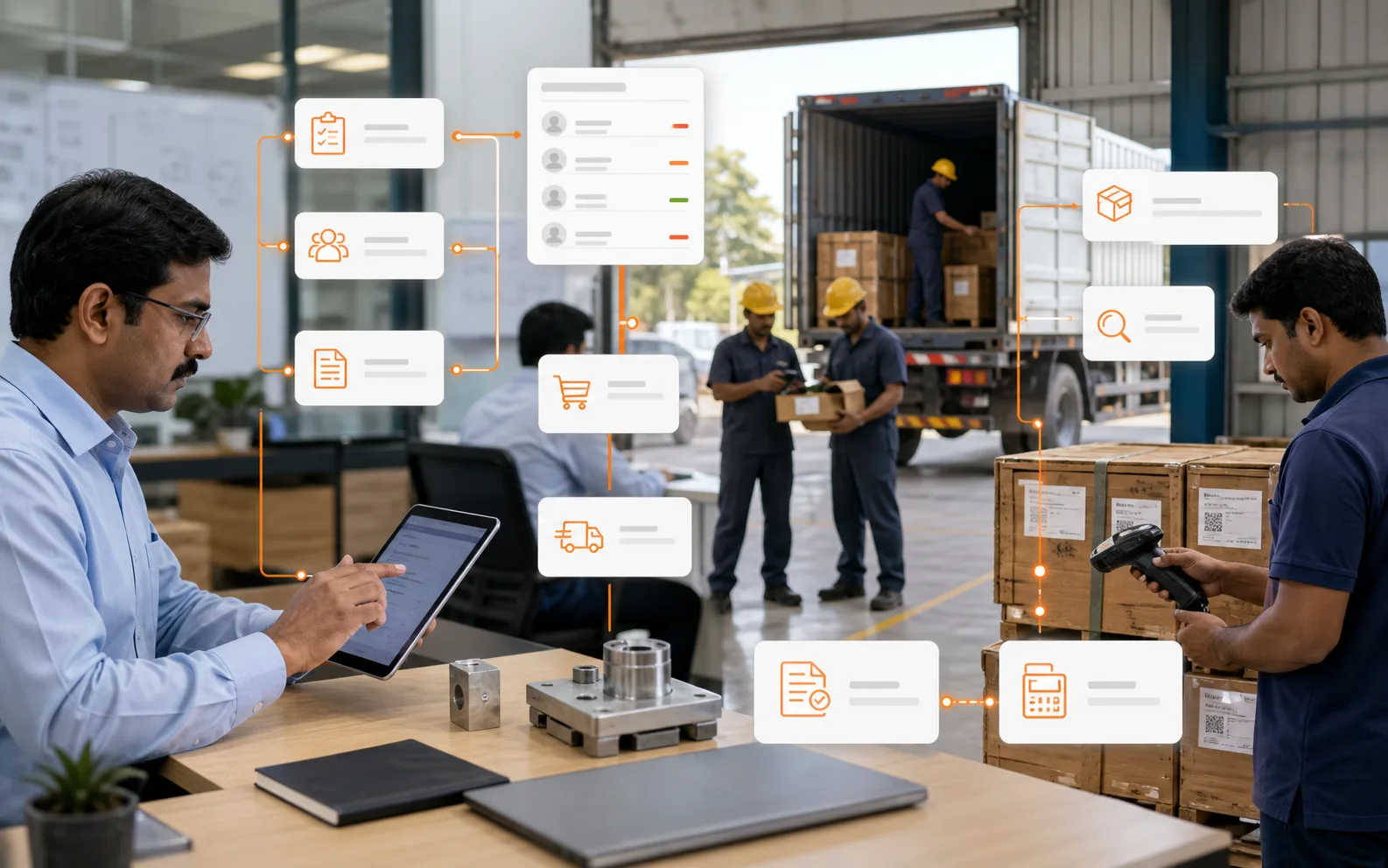
GST invoice software should do more than print a bill. For a manufacturing business, invoicing sits at the point where sales, stock, dispatch, tax, accounts, and customer communication meet.
If the invoice is wrong, the error travels everywhere. Stock may be reduced incorrectly. Tax may be calculated wrongly. Customer records may mismatch. E-way bill or e-invoice work may be delayed. Accounts may spend time correcting avoidable mistakes.
Good GST invoice software helps a business create accurate invoices, maintain clean records, and connect billing with the rest of operations.
This article is for general educational use and is not tax, legal, or accounting advice. GST requirements can change, and businesses should consult qualified professionals and official GST resources for their specific obligations.
AICAN Optiwise is built for manufacturers who need invoicing to connect with inventory, purchase, production, dispatch, and reporting instead of staying as a separate billing tool.
What Is GST Invoice Software?
GST invoice software is a system that helps businesses create GST-compliant invoices, calculate taxes, manage customer and item details, store invoice records, and support return filing or accounting workflows.
Basic tools may only generate invoice PDFs. More capable systems connect invoicing with inventory, customer orders, tax reports, payment status, e-way bill data, and e-invoice readiness.
For manufacturers, the second approach is usually more useful because invoices depend on stock, dispatch, item codes, HSN details, and order commitments.
Why GST Invoice Accuracy Matters
A GST invoice is a legal and tax document. It should contain correct information about the supplier, recipient, goods or services, taxable value, tax rate, tax amount, invoice number, date, and other applicable details.
When invoice data is wrong, the business may face:
- Customer disputes
- GST return mismatches
- Delayed payments
- Incorrect tax liability
- ITC issues for customers
- E-way bill errors
- E-invoice rejection where applicable
- Manual correction work
For B2B customers, invoice correctness is especially important because their input tax credit may depend on proper documentation and reporting.
Key Features Of GST Invoice Software
A practical GST invoice system should support daily business work, not only compliance formatting.
Important features include:
- Customer master with GSTIN and address details
- Item master with HSN/SAC and tax rates
- Automatic tax calculation
- Sequential invoice numbering
- Sales order linkage
- Inventory deduction
- Credit note and debit note support
- PDF invoice generation
- E-way bill data readiness where applicable
- E-invoice readiness where applicable
- Payment tracking
- GST reports
- User permissions and approval controls
- Audit trail for changes
The right feature set depends on business size and complexity. A small trader may need a simpler flow. A manufacturer usually needs stronger inventory and dispatch linkage.
GST Invoice Software Vs ERP
Many businesses start with a billing tool. That is fine in the early stage. But as operations grow, billing software alone may become limiting.
A standalone invoice tool can create invoices, but it may not know:
- Whether stock is actually available
- Whether production is complete
- Which batch or lot is being dispatched
- Whether customer credit limit is exceeded
- Whether purchase and inventory costs are updated
- Whether dispatch documents are ready
- Whether item-level profitability is changing
An ERP-based invoicing system connects invoice creation with operations.
When a sales invoice is raised in Optiwise by AICAN, the goal is that related stock, dispatch, customer, and reporting data should move with it. That reduces duplicate work and improves visibility.
E-Invoicing Readiness
GST e-invoicing applies to businesses that cross notified aggregate turnover limits, subject to official rules and exemptions. Official GST e-invoice resources mention mandatory and conditional fields required for invoice reporting.
Even if a business is not currently covered, it should choose software that can grow with it.
E-invoicing readiness means the system should maintain clean data for:
- Supplier GSTIN
- Buyer GSTIN
- Invoice number and date
- Document type
- Place of supply
- Item description
- HSN code
- Taxable value
- Tax rate and amount
- Total invoice value
- Dispatch and shipping details where applicable
Bad master data can create e-invoice errors later. Preparing early is easier than cleaning years of invoice data after the business crosses the threshold.
Inventory Linkage In GST Invoicing
For manufacturers, invoicing should be linked with stock movement.
If invoice creation does not reduce stock, inventory reports become unreliable. If stock is reduced manually later, the business may forget or enter the wrong item. If finished goods are invoiced before production is recorded, cost and availability reports may become distorted.
A connected invoicing workflow should answer:
- What order is being billed?
- Which item and quantity are dispatched?
- Which warehouse or location is stock moving from?
- Is the stock available?
- Is batch or serial tracking required?
- Has the dispatch been completed?
- Has the invoice been shared with the customer?
This is why manufacturers should be careful before selecting a billing-only tool.
GST Reports And Month-End Work
GST invoice software should make month-end review easier.
Useful reports include:
- Sales register
- B2B invoice summary
- B2C summary where applicable
- Credit note and debit note reports
- Tax rate-wise sales
- HSN summary
- Customer-wise outstanding
- E-invoice status where applicable
- E-way bill status where applicable
These reports help accountants and tax consultants review data faster. They also help owners understand whether invoicing, dispatch, and collections are moving properly.
Common Mistakes When Choosing GST Invoice Software
Small businesses often choose software based only on price or invoice design. That can create problems later.
Common mistakes include:
- Choosing software without inventory linkage
- Ignoring manufacturing workflows
- Not checking e-invoice readiness
- Weak customer and item master controls
- No approval or audit trail
- Poor reporting export options
- No user permissions
- No connection with purchase or dispatch
- Hard-to-use interface for actual staff
The best software is the one your team can use correctly every day.
How Optiwise Helps
AICAN understands that manufacturers do not need invoicing in isolation. They need sales, stock, production, dispatch, and finance visibility to work together.
AICAN Optiwise helps businesses create connected workflows where billing becomes part of the operational system. This is especially useful for small and mid-sized manufacturers that are moving beyond spreadsheets but do not want unnecessary complexity.
Founder’s Note
An invoice is often the last document the customer sees before payment, but inside the company it is the result of many earlier activities. If those activities are disconnected, the invoice becomes fragile.
At AICAN, our view is that GST invoice software should reduce correction work, not create more of it. When the invoice is connected to stock, dispatch, and reporting, the business runs with more confidence.
FAQs
What is GST invoice software?
GST invoice software helps businesses create GST invoices, calculate taxes, maintain invoice records, generate reports, and support compliance workflows.
Is GST invoice software enough for manufacturers?
Sometimes, but manufacturers usually benefit from ERP-based invoicing because invoices need to connect with inventory, production, dispatch, and customer orders.
Does GST invoice software support e-invoicing?
Some systems do. Businesses that are covered by e-invoicing rules should ensure their software supports required data preparation and integration workflows.
What should I check before choosing GST invoice software?
Check GST fields, item and customer masters, tax calculation, invoice numbering, inventory linkage, reporting, e-invoice readiness, user permissions, and ease of use.
How does Optiwise help with GST invoicing?
Optiwise by AICAN connects invoicing with inventory, sales, dispatch, and reporting so manufacturers can reduce manual work and improve billing accuracy.

Related Posts
Types Of GST Returns For Manufacturers | Optiwise
A practical guide to GST returns for manufacturers, including GSTR-1, GSTR-3B, GSTR-9, GSTR-9C, composition returns, TDS/TCS returns, and reconciliation discipline.
17 May 2026Read more →Gst Invoice | Optiwise
Understand GST invoices, required details, common mistakes, e-invoice readiness, and how ERP helps manufacturers create accurate billing and tax records.
14 May 2026Read more →Gstr 10 | Optiwise
Learn what GSTR-10 final return is, who needs to file it, when it is filed, what records matter, and how ERP helps businesses close GST records cleanly.
20 Apr 2026Read more →
How to Transition Your Manual Accounting to ERP-Based Accounting
Learn how MSME manufacturers can move from manual or standalone accounting to ERP-based accounting with clean masters, opening balances, inventory links, approvals, and finance controls.
13 Apr 2026Read more →