
Gst Invoicing | Optiwise
Learn how Optiwise helps manufacturers manage GST invoicing, sales orders, dispatch, tax details, credit and debit notes, receivables, and finance visibility.

Gst Invoicing | Optiwise
GST invoicing for manufacturers should connect sales orders, dispatch, tax details, invoice creation, credit notes, debit notes, receivables, and finance reporting. Invoicing is not just an accounts task. It is the point where order fulfilment, compliance discipline, and cash flow meet.
Manufacturers often face delays when dispatch is ready but invoice details, tax classification, customer terms, or supporting documents are not aligned. A connected ERP workflow reduces these gaps.
AICAN Optiwise helps manufacturers connect sales, dispatch, invoicing, receivables, payables, finance, and dashboards.
Connect invoices with orders and dispatch
GST invoicing should not be isolated from operations.
ERP should connect:
- Sales order
- Customer details
- Product or item details
- Dispatch quantity
- Invoice quantity
- Price and discount
- Tax details
- Payment terms
This reduces mismatch between dispatch and billing.
Capture tax details carefully
GST invoicing requires accurate tax-related information based on the business process and applicable rules.
Track:
- GSTIN where applicable
- Place of supply where applicable
- HSN or SAC where applicable
- Tax rate
- Taxable value
- Invoice value
- Credit or debit note reference where applicable
ERP supports discipline, but the company must ensure tax setup and compliance review are correct.
Improve receivables visibility
Invoices should connect with payment follow-up.
Track:
- Invoice date
- Due date
- Payment status
- Overdue amount
- Customer-wise outstanding
- Follow-up priority
This helps owners manage cash flow better.
Handle credit and debit notes
Manufacturers may need credit or debit notes for returns, rate differences, quantity differences, or commercial adjustments.
ERP should help connect these notes with the original invoice and customer account.
Where Optiwise fits
Optiwise can help manufacturers manage GST invoicing workflows connected with sales orders, dispatch, finance, receivables, credit notes, debit notes, and dashboards.
A practical implementation can focus on:
- Sales order to invoice linkage
- Dispatch-based invoicing
- Tax detail capture
- Receivables tracking
- Credit and debit notes
- Invoice status dashboards
- Finance visibility
AICAN helps manufacturers connect invoicing with operations and cash flow.
Founder’s Note
Invoicing should be accurate, timely, and connected to the real movement of goods. At AICAN, we believe manufacturers need invoicing workflows that reduce errors, improve cash visibility, and keep operations and finance aligned. Learn more at About AICAN.
FAQs
What is GST invoicing for manufacturers?
It is the process of creating tax invoices connected with sales orders, dispatch, item details, tax values, receivables, and finance records.
Can ERP help with GST invoicing?
Yes. ERP can help structure invoice creation, tax fields, dispatch linkage, receivables, credit notes, debit notes, and reports.
Does ERP guarantee GST compliance?
No. ERP supports data and workflow discipline, but compliance depends on correct tax setup, review, and applicable regulations.
Why connect invoicing with dispatch?
It reduces mismatch between shipped quantity, invoice quantity, customer terms, and finance records.
Can Optiwise track receivables from invoices?
AICAN Optiwise can help track invoice due dates, payment status, overdue amounts, and customer-wise outstanding.

Related Posts
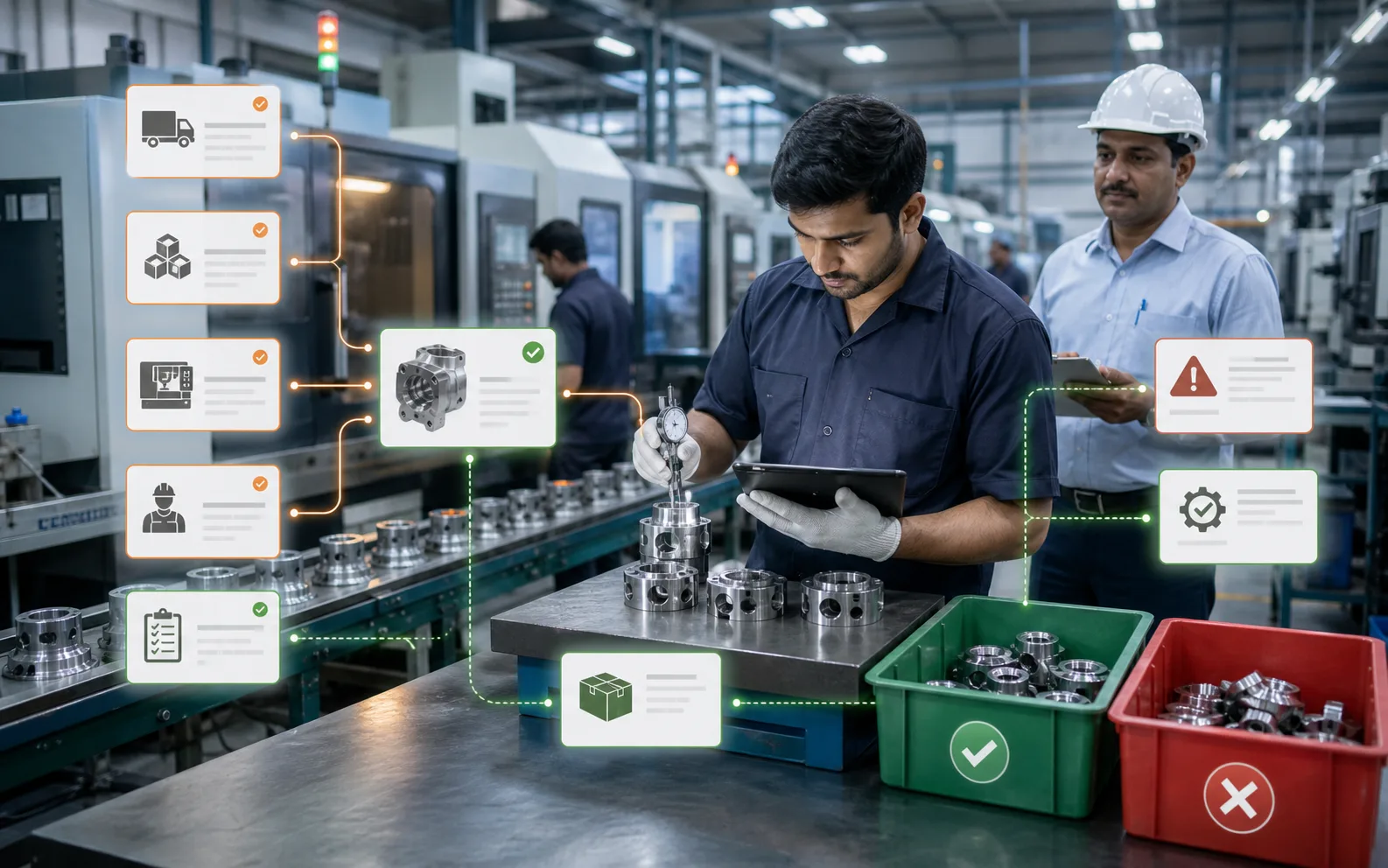
Types Of GST Returns For Manufacturers | Optiwise
A practical guide to GST returns for manufacturers, including GSTR-1, GSTR-3B, GSTR-9, GSTR-9C, composition returns, TDS/TCS returns, and reconciliation discipline.
17 May 2026Read more →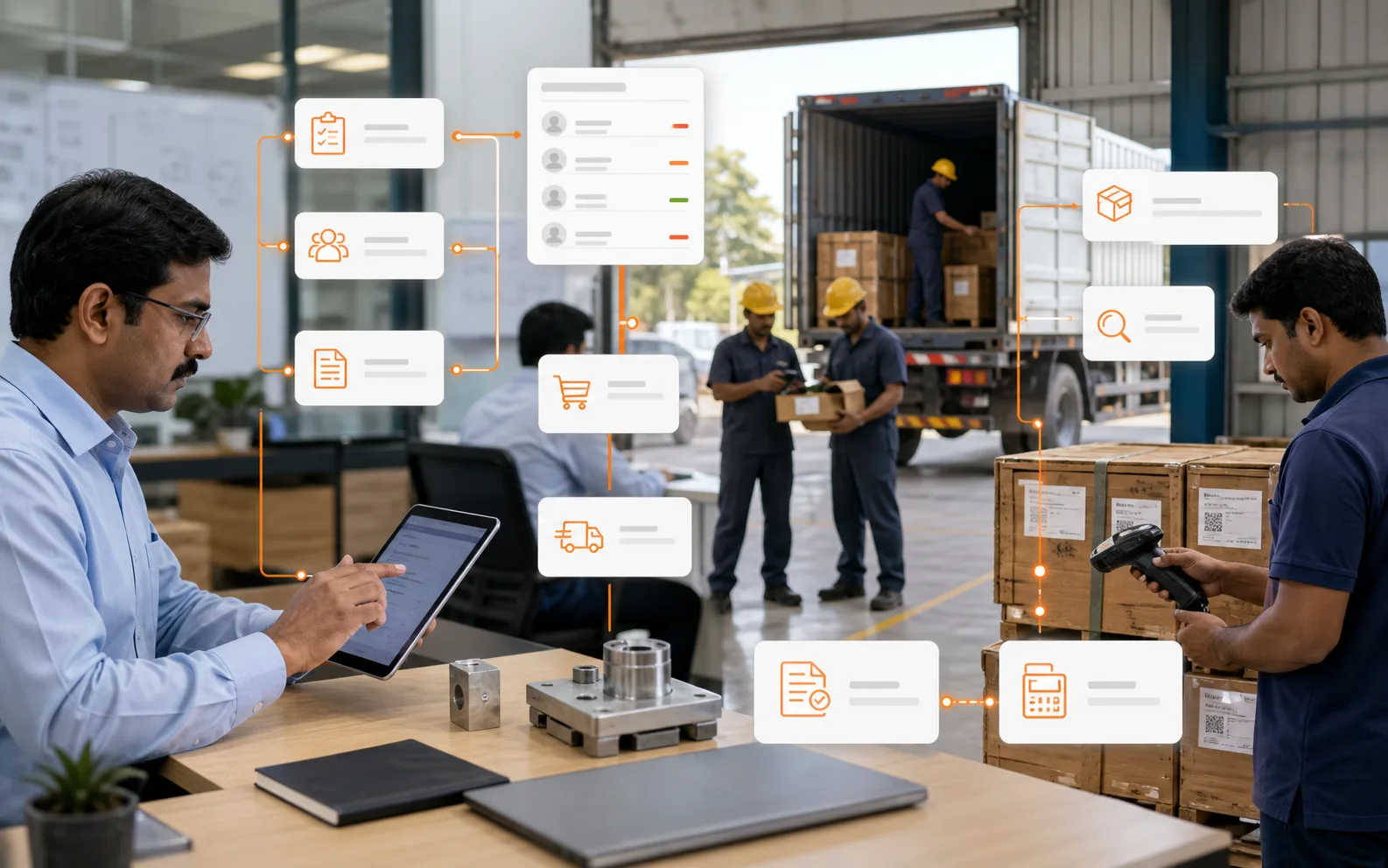
Gst Invoice | Optiwise
Understand GST invoices, required details, common mistakes, e-invoice readiness, and how ERP helps manufacturers create accurate billing and tax records.
14 May 2026Read more →Gstr 10 | Optiwise
Learn what GSTR-10 final return is, who needs to file it, when it is filed, what records matter, and how ERP helps businesses close GST records cleanly.
20 Apr 2026Read more →
How to Transition Your Manual Accounting to ERP-Based Accounting
Learn how MSME manufacturers can move from manual or standalone accounting to ERP-based accounting with clean masters, opening balances, inventory links, approvals, and finance controls.
13 Apr 2026Read more →