
How Is AI Changing Factory Floor Work?
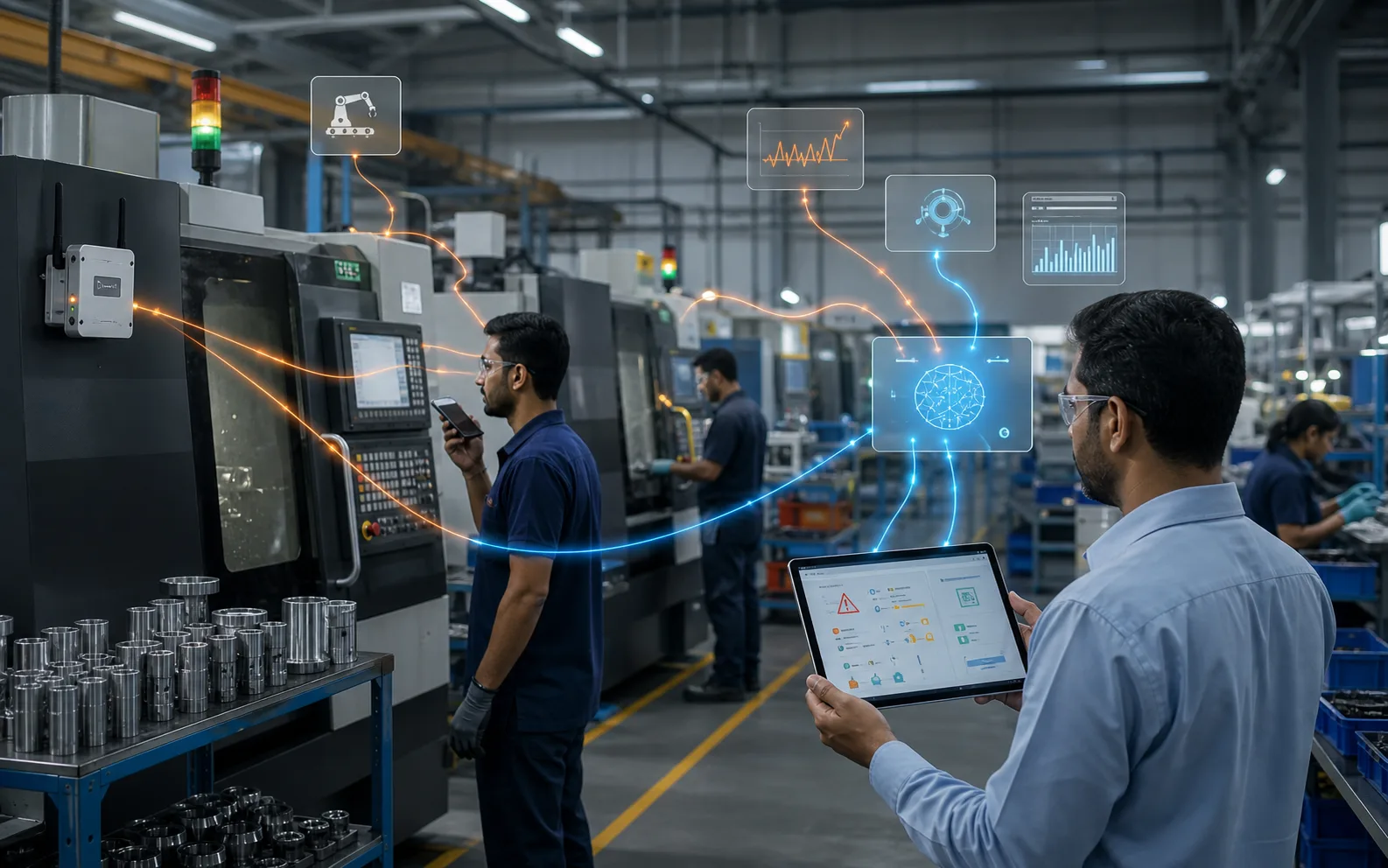
AI is changing factory floor work through real-time visibility, predictive maintenance, quality alerts, digital workflows, and better production decisions.

How Is AI Changing Factory Floor Work?
AI is changing factory floor work by making information more visible, timely, and useful.
Instead of waiting for end-of-shift reports or manual updates, teams can see production status, machine performance, quality issues, material shortages, and maintenance risks earlier. This changes how supervisors, operators, maintenance teams, and managers make decisions.
AI does not remove factory reality. It helps teams respond to it faster.
Real-Time Production Visibility
AI-supported systems can show what is running, what is delayed, what is waiting for material, and where output is falling behind.
This helps supervisors act before a small delay becomes a missed production target.
Predictive Maintenance
AI can analyze machine patterns and identify early warning signs of breakdown.
This helps maintenance teams plan action before equipment fails unexpectedly.
Quality Alerts
AI can help detect quality issues earlier by tracking inspection data, rejection patterns, and process variation.
Early detection reduces rework and waste.
AICAN Optiwise supports shop floor management by connecting production with inventory, purchase, sales, finance, reports, IoT readiness, and AI workflows.
Digital Workflows
Paper-based updates can be delayed or missed.
Digital workflows help record production, material issue, downtime, quality checks, and approvals more consistently.
Better Coordination
AI helps connect departments.
If production is delayed due to material shortage, purchase and inventory teams can see it earlier. If a machine issue affects delivery, planning teams can respond faster.
Where AICAN Optiwise Fits
AICAN Optiwise helps manufacturers make shop floor data part of the wider operating system. This creates clearer links between production reality and business decisions.
Learn more at About AICAN.
Founder’s Note
The biggest change AI brings to the factory floor is not only automation. It is visibility.
When teams see problems earlier, they can act with less stress and more control.
FAQ
Does AI replace supervisors?
No. It gives supervisors better information for faster decisions.
What shop floor work changes first?
Reporting, monitoring, maintenance alerts, quality tracking, and production visibility often change first.
Is AI useful for small factories?
Yes, especially when it starts with practical visibility and workflow improvements.
What skills do workers need?
Basic digital tool usage, data awareness, quality discipline, and problem-solving.
Final Thought
AI is changing factory floor work by turning hidden delays into visible signals.
When shop floor information connects with the rest of the business, manufacturers operate with more confidence. That is the role AICAN is building for Optiwise.

Related Posts
Is AI Worth the Investment for My Factory?
Learn how to decide if AI is worth the investment for your factory by evaluating use cases, data readiness, costs, risks, ROI, and operational impact.
13 Jun 2026Read more →Manufacturing AI Mistakes to Avoid Before You Start
List manufacturing AI mistakes and controls for unclear use case, messy data, unsafe automation, no owner, weak security and unreviewed recommendations.
13 Jun 2026Read more →What's the Difference Between AI and Regular Automation?
Understand the difference between AI and regular automation in manufacturing, with practical examples for workflows, decisions, alerts, and predictive operations.
13 Jun 2026Read more →What Are the Risks of Using AI in Manufacturing?
Understand the risks of AI in manufacturing, including bad data, wrong recommendations, safety issues, security, job fear, over-automation, and implementation failure.
13 Jun 2026Read more →