
How Do I Convince My Boss to Invest in IoT?
Learn how to build a practical business case for manufacturing IoT using downtime, reporting delays, energy waste, quality losses, ROI, pilot scope, and AICAN Optiwise workflows.
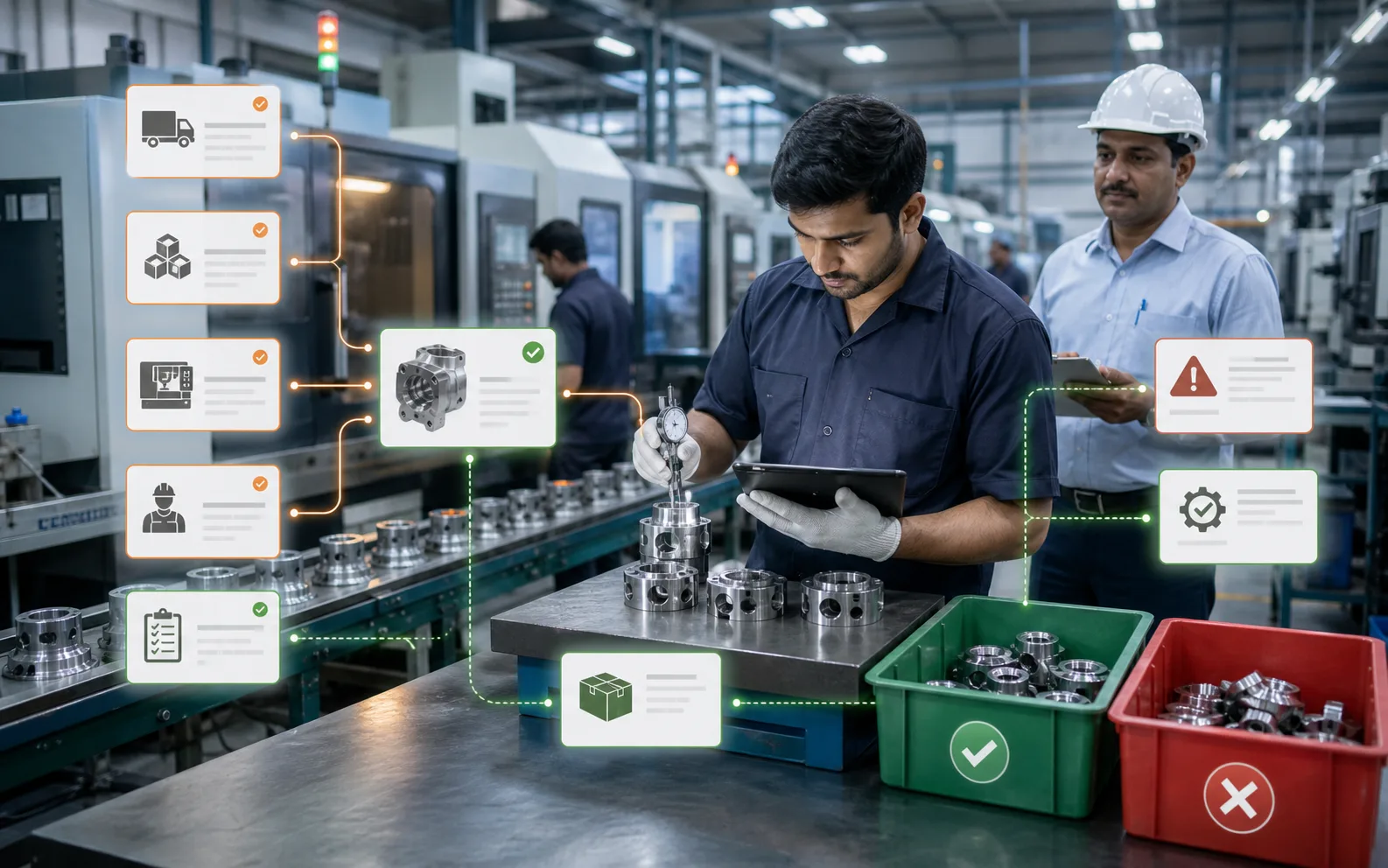
How Do I Convince My Boss to Invest in IoT?
To convince your boss to invest in IoT, do not start with technology.
Start with the factory problem.
Most owners and senior managers are not convinced by phrases like “smart factory,” “Industry 4.0,” or “digital transformation” by themselves. They want to know what problem will be solved, how much it is costing the business today, what the first phase will include, how much disruption it will create, and when the investment may pay back.
A strong IoT business case should be practical, measured, and tied to factory pain. It should show how better visibility can reduce downtime, improve production planning, reduce manual reporting, control energy cost, improve quality, and help management make faster decisions.
The goal is not to sell IoT as a trend. The goal is to show that lack of visibility is already costing money.
Begin With the Current Pain
Your boss may not care about sensors, gateways, protocols, or dashboards at first. They will care about business pain.
Start by identifying the problem in language leadership already understands:
- We do not know actual downtime reasons clearly.
- Production reports arrive too late.
- Supervisors spend too much time chasing status.
- Machine utilization is lower than expected.
- Energy cost is rising but we do not know where.
- Rejection patterns are not visible early enough.
- Maintenance is reactive.
- Customer dispatch risk is discovered too late.
- Owners cannot monitor the plant when away.
This makes the conversation operational, not technical.
Put a Cost on the Problem
A business case becomes stronger when the problem has a cost.
You do not need perfect numbers. Even reasonable estimates can help.
For example:
- How many hours of bottleneck downtime happen each month?
- What is the value of one hour of lost production?
- How many hours are spent preparing manual reports?
- How much overtime happens because delays are discovered late?
- How much scrap or rework happens each month?
- How much energy is consumed during idle time?
- How often are urgent dispatches affected by poor visibility?
The point is to show that the factory is already paying for the problem.
If the monthly loss is larger than the cost of a focused IoT phase, the business case becomes easier to understand.
Propose a Pilot, Not a Giant Project
Many bosses reject IoT because it sounds too big.
A better approach is to propose a focused pilot with clear scope.
For example:
- Monitor the top 3 bottleneck machines
- Track runtime, downtime, production count, and reasons
- Create supervisor and management dashboards
- Review results for 60 or 90 days
- Measure downtime reduction and reporting time saved
- Expand only if the pilot proves value
This reduces risk. It also shows that you are not asking for blind faith. You are asking for a measurable first step.
Define Success Metrics
Your boss will trust the proposal more if success is measurable.
Possible success metrics include:
- Reduction in unknown downtime
- Reduction in manual reporting time
- Improvement in production visibility
- Faster response to stoppages
- Lower energy waste
- Better shift handover
- Reduction in repeated quality issues
- More accurate plan-versus-actual reporting
- Fewer end-of-day surprises
Avoid vague goals like “become digital.” Use goals that can be reviewed.
Show What Happens Without IoT
A good business case also explains the cost of doing nothing.
If the factory continues without visibility:
- Downtime reasons remain unclear
- Manual reports remain delayed
- Supervisors keep chasing information
- Maintenance remains reactive
- Energy waste stays hidden
- Quality patterns are discovered late
- Planning decisions depend on assumptions
- Owners keep relying on calls and Excel summaries
Doing nothing may feel cheaper, but it can preserve daily losses.
Address Common Objections
Leadership may raise valid concerns. Prepare honest responses.
“It will be too expensive.”
Suggest a phased pilot focused on the costliest problem. Compare cost with current losses.
“Our machines are old.”
Explain that many existing machines can be connected through PLCs, signals, sensors, meters, gateways, or operator input. Replacement is not usually the first step.
“Our team will not use it.”
Include role-wise training, simple screens, supervisor ownership, and go-live support in the plan.
“It will disrupt production.”
Recommend a site survey, planned installation, non-invasive monitoring where possible, and maintenance-window work.
“We already have Excel reports.”
Explain that Excel usually reports after the fact. IoT gives faster visibility and reduces manual reconciliation.
“What if it does not work?”
Define pilot success metrics and review before expansion.
Connect IoT With Existing Business Goals
IoT should support goals the business already has.
For example:
- Improve on-time delivery
- Reduce production cost
- Increase machine utilization
- Reduce waste
- Improve customer confidence
- Reduce dependency on manual reporting
- Support growth without chaos
- Improve owner visibility
- Strengthen audit readiness
When IoT is linked to existing goals, it feels like a business tool, not an extra experiment.
Make the Proposal Practical
A strong proposal should include:
- Problem statement
- Current cost estimate
- Pilot scope
- Machines or lines included
- Data points to capture
- Dashboards needed
- Training plan
- Timeline
- Investment estimate
- Success metrics
- Review date
- Expansion plan
This structure shows maturity. It also makes it easier for leadership to say yes because the risk is defined.
Where AICAN Optiwise Fits
AICAN Optiwise helps manufacturers connect IoT and operational visibility with production, inventory, purchase, finance, reporting, and management workflows. This is important for leadership because ROI does not come only from collecting machine data. It comes from better decisions across the factory.
Optiwise can help create a practical first phase: clearer production tracking, downtime visibility, inventory connection, management dashboards, and reporting that supports daily control.
AICAN focuses on manufacturing digitization that fits real factory constraints and growth plans. You can learn more about the company on the About AICAN page.
FAQ
What is the best argument for IoT investment?
The best argument is the cost of current blind spots: downtime, manual reporting, energy waste, quality loss, delayed decisions, and poor planning visibility.
Should I propose a full IoT rollout?
Usually, no. A focused pilot with clear success metrics is easier to approve and safer to implement.
How do I calculate IoT ROI?
Estimate current losses, define expected improvements conservatively, include full project cost, and calculate monthly benefit versus investment.
What if management thinks our machines are too old?
Explain that IoT often works with existing equipment through sensors, PLCs, machine signals, gateways, meters, and operator input.
How can AICAN Optiwise help with the business case?
AICAN Optiwise connects factory visibility with production, inventory, purchase, finance, and reporting workflows, making IoT more useful for management decisions.
What should the first pilot include?
Start with critical machines or processes, capture downtime and production data, build dashboards, train users, and review measurable results.
Founder’s Note
A good technology proposal should respect the person approving it.
At AICAN, we believe owners and leaders do not need buzzwords. They need clarity: what problem are we solving, what will it cost, what will improve, and how will we know?
When IoT is presented as a practical control system for the factory, the conversation becomes much stronger.
Final Thought
To convince your boss to invest in IoT, build the case around business pain, measurable loss, focused scope, and practical payback.
Do not sell sensors. Sell better visibility, faster decisions, reduced waste, and stronger production control. With AICAN Optiwise, the business case can connect IoT data to the workflows leadership already cares about.

Related Posts

Is AI Worth the Investment for My Factory?
Learn how to decide if AI is worth the investment for your factory by evaluating use cases, data readiness, costs, risks, ROI, and operational impact.
13 Jun 2026Read more →Manufacturing AI Mistakes to Avoid Before You Start
List manufacturing AI mistakes and controls for unclear use case, messy data, unsafe automation, no owner, weak security and unreviewed recommendations.
13 Jun 2026Read more →What's the Difference Between AI and Regular Automation?
Understand the difference between AI and regular automation in manufacturing, with practical examples for workflows, decisions, alerts, and predictive operations.
13 Jun 2026Read more →What Are the Risks of Using AI in Manufacturing?
Understand the risks of AI in manufacturing, including bad data, wrong recommendations, safety issues, security, job fear, over-automation, and implementation failure.
13 Jun 2026Read more →