
Hybrid Roles: How Humans and AI Will Work Together
Learn how hybrid human-AI roles will work, especially in manufacturing, where people use AI for visibility, planning, follow-ups, quality, and decision support.

Hybrid Roles: How Humans and AI Will Work Together
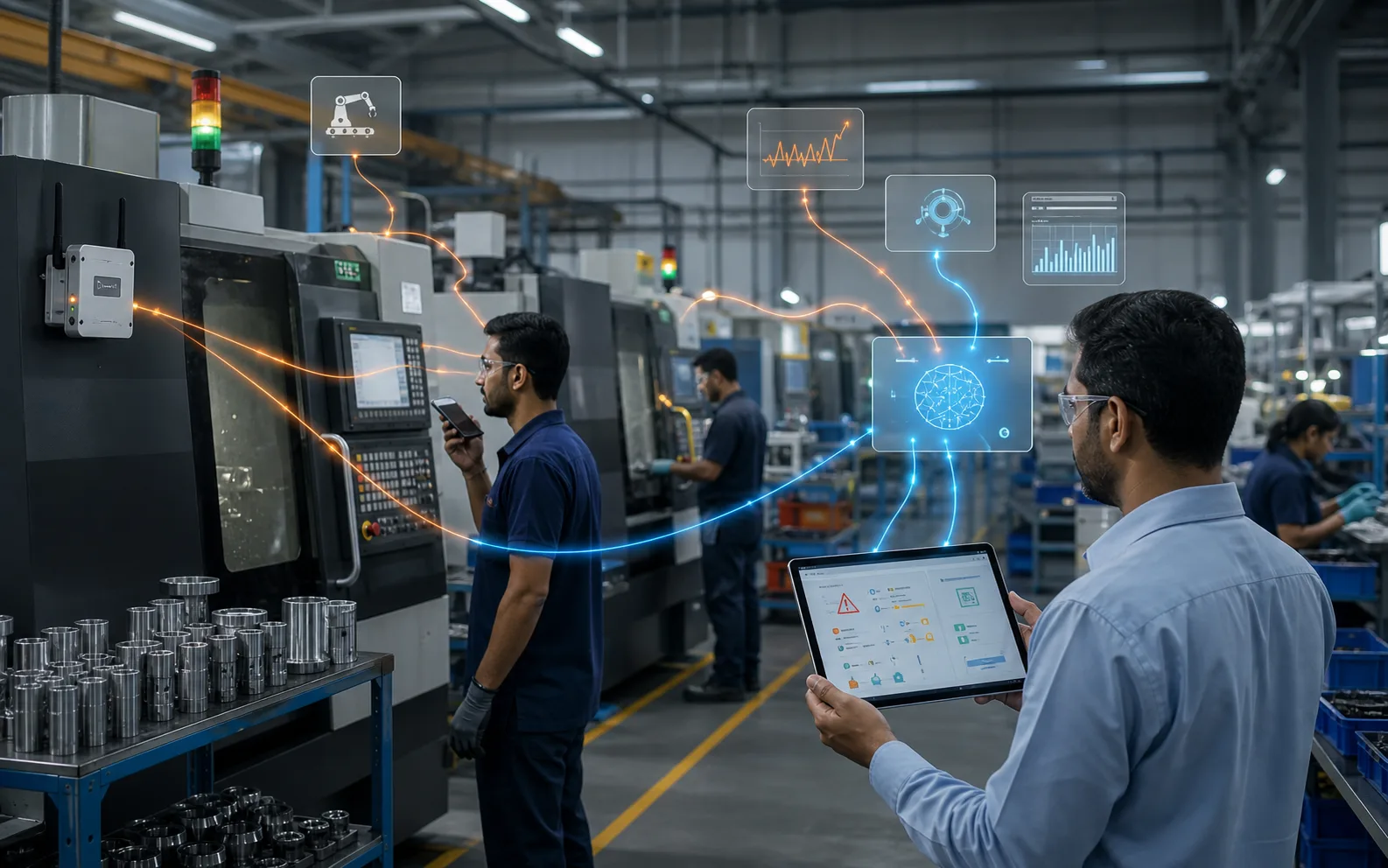
Future jobs will increasingly become hybrid roles. People will still own outcomes, but AI will assist with information, prioritization, drafting, analysis, and alerts.
The best workers will not be replaced by AI. They will learn how to manage AI as part of their workflow.
What Hybrid Roles Look Like
A hybrid role combines human judgment with AI support.
Examples:
- Salesperson using AI to prioritize follow-ups
- Production planner using AI to identify bottlenecks
- Quality manager using AI to spot defect patterns
- Purchase manager using AI to flag supplier delays
- Owner using AI dashboards to review exceptions
Why Hybrid Roles Matter
AI can process more information than humans. Humans understand context and responsibility. Together, they can improve speed and quality.
Skills Needed for Hybrid Roles
- AI tool fluency
- Domain knowledge
- Data literacy
- Verification
- Communication
- Decision-making
- Process thinking
Risks of Hybrid Work
Hybrid roles fail when people blindly trust AI, ignore it, or use poor data.
Human review remains essential.
Where AICAN Optiwise Fits
AICAN Optiwise creates hybrid workflows for MSME manufacturing by giving teams AI-assisted visibility across sales, purchase, inventory, production, quality, dispatch, and finance.
FAQ
What is a hybrid human-AI role?
A role where AI supports tasks and humans guide decisions and execution.
Will hybrid roles pay more?
They may, if they create measurable business value.
What skill matters most?
Domain expertise combined with AI fluency.
Can shopfloor roles become hybrid?
Yes, through dashboards, alerts, digital quality checks, and automation support.
Final Thought
Hybrid roles are not the future in theory. They are already emerging.
The sooner you learn to work with AI, the easier the transition becomes.

Related Posts
Is AI Worth the Investment for My Factory?
Learn how to decide if AI is worth the investment for your factory by evaluating use cases, data readiness, costs, risks, ROI, and operational impact.
13 Jun 2026Read more →Manufacturing AI Mistakes to Avoid Before You Start
List manufacturing AI mistakes and controls for unclear use case, messy data, unsafe automation, no owner, weak security and unreviewed recommendations.
13 Jun 2026Read more →What's the Difference Between AI and Regular Automation?
Understand the difference between AI and regular automation in manufacturing, with practical examples for workflows, decisions, alerts, and predictive operations.
13 Jun 2026Read more →What Are the Risks of Using AI in Manufacturing?
Understand the risks of AI in manufacturing, including bad data, wrong recommendations, safety issues, security, job fear, over-automation, and implementation failure.
13 Jun 2026Read more →