
What Are the Main Challenges When Implementing IoT?
Understand the real challenges manufacturers face when implementing IoT, including unclear scope, old machines, network issues, data quality, adoption, security, and ROI.
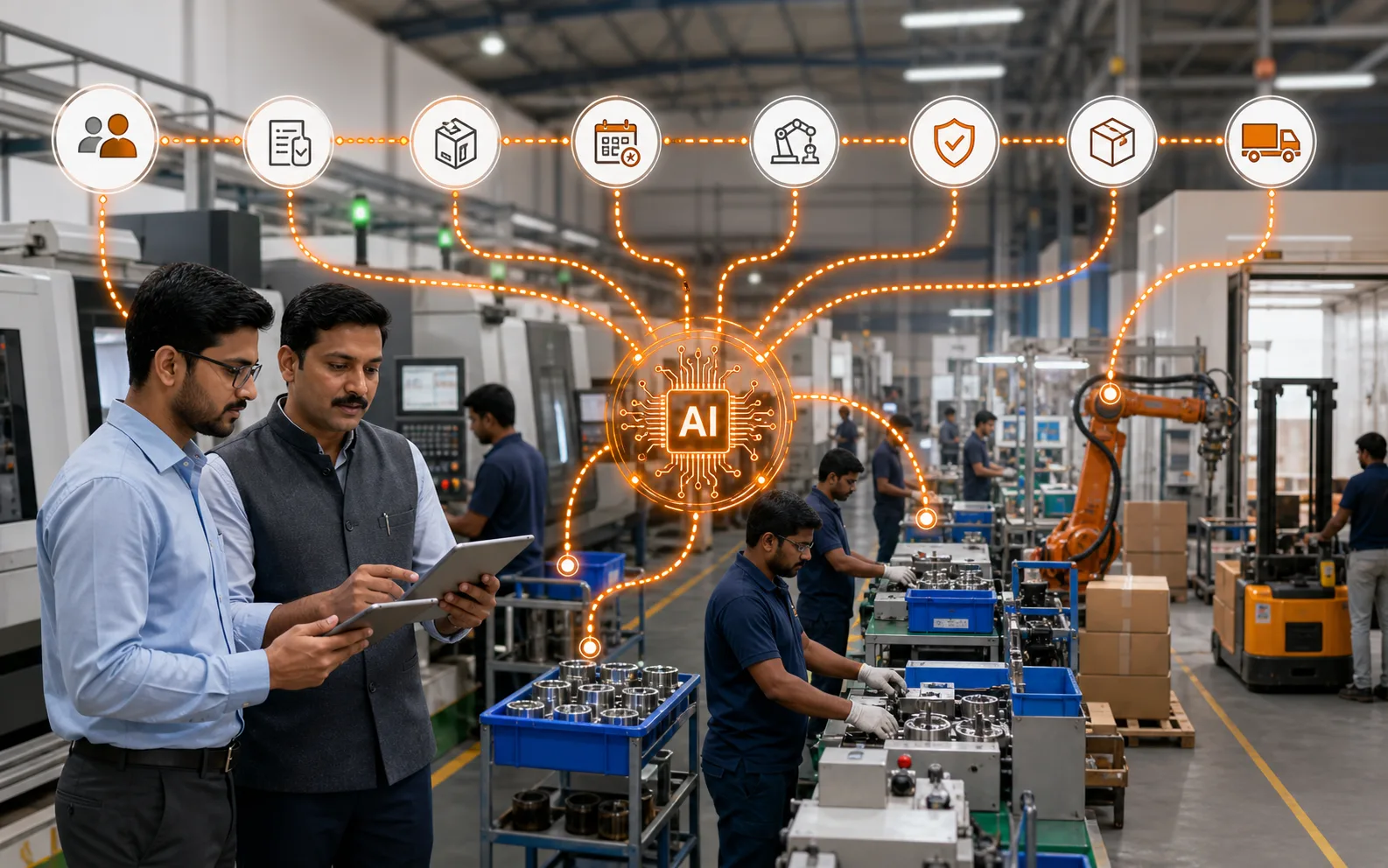
What Are the Main Challenges When Implementing IoT?
The main challenges in IoT implementation are usually not the sensors. They are unclear scope, weak ownership, old machine compatibility, network gaps, poor data quality, user resistance, integration complexity, security concerns, and unrealistic ROI expectations.
That may sound like a long list, but it has a simple message: IoT is an operating project, not only a technology project.
A manufacturer can buy devices quickly. Making the data useful inside daily production, maintenance, quality, inventory, and management routines takes better planning.
Challenge 1: Starting Without a Clear Use Case
Many IoT projects become slow because they begin with technology instead of a factory problem.
A clear use case sounds like this:
- reduce downtime on the bottleneck machine
- track energy per unit on a high-load process
- improve production visibility for one line
- create batch traceability for a quality-critical product
- detect early warning signs on critical equipment
A weak use case sounds like this:
- make the factory smart
- collect machine data
- build dashboards
- implement Industry 4.0
If the use case is vague, scope expands, dashboards become cluttered, and ROI becomes hard to prove.
Challenge 2: Mixed and Legacy Equipment
Most factories have mixed equipment. Some machines have PLCs. Some have old controls. Some are manual. Some utility equipment is critical but not digitally connected.
This creates implementation complexity, but it is manageable.
The solution is to assess each asset and choose the right data capture method:
- PLC integration where available
- retrofit sensors for older equipment
- meters for energy and utilities
- gateways for data collection
- operator input where context is needed
The challenge is not old equipment itself. The challenge is poor planning around how that equipment will be connected.
Challenge 3: Network and Site Readiness
Factory networks are not always ready for IoT. Weak Wi-Fi, electrical noise, limited cabling, poor internet reliability, and difficult machine access can slow implementation.
Before installation, teams should check:
- gateway placement
- power availability
- network coverage
- signal reliability
- safe mounting locations
- production downtime windows
- backup connectivity needs
Ignoring site readiness creates delays later.
Challenge 4: Data Quality and Validation
If the data is wrong, users will stop trusting the system.
Data validation should confirm:
- machine status is accurate
- counts match actual output
- downtime is detected correctly
- reason codes are clear
- energy readings match meters
- alerts are meaningful
- shift, machine, product, and order mappings are correct
Validation takes time, but it protects adoption. A dashboard with wrong data can damage confidence faster than no dashboard at all.
Challenge 5: User Adoption
Operators, supervisors, maintenance, quality, and managers may resist IoT if they see it as surveillance, extra work, or another system that management will not use properly.
Adoption improves when people understand:
- what problem the system solves
- what data is captured automatically
- what input is expected from them
- how the data helps them get support
- how review meetings will use the information
- what actions will follow from alerts
IoT adoption is easier when the system removes confusion instead of creating blame.
Challenge 6: Integration With ERP and Business Workflows
IoT data becomes much more valuable when connected with production orders, inventory, quality, maintenance, purchase, sales, finance, and dispatch.
But integration can be difficult if master data is inconsistent, APIs are limited, workflows are unclear, or departments use different definitions.
A phased approach usually works best. Start with the integration needed for the first use case, then expand.
Challenge 7: Security and Access Control
Connected devices and factory systems must be secured. This includes device inventory, user permissions, network segmentation, vendor access, updates, backups, and monitoring.
Security is sometimes ignored during pilots because teams want to move fast. That is risky. IoT systems can become operationally important quickly, so basic security discipline should be part of the design from the beginning.
Challenge 8: Unrealistic ROI Expectations
IoT does not create value just by existing. It creates value when data improves decisions and actions.
A realistic ROI plan should connect the project to losses such as:
- downtime
- energy waste
- rework and scrap
- manual reporting effort
- delayed maintenance
- missed dispatches
- poor traceability
- inaccurate costing
If the project has no measurable target, ROI will remain a debate.
How to Reduce Implementation Risk
A practical approach is to start with one important use case, one committed owner, one clear success metric, and one manageable pilot area.
Then:
- validate data early
- train each role properly
- keep dashboards simple
- review data weekly
- assign actions
- connect with ERP where it improves decisions
- scale only after the first area is trusted
This keeps the project grounded.
Where AICAN Optiwise Fits
AICAN Optiwise helps manufacturers connect IoT thinking with the operating workflows that matter: production, inventory, purchase, sales, finance, reporting, and management review.
Many IoT challenges become easier when the business has a connected operational foundation. You can explore AICAN and learn more on About AICAN.
FAQ
What is the biggest IoT implementation challenge?
The biggest challenge is often unclear scope and weak ownership. Without a business problem and an accountable owner, the project drifts.
Can old machines delay IoT implementation?
They can add assessment work, but they do not block IoT. Retrofit sensors and gateways can often connect older equipment.
How do we avoid poor data quality?
Validate readings against real operation before relying on dashboards. Check machine status, counts, downtime, energy, and mappings.
Why do users resist IoT?
Users resist when the system feels like surveillance, extra work, or management pressure. Adoption improves when it helps them solve daily problems.
Should we integrate IoT with ERP immediately?
Integrate where it supports the first use case. Full integration can be phased as the project matures.
Founder’s Note
At AICAN, we believe implementation success depends on respecting factory reality. A good system must fit machines, people, workflows, and business decisions.
IoT is powerful when it is practical. That is the standard we care about.
Final Thought
IoT implementation challenges are real, but they are manageable. Start with a focused problem, validate the data, train the users, secure the setup, and connect the insight to action.

Related Posts
Is AI Worth the Investment for My Factory?
Learn how to decide if AI is worth the investment for your factory by evaluating use cases, data readiness, costs, risks, ROI, and operational impact.
13 Jun 2026Read more →Manufacturing AI Mistakes to Avoid Before You Start
List manufacturing AI mistakes and controls for unclear use case, messy data, unsafe automation, no owner, weak security and unreviewed recommendations.
13 Jun 2026Read more →What's the Difference Between AI and Regular Automation?
Understand the difference between AI and regular automation in manufacturing, with practical examples for workflows, decisions, alerts, and predictive operations.
13 Jun 2026Read more →What Are the Risks of Using AI in Manufacturing?
Understand the risks of AI in manufacturing, including bad data, wrong recommendations, safety issues, security, job fear, over-automation, and implementation failure.
13 Jun 2026Read more →