
How Do I Monitor Clean Room Equipment?
Learn how to monitor clean room equipment using ERP, IoT, maintenance records, calibration schedules, environmental monitoring, alerts, and quality review workflows.
How Do I Monitor Clean Room Equipment?
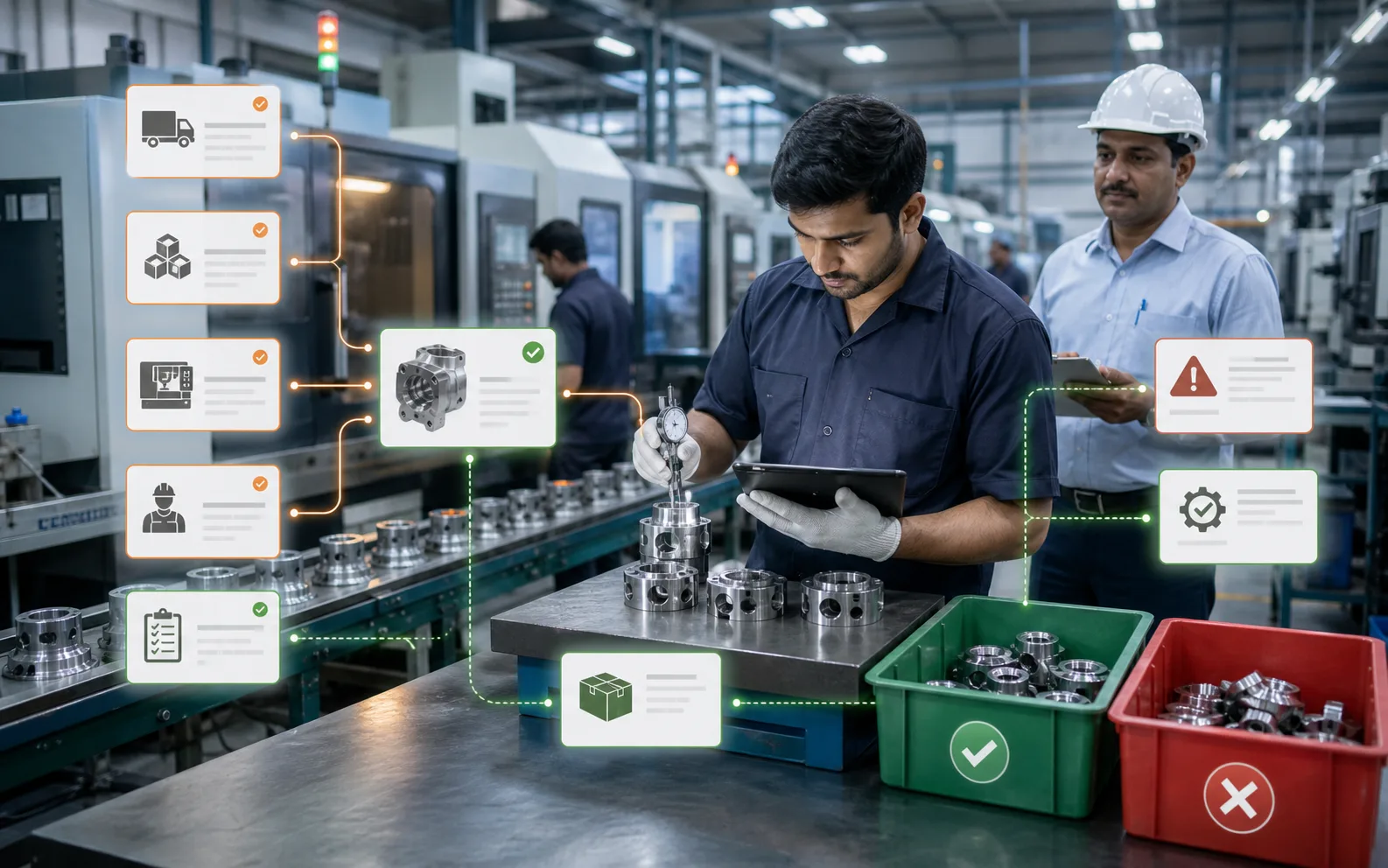
You monitor clean room equipment by combining defined SOPs, environmental monitoring, equipment checks, calibration records, preventive maintenance, alarms, data review, and ERP or IoT-based reporting. The goal is to keep critical equipment visible, controlled, and reviewable.
Clean rooms depend on equipment that supports environmental conditions, contamination control, air handling, pressure relationships, and process stability. If the monitoring is weak, teams may detect issues late or struggle to prove what happened during a production period.
AICAN Optiwise helps manufacturers connect production, maintenance, quality checkpoints, inventory, and reporting so equipment and environmental records can be managed with better visibility.
Identify critical clean room equipment
Start by listing the equipment and systems that matter for clean room operation.
This may include:
- HVAC and air handling units
- HEPA filters
- Differential pressure systems
- Temperature sensors
- Humidity sensors
- Particle counters where applicable
- Pass boxes
- Air showers
- Laminar airflow units
- Clean benches
- Dehumidifiers
- Utility systems
- Monitoring devices and data loggers
Each asset should have an owner, location, maintenance requirement, calibration requirement where applicable, and monitoring expectation.
Define what must be monitored
Clean room monitoring should be based on process need and quality risk. Not every facility has the same requirements, so the quality team should define monitoring points according to SOPs and applicable standards.
Common parameters include:
- Temperature
- Humidity
- Differential pressure
- Airflow status
- Filter status
- Equipment runtime
- Alarm conditions
- Calibration status
- Maintenance status
- Cleaning or usage records where relevant
The system should make deviations visible and documentable.
Use alerts with clear responsibility
Alerts are useful only when someone owns them. A temperature or pressure excursion should not become a random notification that everyone ignores.
For each alert, define:
- Trigger condition
- Alert severity
- Responsible person or role
- Escalation path
- Expected response time
- Documentation requirement
- Quality review requirement
- Link to affected room, equipment, material, or batch where relevant
This turns monitoring into a controlled workflow.
Track preventive maintenance
Clean room equipment needs planned maintenance. Preventive maintenance records help show that critical systems are being looked after, not only repaired after failure.
The ERP or maintenance system should track:
- Maintenance schedule
- Work order history
- Checklist completion
- Spare parts used
- Technician notes
- Next due date
- Overdue tasks
- Equipment downtime
Maintenance records should be easy to retrieve during internal reviews, audits, or investigations.
Track calibration and verification
Monitoring devices and instruments may require calibration or verification. If a sensor is used for important decisions, the team must know whether it is within its defined control program.
Useful calibration records include:
- Instrument ID
- Location
- Last calibration date
- Next due date
- Calibration status
- Certificate reference where applicable
- Out-of-calibration handling process
The company’s quality system should define how calibration is controlled and what happens if equipment is overdue or found out of tolerance.
Connect monitoring to production context
Clean room equipment records become more useful when linked to production activity.
For example:
- Which batch was produced during a pressure excursion?
- Which room was used for a particular process?
- Was the equipment maintenance current during the batch?
- Was any alarm active during production?
- Did quality review the event before release?
ERP provides context that standalone sensor systems often lack. It connects room, batch, equipment, quality, and inventory information.
Review trends, not only alarms
A clean room may not cross alarm limits, but trends can still show developing issues. Humidity may slowly drift. Pressure may become unstable. Filter performance may weaken. Equipment downtime may increase.
Trend review helps teams act before a serious issue appears.
Useful trend reports include:
- Temperature trend by room
- Humidity trend by room
- Differential pressure trend
- Alarm frequency
- Maintenance frequency
- Equipment downtime
- Calibration overdue history
- Repeated excursion analysis
This supports preventive action rather than only reactive response.
Avoid common clean room monitoring mistakes
Common gaps include:
- Monitoring data stored separately from quality records
- Alerts without ownership
- Calibration schedules tracked manually
- Maintenance records kept only on paper
- No link between room condition and batch production
- Trend review ignored
- Too many users able to modify records
- No documented response to excursions
A connected system helps reduce these gaps, but the process still needs ownership.
Where Optiwise fits
Optiwise can help manufacturers connect clean room equipment monitoring with maintenance, production, quality checkpoints, inventory, and reporting. For pharma teams, this supports better visibility over equipment readiness, environmental exceptions, maintenance due dates, and batch impact.
AICAN focuses on practical systems that help plant teams act quickly while leaving clearer records for review.
Founder’s Note
Clean room monitoring is not only about numbers on a screen. It is about confidence: confidence that the room was suitable, the equipment was maintained, and exceptions were handled properly. At AICAN, we believe monitoring should connect signals with action and action with records. That is how digital systems support real manufacturing discipline. Learn more at About AICAN.
FAQs
How do I monitor clean room equipment?
Identify critical equipment, define monitoring parameters, use alerts, track maintenance, manage calibration, review trends, connect records to production context, and document exceptions according to SOPs.
What clean room parameters should be monitored?
Common parameters include temperature, humidity, differential pressure, airflow status, filter status, equipment runtime, alarms, maintenance status, and calibration status. Exact requirements depend on process and quality standards.
Can IoT monitor clean room equipment?
Yes. IoT can monitor environmental and equipment signals such as temperature, humidity, pressure, runtime, and alarms. If the data supports quality decisions, validation and data integrity should be reviewed.
Why connect clean room monitoring with ERP?
ERP provides production and batch context. This helps teams understand which batch, room, equipment, or material may be affected by an event.
What is the biggest clean room monitoring risk?
The biggest risk is having data without action. Monitoring should trigger review, documentation, escalation, and quality decisions where needed.

Related Posts
How Sensors Help With Quality Control in Manufacturing
Explain quality-control sensors through measured property, tolerance, calibration evidence, sampling, false alerts and human disposition.
11 Jun 2026Read more →
Track Quality Issues in ERP: Inspection to Disposition
Follow an inspection issue through stock hold, approved rework or scrap, quantity reconciliation and corrective-action checks, with a 50-part example.
28 May 2026Read more →How Can IoT Improve My Quality Control Process?
Learn how IoT improves quality control by connecting inspection data, batch traceability, machine conditions, process parameters, and corrective action.
13 May 2026Read more →
Predictive Maintenance Software: A Growing Manufacturing Tech Career
Learn why predictive maintenance software is creating manufacturing tech careers in IoT, analytics, AI, machine data, and ERP-connected operations.
3 May 2026Read more →