
Outbound Logistics | Optiwise
Learn what outbound logistics means, how it works in manufacturing, and how ERP-connected dispatch planning improves delivery reliability.
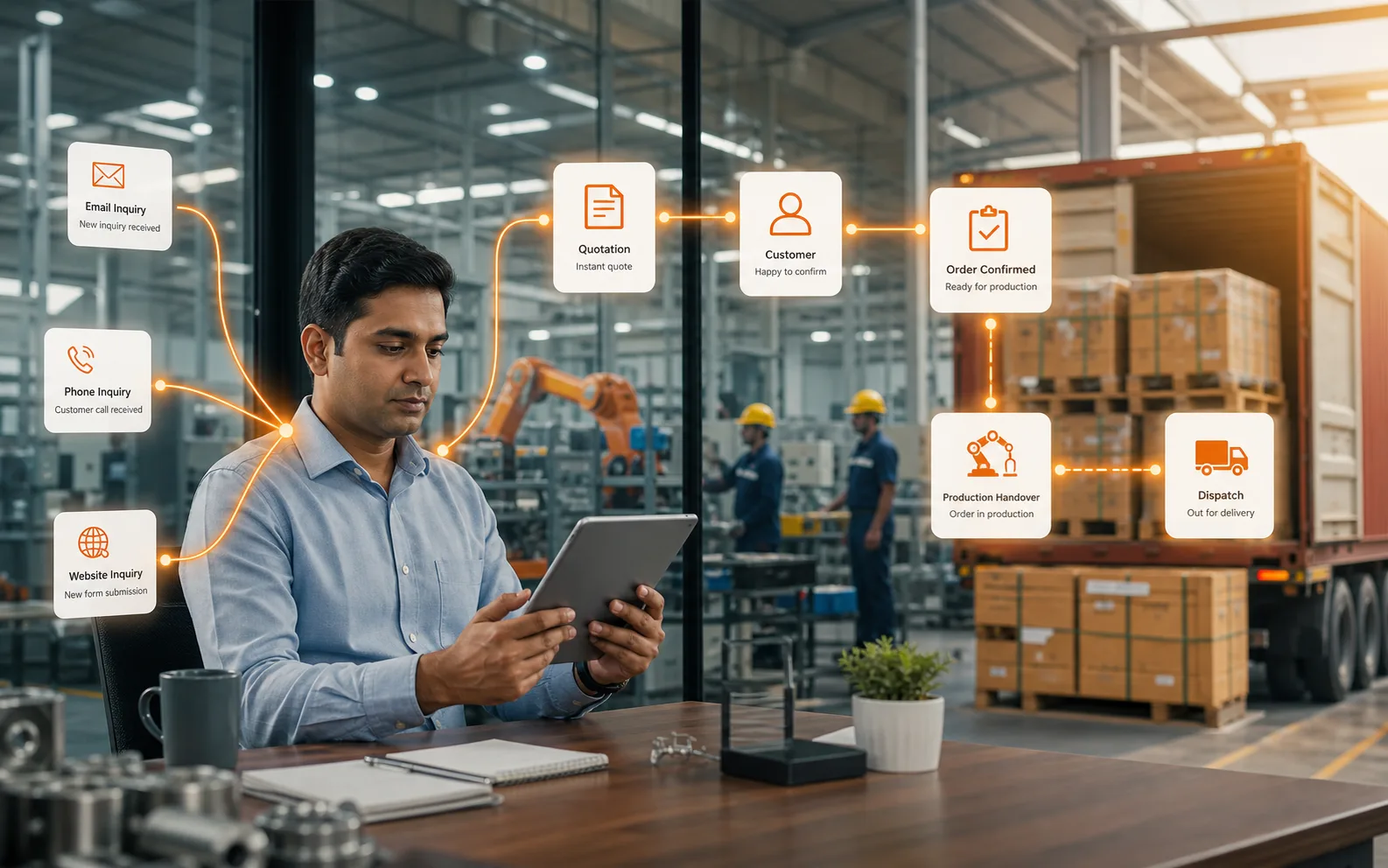
Outbound Logistics: Meaning, Process, and Manufacturing Best Practices
Outbound logistics is the movement of finished goods from the factory or warehouse to the customer, dealer, distributor, project site, or another business location.
It is the final operational stretch before the customer experiences the order. If outbound logistics fails, all earlier work in sales, purchase, production, and quality can still end in a poor delivery experience.
For manufacturers, outbound logistics includes dispatch planning, packing, documentation, transport coordination, shipment tracking, and delivery confirmation.
What Is Outbound Logistics?
Outbound logistics covers the storage, handling, dispatch, transportation, and delivery of finished goods.
It begins when goods are ready for dispatch and ends when they reach the intended destination with proper documentation.
In manufacturing, outbound logistics must often coordinate with production completion, quality clearance, packing standards, invoicing, and customer delivery windows.
Outbound Logistics Process
The process usually starts with dispatch planning. Orders ready for shipment are reviewed by date, route, priority, customer, and transport mode.
Next comes picking and packing. Items are selected, checked, packed, labelled, and staged.
Documentation follows. Depending on the order, this may include invoice, packing list, e-way bill, test certificate, warranty documents, export papers, or customer-specific forms.
Then goods are loaded and shipped. Delivery status is tracked until confirmation.
Why Outbound Logistics Matters
Outbound logistics affects customer satisfaction, cash flow, delivery performance, freight cost, and brand trust.
A delayed dispatch can delay invoice realization. Poor packing can damage goods. Wrong documentation can stop vehicles or create customer rejection. Poor tracking can leave sales teams unable to answer customers.
Good outbound logistics makes delivery dependable.
Manufacturing Challenges
Manufacturers face challenges such as bulky goods, fragile items, batch traceability, partial dispatch, customer-specific packing, project delivery schedules, export compliance, and transporter coordination.
Some products cannot ship without quality clearance. Some need special handling. Some require synchronized installation teams. These realities must be visible in the dispatch plan.
Best Practices
Create a ready-to-dispatch dashboard. Standardize packing requirements. Connect dispatch with invoice and documentation. Use transport planning by route and priority. Track pending dispatches daily. Capture proof of delivery where relevant.
Also review freight cost and delivery performance. Logistics should not be treated only as a last-minute activity.
How Optiwise Helps
AICAN Optiwise connects sales, inventory, production, dispatch, reporting, IoT, and AI workflows. Outbound logistics improves when dispatch teams can see order readiness, stock status, production completion, and documentation requirements in one place.
With Optiwise by AICAN, manufacturers can strengthen dispatch visibility, order tracking, and management reporting. AI-supported alerts can help flag delayed shipments or orders waiting too long after readiness.
Learn more about AICAN and its connected manufacturing operations.
Metrics to Track
Track on-time dispatch, on-time delivery, dispatch lead time, freight cost per order, damage rate, documentation errors, vehicle waiting time, and proof-of-delivery closure time.
These metrics help identify whether outbound logistics issues come from warehouse, documentation, transporter, packing, or production delay.
Founder’s Note
AICAN’s founder-led view is that outbound logistics is not the end of operations; it is the customer-facing proof of operations. A factory can produce well, but if dispatch is chaotic, the customer remembers the chaos.
Good logistics makes reliability visible.
FAQs
What is outbound logistics?
Outbound logistics is the process of moving finished goods from the business to customers, dealers, distributors, or other destinations.
What are the steps in outbound logistics?
Steps include dispatch planning, picking, packing, documentation, loading, shipping, tracking, and delivery confirmation.
Why is outbound logistics important?
It affects delivery reliability, customer satisfaction, freight cost, cash flow, and order closure.
How can ERP improve outbound logistics?
ERP connects order readiness, stock, dispatch documents, invoices, and shipment status for better control.
Is outbound logistics only transport?
No. It includes packing, documentation, staging, dispatch planning, loading, tracking, and delivery confirmation.
Final Thought
Outbound logistics is where the customer sees whether the business can keep its promise. A connected dispatch process turns finished goods into completed revenue with fewer surprises.

Related Posts
Sales Invoice Management Process For SMEs | Optiwise
A practical guide to sales invoice management for SME manufacturers, covering order confirmation, dispatch, GST details, documentation, payment follow-up, and controls.
5 Jun 2026Read more →How Do I Manage Custom Furniture Orders?
Learn how furniture manufacturers can manage custom orders using specifications, drawings, approvals, BOMs, materials, cutting, CNC, assembly, finishing, costing, delivery, and installation tracking.
21 May 2026Read more →
Minimum Order Quantity | Optiwise
Learn minimum order quantity, why suppliers set MOQ, how manufacturers should evaluate it, risks, examples, and how Optiwise improves MOQ and stock planning.
2 May 2026Read more →MSME networking events and trade fairs 2024: International opportunities for Indian businesses
Written by Reading progress Call us As we step into 2024, the landscape for Micro, Small, and Medium Enterprises (MSMEs) is evolving rapidly. With digital transformation becoming the norm, it’s crucial for Indian busines…
17 Apr 2026Read more →