
Risks of Over-Automating With AI
Over-automating with AI can create poor customer experience, employee fear, hidden errors, weak accountability, and loss of human judgment.

Risks of Over-Automating With AI
AI automation is useful, but over-automating can create serious problems.
When businesses automate too much too quickly, they may lose customer trust, create employee fear, miss important exceptions, hide errors, or remove human judgment from decisions that need it. The goal should be smart automation, not maximum automation.
Risk 1: Poor Customer Experience
Customers become frustrated when AI blocks them from human help.
Complex complaints, urgent issues, and emotional situations should escalate quickly.
Risk 2: Hidden Errors
If AI actions are not reviewed, mistakes may spread quietly.
Audit logs and review workflows are essential.
Risk 3: Employee Resistance
Employees may fear replacement if automation is introduced without communication.
This can reduce adoption and morale.
Risk 4: Loss of Judgment
Some decisions need human context.
Pricing exceptions, complaints, HR issues, supplier commitments, and strategic choices should not be fully automated too early.
AICAN Optiwise supports AI workflows with operational context, but human review remains essential for high-risk decisions.
How to Avoid Over-Automation
Start with low-risk tasks, define escalation rules, keep audit trails, measure outcomes, and review user feedback.
Where AICAN Optiwise Fits
AICAN Optiwise helps businesses automate responsibly by keeping workflows connected and measurable across operations.
Learn more at About AICAN.
Founder’s Note
Automation should remove friction, not responsibility. If AI makes a business faster but less accountable, the design is wrong.
Keep humans in the loop where judgment matters.
FAQ
What is over-automation?
Automating tasks that still need human judgment, empathy, or accountability.
What should not be fully automated?
Complaints, sensitive HR issues, legal matters, major approvals, and complex customer cases.
How can risk be reduced?
Use escalation, audit logs, testing, and human review.
Is automation still worth it?
Yes, when applied to the right tasks with controls.
Final Thought
The goal is not to automate everything. The goal is to automate wisely.
Businesses that balance AI speed with human judgment will get better results. That is the responsible automation approach AICAN supports.

Related Posts
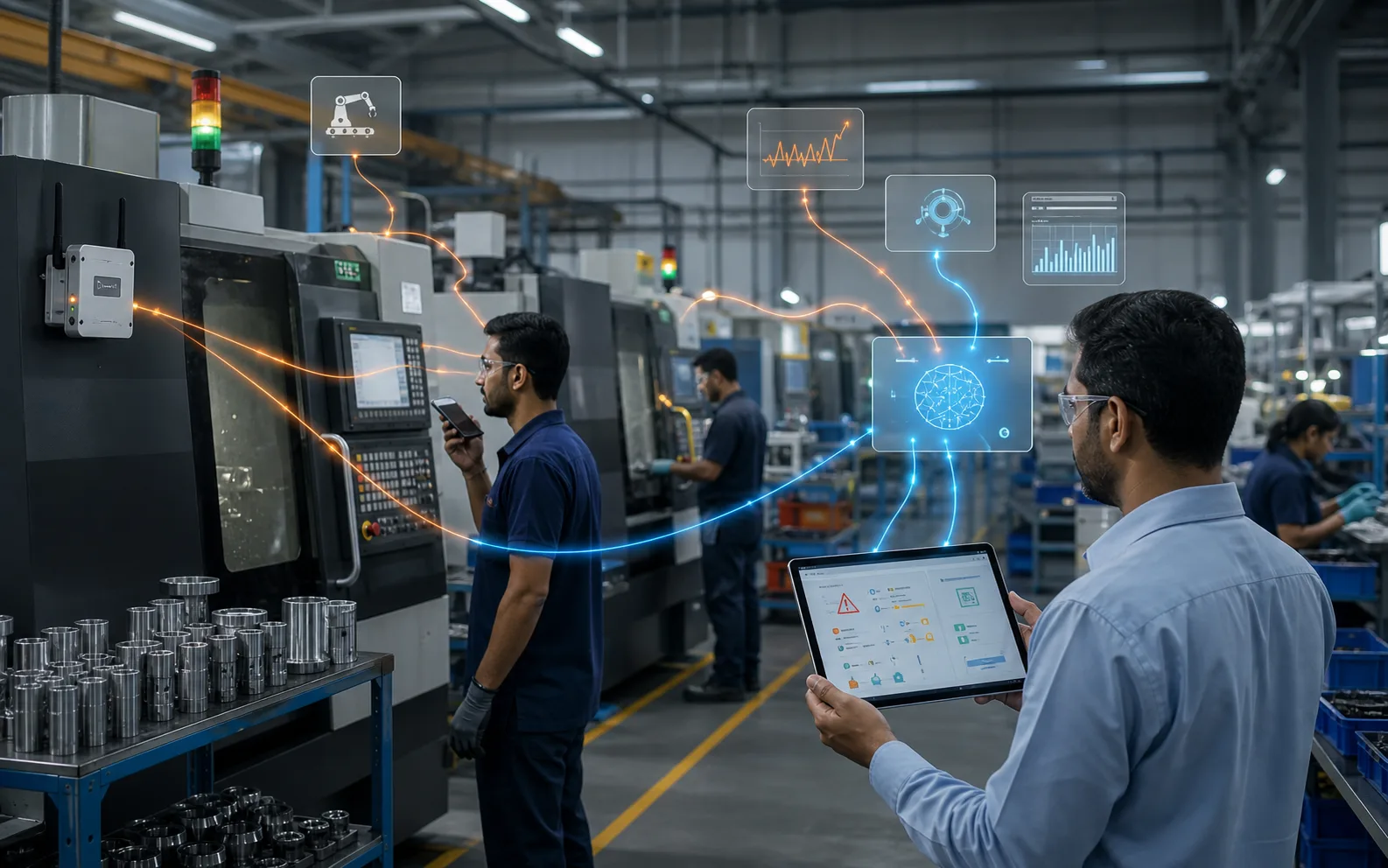
Is AI Worth the Investment for My Factory?
Learn how to decide if AI is worth the investment for your factory by evaluating use cases, data readiness, costs, risks, ROI, and operational impact.
13 Jun 2026Read more →Manufacturing AI Mistakes to Avoid Before You Start
List manufacturing AI mistakes and controls for unclear use case, messy data, unsafe automation, no owner, weak security and unreviewed recommendations.
13 Jun 2026Read more →What's the Difference Between AI and Regular Automation?
Understand the difference between AI and regular automation in manufacturing, with practical examples for workflows, decisions, alerts, and predictive operations.
13 Jun 2026Read more →What Are the Risks of Using AI in Manufacturing?
Understand the risks of AI in manufacturing, including bad data, wrong recommendations, safety issues, security, job fear, over-automation, and implementation failure.
13 Jun 2026Read more →