
How Do Sensors Help with Predictive Maintenance?
Learn how sensors support predictive maintenance by tracking vibration, temperature, current, pressure, and operating patterns before equipment failures occur.
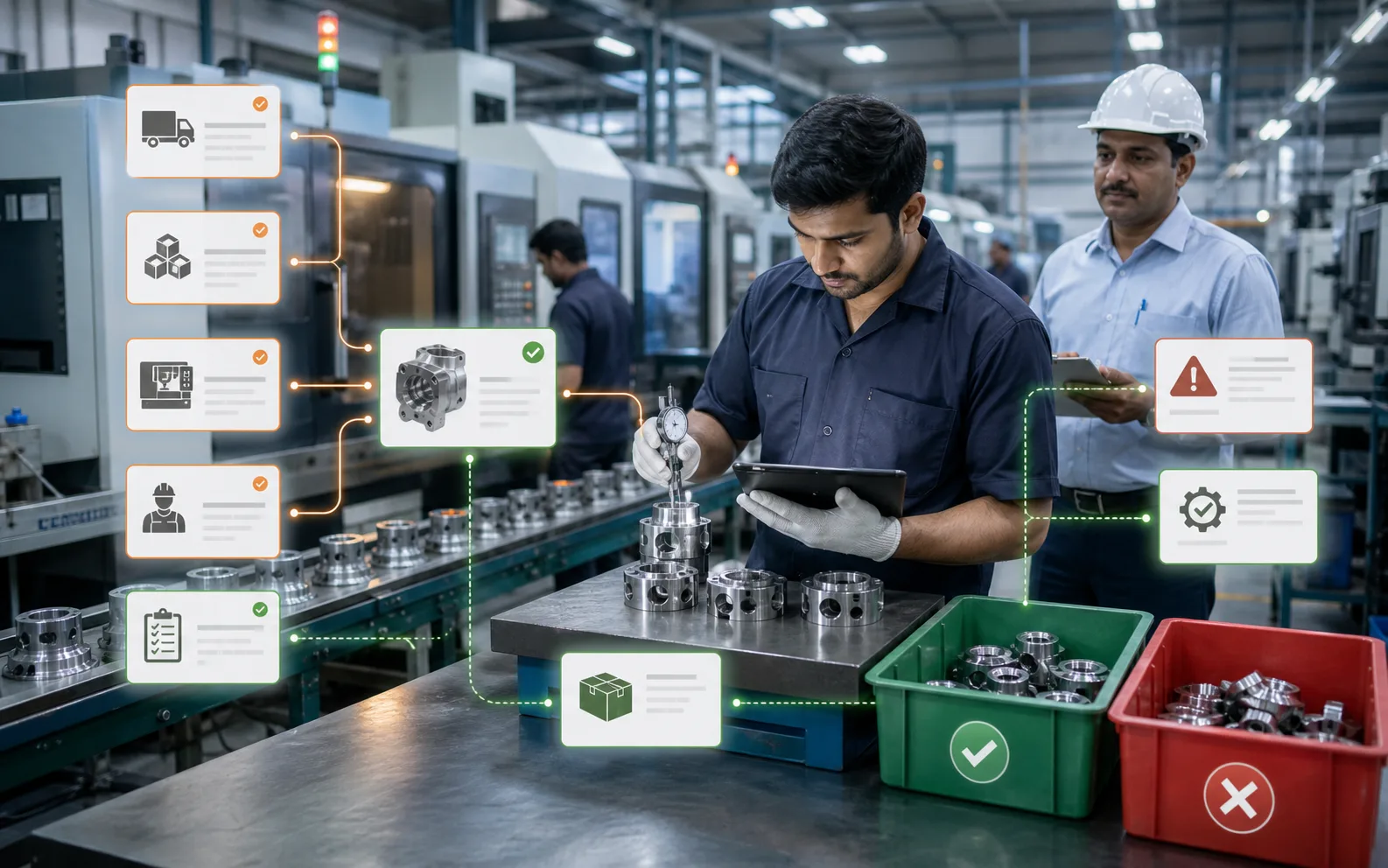
How Do Sensors Help with Predictive Maintenance?
Sensors help predictive maintenance by showing how equipment behaves before it fails.
Instead of waiting for a breakdown or replacing parts only by calendar schedule, factories can monitor signals such as vibration, temperature, current, pressure, flow, cycle count, and run hours. These signals help maintenance teams notice abnormal patterns earlier.
Predictive maintenance is not magic. It is disciplined observation. Sensors provide the observation. People still need to interpret, plan, and act.
For manufacturers evaluating AICAN Optiwise, sensor-backed maintenance can turn machine health data into alerts, reports, and maintenance priorities.
Predictive maintenance starts with machine behaviour
Machines usually give clues before they fail.
A bearing vibrates differently. A motor draws more current. A gearbox runs hotter. A pump pressure fluctuates. A compressor takes longer to recover. A machine begins having more short stops. These signals may appear days or weeks before a major issue, depending on the equipment and failure mode.
Sensors help capture these clues consistently.
Vibration sensors reveal mechanical change
Vibration monitoring is useful for rotating equipment such as motors, pumps, fans, compressors, spindles, and gearboxes.
A change in vibration pattern may indicate imbalance, misalignment, looseness, bearing wear, or mechanical stress. The exact interpretation requires maintenance knowledge and sometimes specialist analysis, but the sensor gives the team a starting signal.
The most important thing is baseline comparison. A reading becomes useful when the team knows what normal looks like for that machine.
Temperature sensors catch overheating trends
Temperature is one of the most practical maintenance signals.
Motors, bearings, panels, hydraulics, ovens, and process equipment may show abnormal heat before failure. A temperature rise may indicate friction, overload, poor cooling, electrical issues, lubrication problems, or process drift.
A single high temperature alarm is useful. A slow trend over time can be even more useful because it gives the team time to plan.
Current sensors show load and operating stress
Current sensors can show whether a motor is running, overloaded, idle, or behaving unusually.
A rise in current may indicate mechanical resistance, tool wear, material change, alignment issues, or process load. Current data can also help identify unnecessary idle running or machines consuming power without productive output.
For older machines, current sensing can be a practical way to infer machine status without deep controller integration.
Pressure and flow sensors support utilities and process equipment
Pressure and flow are important in compressed air, hydraulics, cooling water, steam, pumps, and process lines.
A pressure drop may indicate leakage, blockage, pump issues, valve problems, or demand changes. Flow changes can reveal abnormal consumption, clogged filters, or unstable process conditions.
In many factories, utility failures cause production issues indirectly. Sensors help expose those hidden causes.
Predictive maintenance needs thresholds and review routines
Sensor data alone does not create predictive maintenance.
The factory needs thresholds, trend review, alert ownership, inspection routines, and maintenance closure discipline. If the dashboard shows vibration increasing but nobody owns the action, failure still happens.
A good approach is to start with a few critical assets and define clear rules: what will be monitored, what counts as abnormal, who responds, and how action is recorded.
Data should be connected to maintenance history
Sensor trends become more useful when linked with maintenance events.
If a bearing was replaced, the vibration trend should be reviewed before and after. If a motor overheated, the temperature history should be compared with work orders. If a breakdown happened, the sensor data should be used to learn whether warning signs were missed.
This creates a learning loop. Predictive maintenance improves over time.
Where AICAN Optiwise fits
AICAN Optiwise helps manufacturers connect machine and sensor data into dashboards, alerts, and operating reports. For maintenance teams, that can mean better visibility into machine health, repeated stoppages, abnormal trends, and response priorities.
AICAN works with manufacturers that want maintenance to move from reactive firefighting toward planned, evidence-based action. Learn more at About AICAN.
Founder’s Note
Predictive maintenance is not about predicting the future perfectly. It is about listening to machines better than we did yesterday. Sensors make the early signals visible. The maintenance culture decides whether those signals become action.
FAQs
Which sensors are used for predictive maintenance?
Common sensors include vibration, temperature, current, pressure, flow, and run-hour or cycle-count sensors.
Can predictive maintenance prevent every breakdown?
No. It can reduce some avoidable failures and improve planning, but sudden failures can still happen.
Do I need AI for predictive maintenance?
Not always. Many factories can start with thresholds, trend analysis, alerts, and disciplined review.
Which machines should I monitor first?
Start with bottleneck machines, high-cost assets, machines with repeated failures, or equipment that affects safety or delivery.
How does AICAN Optiwise support maintenance teams?
It can bring sensor data into dashboards and alerts so maintenance teams see abnormal conditions and repeated patterns sooner.

Related Posts
How Sensors Help With Quality Control in Manufacturing
Explain quality-control sensors through measured property, tolerance, calibration evidence, sampling, false alerts and human disposition.
11 Jun 2026Read more →
Track Quality Issues in ERP: Inspection to Disposition
Follow an inspection issue through stock hold, approved rework or scrap, quantity reconciliation and corrective-action checks, with a 50-part example.
28 May 2026Read more →How Can IoT Improve My Quality Control Process?
Learn how IoT improves quality control by connecting inspection data, batch traceability, machine conditions, process parameters, and corrective action.
13 May 2026Read more →
Predictive Maintenance Software: A Growing Manufacturing Tech Career
Learn why predictive maintenance software is creating manufacturing tech careers in IoT, analytics, AI, machine data, and ERP-connected operations.
3 May 2026Read more →