
What Is Lean Manufacturing? Guide For SMEs | Optiwise
Learn lean manufacturing, the main types of waste, practical lean tools, examples for SMEs, and how Optiwise supports visibility and continuous improvement.
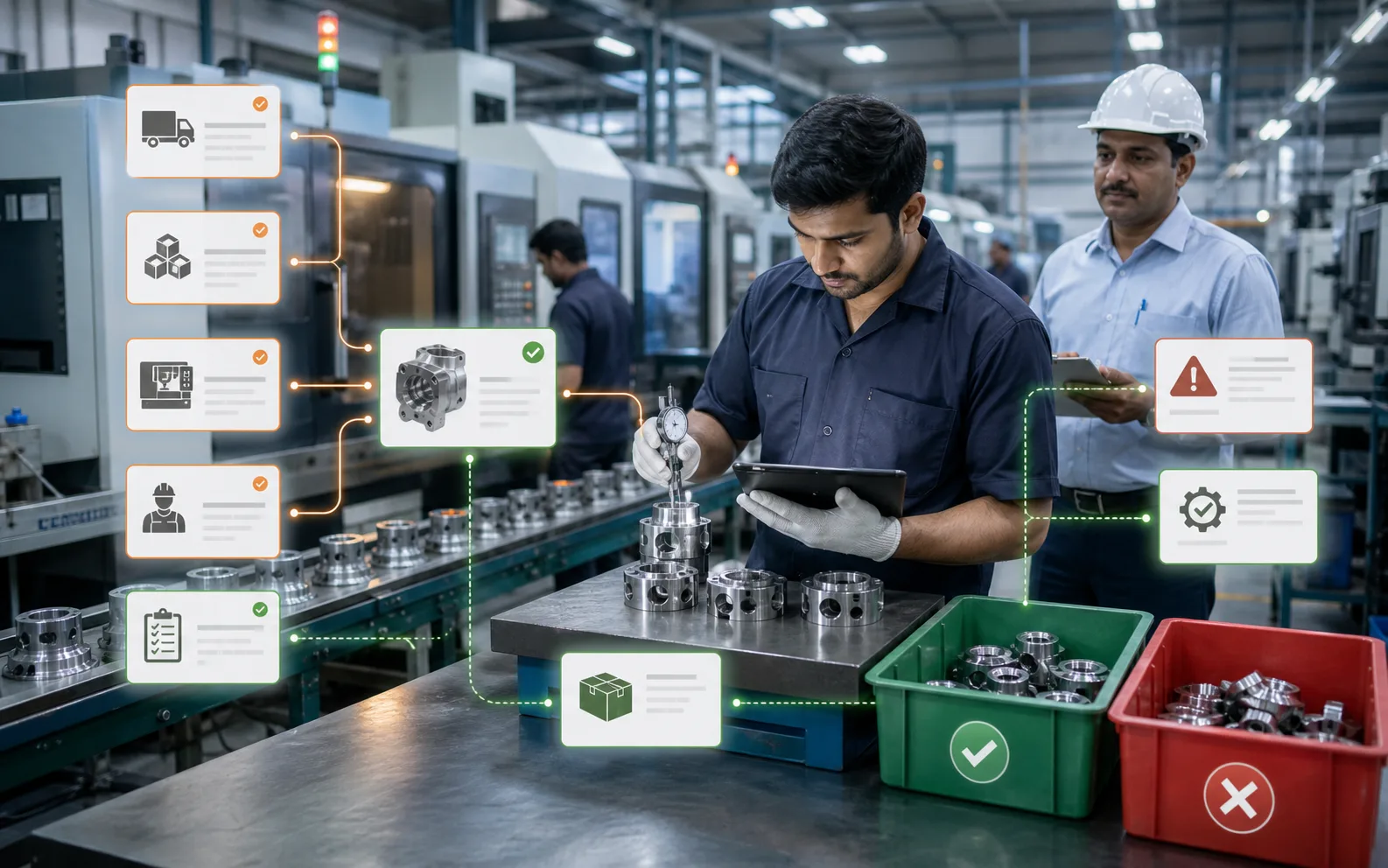
What Is Lean Manufacturing? Guide For SMEs
Lean manufacturing is not about cutting people or forcing the shop floor to work faster. It is about removing waste so work can flow better. In many factories, the waste is easy to feel but hard to see: material waiting, people searching, machines idle, excess WIP, rework, unclear approvals, and dispatch delays.
Lean manufacturing is a management approach focused on delivering customer value with less waste. For manufacturing SMEs, lean does not need to start with a large consulting project. It can start with one product, one process, one bottleneck, and one honest map of what really happens. AICAN Optiwise helps manufacturers make operational waste more visible through connected inventory, purchase, production, and dispatch data.
What Is Lean Manufacturing?
Lean manufacturing is a system of improving production by identifying and reducing waste while improving flow, quality, and customer value. It focuses on what the customer values and removes activities that do not support that value.
The aim is not only lower cost. It is better delivery, better quality, lower inventory, faster response, and more stable operations.
The Main Wastes
Lean often talks about wastes such as overproduction, waiting, transport, overprocessing, excess inventory, unnecessary motion, defects, and underused talent. SMEs may see these every day without naming them.
For example, waiting happens when production waits for material. Motion happens when workers search for tools. Overproduction happens when finished goods are made without demand. Defects happen when rework consumes time and material.
Lean Is About Flow
A factory can be busy and still have poor flow. If each department optimizes itself but orders wait between departments, the customer still experiences delay. Lean asks teams to look at the whole flow, not only local efficiency.
This is why value stream mapping, 5S, standard work, visual management, and root cause analysis are common lean tools.
Practical Lean Tools
5S improves workplace organization. Value stream mapping shows material and information flow. Kanban helps signal replenishment. Standard work reduces variation. Root cause analysis helps solve repeated problems. Kaizen encourages small continuous improvements.
SMEs should not adopt tools for appearance. Each tool should solve a real operational problem.
Lean And Inventory
Excess inventory often hides problems. It hides unreliable suppliers, poor planning, long changeovers, quality issues, and weak forecasting. Lean does not mean removing all inventory blindly. It means understanding why inventory exists and reducing the wasteful part.
Optiwise by AICAN helps manufacturers see stock, WIP, purchase, and production status so inventory decisions are based on facts.
Lean And People
Lean works when people doing the work are involved. Operators, stores teams, purchase executives, planners, and dispatch teams know where delays happen. If improvement is imposed without listening, teams may comply on paper and continue old habits in practice.
A strong lean culture respects people and improves processes.
How SMEs Can Start
Pick one recurring problem: late dispatch, high WIP, repeated stockouts, rework, or long setup time. Map the current process. Measure the delay. Ask why it happens. Fix one root cause. Review after a week. Then improve again.
Small visible wins build trust faster than large abstract programs.
Role Of Optiwise
Lean needs visibility. If teams cannot see shortages, delays, WIP, rework, or dispatch status, they cannot improve reliably. AICAN Optiwise supports this visibility by connecting factory workflows and giving leaders operational signals.
The system does not replace lean thinking. It makes lean thinking easier to practice daily.
Founder’s Note
At AICAN, we believe lean is practical common sense made visible. Optiwise helps manufacturers see where work is stuck, where inventory is hiding problems, and where teams need better information. Improvement begins when the factory can see itself clearly.
FAQs
What is lean manufacturing?
Lean manufacturing is an approach to improving production by reducing waste and improving flow, quality, and customer value.
What are common lean wastes?
Common wastes include waiting, overproduction, excess inventory, defects, unnecessary movement, transport, overprocessing, and underused talent.
Is lean only for large factories?
No. SMEs can apply lean through simple tools like 5S, value stream mapping, standard work, and root cause analysis.
Does lean mean reducing inventory to zero?
No. Lean means understanding inventory and reducing wasteful inventory without hurting reliability.
How does Optiwise support lean?
Optiwise provides visibility into inventory, purchase, production, WIP, and dispatch so teams can identify and reduce waste.

Related Posts
How Sensors Help With Quality Control in Manufacturing
Explain quality-control sensors through measured property, tolerance, calibration evidence, sampling, false alerts and human disposition.
11 Jun 2026Read more →
Track Quality Issues in ERP: Inspection to Disposition
Follow an inspection issue through stock hold, approved rework or scrap, quantity reconciliation and corrective-action checks, with a 50-part example.
28 May 2026Read more →How Can IoT Improve My Quality Control Process?
Learn how IoT improves quality control by connecting inspection data, batch traceability, machine conditions, process parameters, and corrective action.
13 May 2026Read more →
Predictive Maintenance Software: A Growing Manufacturing Tech Career
Learn why predictive maintenance software is creating manufacturing tech careers in IoT, analytics, AI, machine data, and ERP-connected operations.
3 May 2026Read more →