
Will AI Eliminate the Middle Class?
A balanced look at whether AI could weaken or reshape middle-class jobs, and how workers, businesses, and policymakers can respond through reskilling and better adoption.
Will AI Eliminate the Middle Class?
AI could put pressure on many middle-class jobs, especially roles built around routine information processing. But it does not have to eliminate the middle class. The outcome depends on adoption choices, education, reskilling, business models, and policy decisions.
AI is powerful enough to reshape work. The question is whether society helps people move into better roles or lets the transition become painful.
Jobs Under Pressure
Middle-class roles involving repetitive reports, basic analysis, routine documentation, and predictable admin work may change quickly.
AI can do parts of these tasks faster and cheaper.
Jobs That Can Grow
New and stronger roles may emerge in:
- AI operations
- Data quality
- Process improvement
- Automation maintenance
- Human-AI training
- Customer trust roles
- Safety and governance
- Domain-specialist analysis
Manufacturing Impact
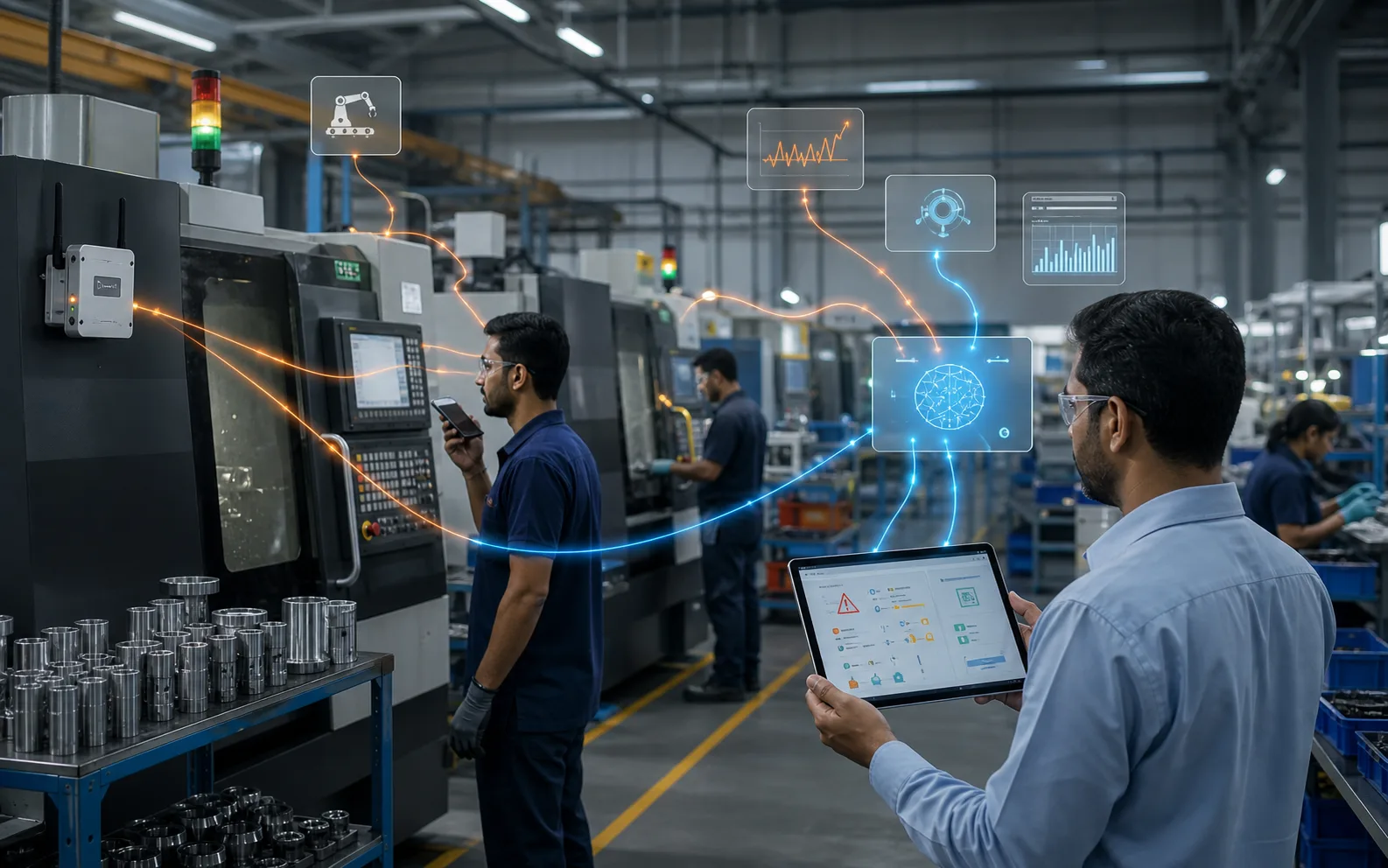
In manufacturing, AI can reduce manual reporting and improve automation. But factories still need skilled people for maintenance, safety, quality, planning, customer communication, and leadership.
The Reskilling Challenge
The key issue is transition. Workers need practical paths to learn new tools and move into AI-assisted roles.
Without reskilling, job displacement becomes more severe.
What Workers Can Do
Workers can improve resilience by learning AI tools, data literacy, domain expertise, communication, and judgment.
What Businesses Can Do
Businesses should adopt AI responsibly: map tasks, train workers, redesign roles, and create transition paths instead of treating automation only as headcount reduction.
Where AICAN Optiwise Fits
AICAN Optiwise represents AI as an operating assistant for manufacturing teams. It can help people make better decisions across workflows rather than simply remove them from the process.
FAQ
Will AI destroy middle-class jobs?
It may disrupt many roles, but the outcome depends on reskilling, adoption, and economic choices.
Which jobs are most exposed?
Routine, predictable information work is more exposed.
What protects workers?
AI fluency, domain expertise, judgment, communication, and adaptability.
Can businesses adopt AI responsibly?
Yes, by training teams and redesigning roles rather than only cutting jobs.
Final Thought
AI will test the middle class, but it does not have to erase it.
The difference will come from how quickly people, companies, and institutions help workers move up the skill curve.

Related Posts
Is AI Worth the Investment for My Factory?
Learn how to decide if AI is worth the investment for your factory by evaluating use cases, data readiness, costs, risks, ROI, and operational impact.
13 Jun 2026Read more →Manufacturing AI Mistakes to Avoid Before You Start
List manufacturing AI mistakes and controls for unclear use case, messy data, unsafe automation, no owner, weak security and unreviewed recommendations.
13 Jun 2026Read more →What's the Difference Between AI and Regular Automation?
Understand the difference between AI and regular automation in manufacturing, with practical examples for workflows, decisions, alerts, and predictive operations.
13 Jun 2026Read more →What Are the Risks of Using AI in Manufacturing?
Understand the risks of AI in manufacturing, including bad data, wrong recommendations, safety issues, security, job fear, over-automation, and implementation failure.
13 Jun 2026Read more →