
Quality Control In Manufacturing | Optiwise
Learn what quality control in manufacturing means, why it matters, common QC methods, inspection stages, challenges, and how ERP improves quality visibility.
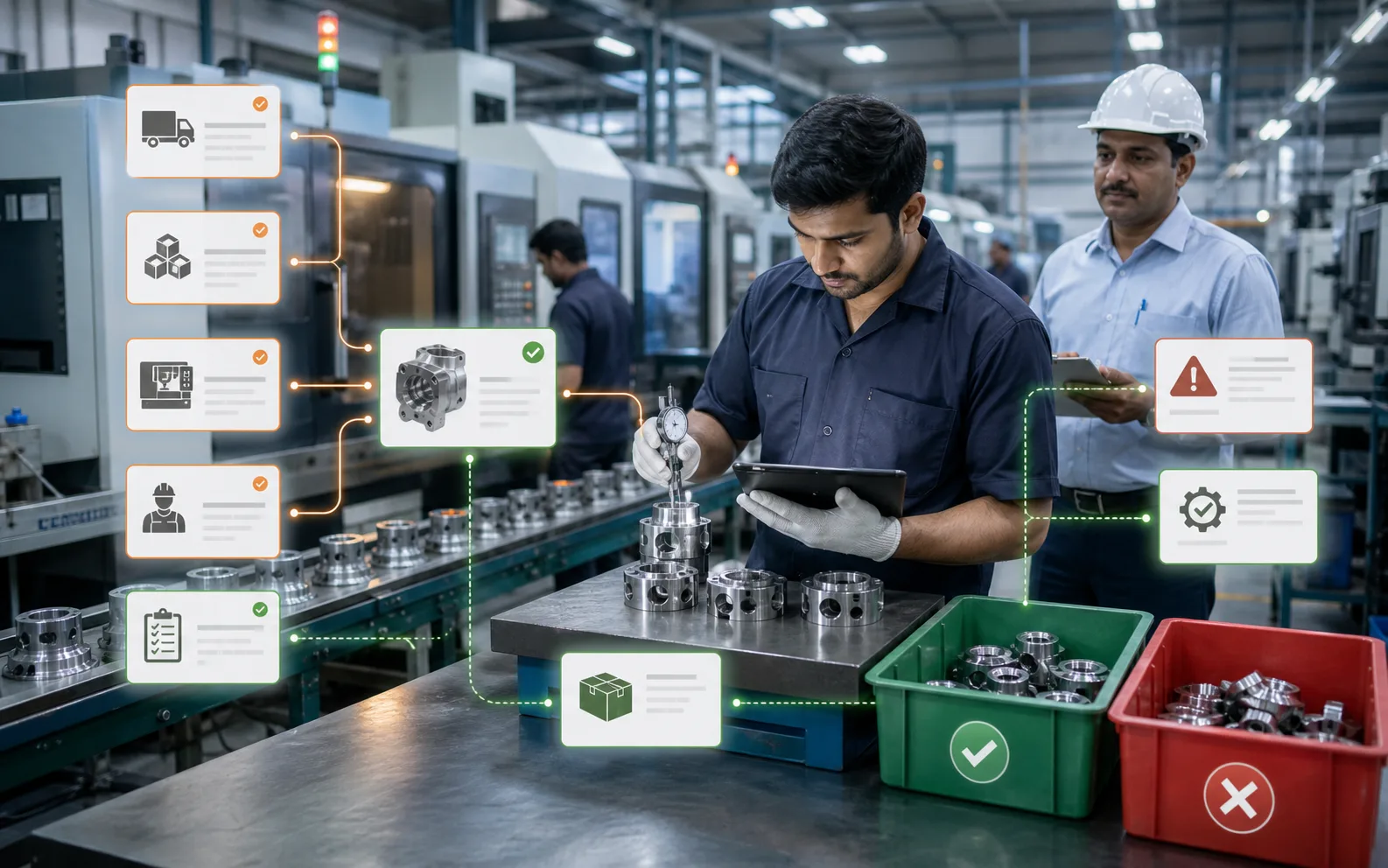
Quality Control in Manufacturing: A Practical Guide
Quality control is where manufacturing promises meet reality.
A drawing may be correct. The purchase order may be clear. The machine may run as planned. The operator may follow the process. But until the output is checked against the required standard, the business does not know whether the product is acceptable.
Quality control, or QC, is the process of inspecting, testing, and verifying products or materials to ensure they meet defined requirements.
For manufacturers, QC protects customers, reduces rework, controls cost, improves supplier performance, and builds trust. Poor quality control does the opposite. It creates rejection, warranty claims, delayed dispatch, customer complaints, and hidden cost.
This guide explains quality control in manufacturing, inspection stages, common methods, challenges, and how AICAN Optiwise helps manufacturers connect quality with inventory, purchase, production, and reporting.
Note: This article is for general operational understanding only. Industry-specific quality, safety, certification, and regulatory requirements should be reviewed with qualified professionals and applicable standards.
What Is Quality Control in Manufacturing?
Quality control in manufacturing is the process of checking materials, processes, and finished products to confirm they meet specified quality standards.
It may include:
- incoming material inspection
- in-process inspection
- final inspection
- dimensional checks
- visual checks
- functional testing
- sampling
- batch testing
- rejection and rework control
- inspection reports
The goal is to identify defects before products reach the customer.
Why Quality Control Matters
Customer Satisfaction
Customers expect products to meet agreed specifications. QC reduces the risk of defective goods reaching them.
Lower Rework Cost
Finding defects early is cheaper than fixing them after dispatch.
Production Stability
Quality data helps identify process problems before they repeat.
Supplier Accountability
Incoming inspection helps track supplier quality issues.
Compliance and Traceability
Some industries require documented quality checks and batch records.
Brand Trust
Consistent quality builds long-term customer confidence.
Stages of Quality Control
Incoming Quality Control
Materials received from suppliers are checked before being accepted into usable stock.
This may include quantity check, certificate verification, grade check, dimension check, visual inspection, or lab testing.
In-Process Quality Control
Checks are performed during production to catch defects early.
This is useful when defects can increase if production continues without correction.
Final Quality Control
Finished goods are inspected before packing or dispatch.
Final inspection confirms whether the product meets customer requirements.
Dispatch Quality Check
Some businesses perform packing, labeling, and document checks before dispatch.
Common Quality Control Methods
Visual Inspection
Used to identify visible defects such as scratches, cracks, colour mismatch, damage, or incorrect assembly.
Dimensional Inspection
Uses tools such as vernier calipers, micrometers, gauges, or CMM to check dimensions.
Functional Testing
Confirms whether the product works as intended.
Sampling Inspection
A sample quantity is checked from a batch based on defined rules.
100 Percent Inspection
Every unit is checked. This is useful for high-risk, high-value, or critical products.
Statistical Process Control
SPC uses data to monitor process variation and detect trends before defects increase.
Quality Control vs Quality Assurance
Quality control focuses on detecting defects in materials, processes, or products.
Quality assurance focuses on designing processes that prevent defects.
Both are important. QC catches problems. QA reduces the chance of problems happening again.
Common QC Challenges
Manual Inspection Records
Paper inspection records are hard to analyze and easy to lose.
Late Detection
If defects are found only at final inspection, rework cost is higher.
Poor Rejection Reason Tracking
If rejection reasons are not captured, the same problems repeat.
Supplier Quality Issues
Without supplier-wise quality data, purchase may keep buying from unreliable suppliers.
Disconnected Quality and Inventory
Rejected material should not remain in usable stock.
No Link With Production Orders
Quality issues should be traceable to job, batch, machine, operator, or process where possible.
How ERP Improves Quality Control
ERP helps connect quality checks with actual business transactions.
A connected system can:
- record incoming inspection
- hold rejected material
- link QC with goods receipt
- track in-process inspection
- record rejection reasons
- connect rework with production
- update inventory status
- review supplier quality
- generate quality reports
Optiwise by AICAN helps manufacturers improve operational visibility by connecting production, inventory, purchase, and reporting. Quality control becomes more useful when inspection results are not isolated from material and production records.
Practical QC Checklist
Manufacturers can begin with these questions:
- Are quality standards clearly defined?
- Are incoming materials inspected where needed?
- Are rejection reasons recorded?
- Is rejected stock separated from usable stock?
- Are supplier quality issues tracked?
- Are in-process checks performed for critical operations?
- Are final inspection reports maintained?
- Are repeat defects reviewed?
Founder’s Note
At AICAN, we see quality control as a discipline of visibility. A defect is not only a failed piece. It is a signal about material, process, machine, supplier, training, or planning.
AICAN Optiwise helps manufacturers connect these signals with the rest of operations. When quality data sits with production and inventory data, the business can improve faster.
FAQs
What is quality control in manufacturing?
Quality control is the process of inspecting and testing materials, processes, and finished products to ensure they meet required standards.
What are the main stages of QC?
Common stages include incoming inspection, in-process inspection, final inspection, and dispatch checks.
What is the difference between QC and QA?
QC detects defects. QA focuses on preventing defects through better processes.
Why is QC important for manufacturers?
It reduces rework, prevents defective goods from reaching customers, supports supplier control, and improves product reliability.
How does Optiwise help quality control?
Optiwise by AICAN helps connect quality checks with purchase, inventory, production, rejection tracking, and reporting.

Related Posts
How Sensors Help With Quality Control in Manufacturing
Explain quality-control sensors through measured property, tolerance, calibration evidence, sampling, false alerts and human disposition.
11 Jun 2026Read more →
Track Quality Issues in ERP: Inspection to Disposition
Follow an inspection issue through stock hold, approved rework or scrap, quantity reconciliation and corrective-action checks, with a 50-part example.
28 May 2026Read more →How Can IoT Improve My Quality Control Process?
Learn how IoT improves quality control by connecting inspection data, batch traceability, machine conditions, process parameters, and corrective action.
13 May 2026Read more →
Predictive Maintenance Software: A Growing Manufacturing Tech Career
Learn why predictive maintenance software is creating manufacturing tech careers in IoT, analytics, AI, machine data, and ERP-connected operations.
3 May 2026Read more →