
Quality Management System for Manufacturers: SOP, Inspection and Corrective Action Flow
Build a manufacturing quality system around SOPs, inspection parameters, roles, corrective actions and review evidence without implying certification.
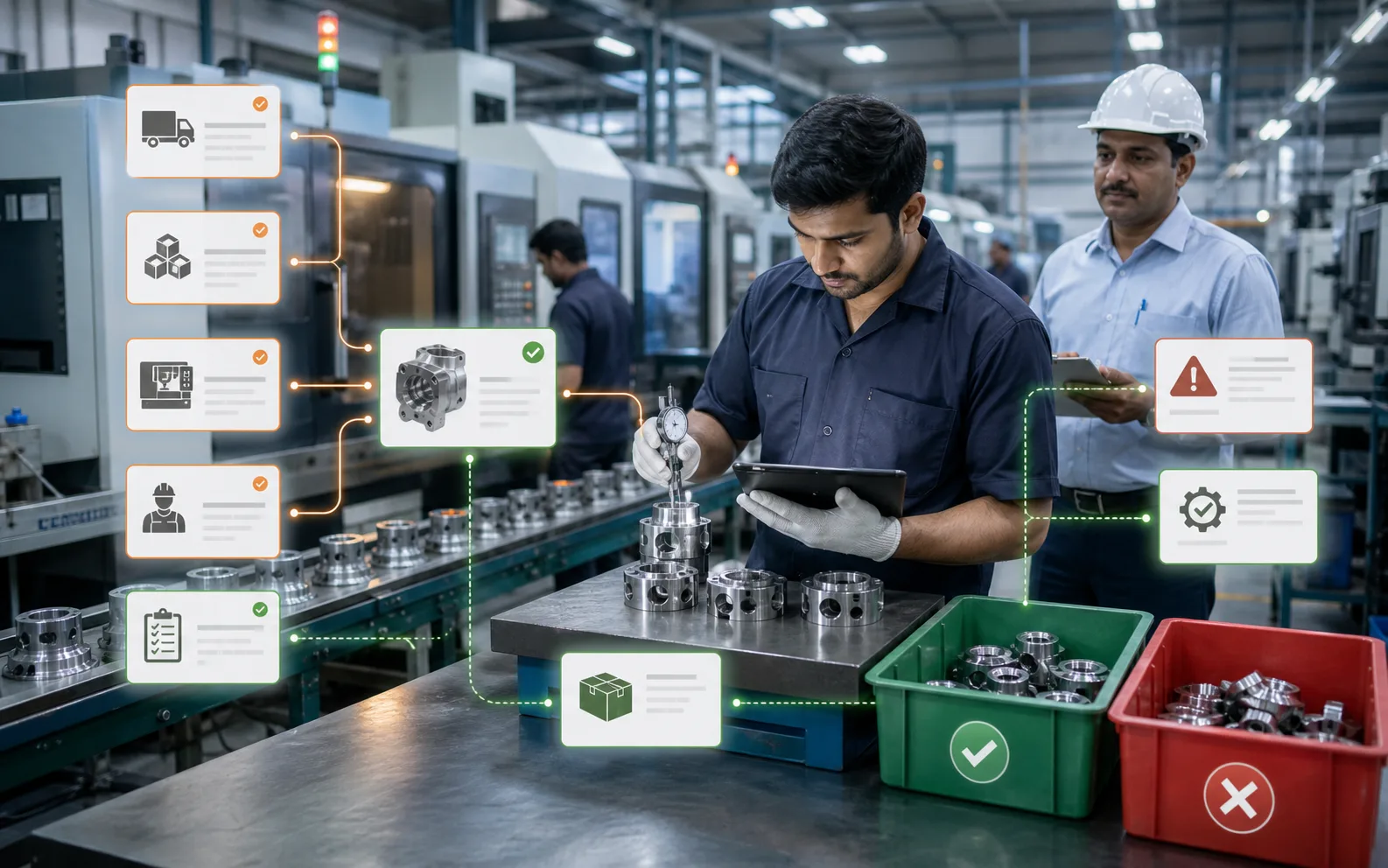
A quality management system should make good work repeatable. In manufacturing, that means controlled SOPs, clear inspection parameters, evidence of results, decisions on rejected material and corrective action when the same problem repeats.
Optiwise supports quality as an operating workflow connected to inventory, production and dispatch. The goal is to prevent rejected material from quietly entering usable stock or finished goods.
Direct answer
A manufacturing quality management system works when SOPs, inspection parameters, nonconformance, corrective actions and approvals are part of daily production records.
Factory example
Incoming material inspection repeatedly holds one supplier lot. The quality workflow records parameter failure, disposition, corrective action owner and supplier communication. Purchase can see the pattern before placing the next order.
Implementation path in Optiwise
- Control SOPs and inspection parameters.
- Record disposition before stock moves.
- Assign corrective actions for repeated failures.
Worksheet for your factory
Use this as the working checklist before you change software settings, write SOPs or ask the team to follow a new report.
| Record | What to capture | Why it matters |
|---|---|---|
| SOP or work instruction | Current controlled method for the task | Keeps process expectations clear |
| Inspection parameter | Dimension, visual check, test value or document check | Makes quality measurable |
| Sampling or frequency | When and how many items are checked | Prevents random inspection coverage |
| Result and disposition | Accepted, rejected, rework or hold | Controls material movement |
| Corrective action | Owner, due date and evidence | Turns repeated defects into action |
| Review approval | Quality or process owner sign-off | Creates accountability |
How Optiwise supports this workflow
- Run incoming, in-process and final quality checks as part of material and production flow.
- Keep rejected, held and accepted stock states separate.
- Use configurable forms and approval workflows for SOP checks, inspection results and corrective actions.
- Connect quality decisions to purchase, production, inventory and dispatch records.
Explore the connected Optiwise workflows for production, inventory, purchasing, quality, IoT, and AI agents.
Checks before you use the number for decisions
- Confirm the owner of the record and the person who reviews exceptions.
- Write the unit of measure, time period and source system beside every number.
- Mark missing, stale or manually corrected data instead of hiding it inside the final score.
- Keep approval evidence for changes that affect stock, production, quality or customer commitments.
Reference source
For general manufacturing ERP and MRP context, compare this workflow with Deskera MRP resources, then adapt the records to your own factory process.
FAQs
Does this page mean Optiwise certifies a factory for ISO?
No. Optiwise helps run controlled quality workflows and keep evidence. Certification depends on the standard, audit scope and external auditor requirements.
What is the first quality workflow to digitize?
Start with the inspection that blocks the most rework, returns or dispatch delays. Incoming material inspection and final dispatch inspection are common starting points.

Related Posts
How Sensors Help With Quality Control in Manufacturing
Explain quality-control sensors through measured property, tolerance, calibration evidence, sampling, false alerts and human disposition.
11 Jun 2026Read more →
Track Quality Issues in ERP: Inspection to Disposition
Follow an inspection issue through stock hold, approved rework or scrap, quantity reconciliation and corrective-action checks, with a 50-part example.
28 May 2026Read more →How Can IoT Improve My Quality Control Process?
Learn how IoT improves quality control by connecting inspection data, batch traceability, machine conditions, process parameters, and corrective action.
13 May 2026Read more →
Predictive Maintenance Software: A Growing Manufacturing Tech Career
Learn why predictive maintenance software is creating manufacturing tech careers in IoT, analytics, AI, machine data, and ERP-connected operations.
3 May 2026Read more →