
Will Computer Vision Replace My Quality Control Team?
Learn how computer vision changes quality control work, why it usually supports inspectors rather than replaces them, and how manufacturers should manage adoption.
Will Computer Vision Replace My Quality Control Team?
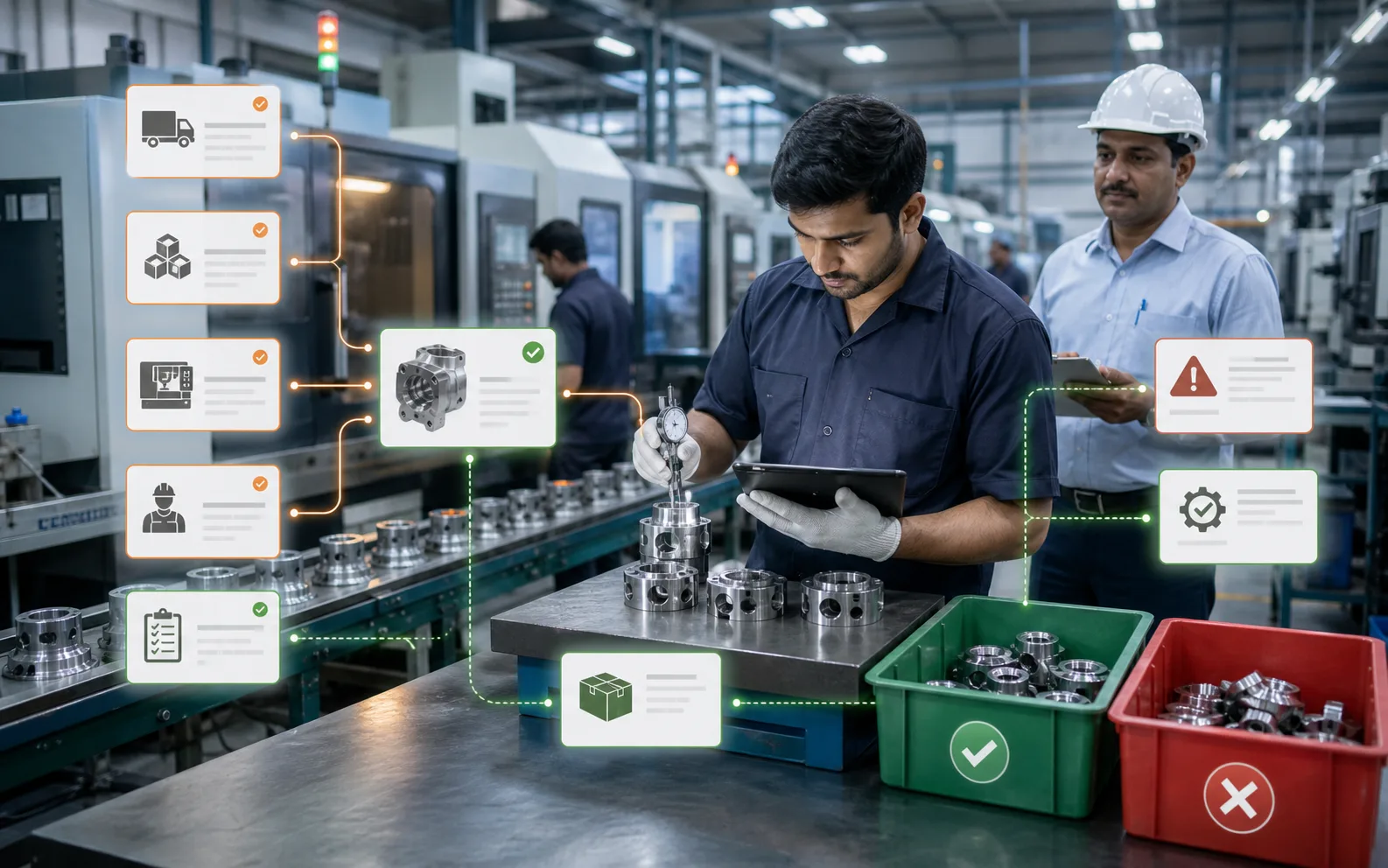
Computer vision usually changes the quality control team’s work before it replaces the team.
A camera can inspect repetitive visual conditions. It can check every part, record images, count defects, and apply consistent rules. But it does not understand customer urgency, borderline judgement, root cause, process history, supplier context, or whether a quality issue needs escalation.
Quality control is not only looking at parts. It is deciding what the defect means and what the factory should do next.
For manufacturers evaluating AICAN Optiwise, computer vision should be introduced as a support system for better quality decisions, not as a threat to experienced quality people.
Vision systems reduce repetitive inspection load
Many quality teams spend time on repetitive checks.
They look for missing labels, wrong orientation, surface marks, missing components, incorrect print, fill level issues, packaging errors, or assembly mistakes. These checks can be tiring, especially on fast lines or long shifts.
Computer vision can take over some of this repetitive burden. That allows quality people to spend more time on review, root-cause analysis, process improvement, supplier feedback, and customer-facing quality evidence.
Inspectors still handle judgement
Not every defect is a simple yes or no.
A small surface mark may be acceptable for one customer and unacceptable for another. A colour variation may need comparison with approved limits. A borderline defect may need batch review. A repeated issue may indicate a process problem, not only a product problem.
Human judgement remains important because quality decisions have business context.
Roles may shift toward review and improvement
After computer vision is introduced, quality roles may become more data-driven.
Inspectors may review rejected images, confirm defect categories, tune inspection limits with engineering, investigate repeated issues, and help define new inspection rules. Supervisors may review trends by product, line, shift, or machine. Quality managers may use inspection data for corrective action and customer discussion.
The role becomes less about catching every visible defect manually and more about improving the system that prevents defects.
Workers may fear surveillance or job loss
Resistance is natural if the project is introduced badly.
If management says only “the camera will now inspect everything,” people may assume the goal is headcount reduction or blame. That damages adoption. The team should understand what the system checks, how results will be used, and how human review remains part of the process.
A computer vision rollout should include role clarity, training, and honest communication.
Vision systems still need people to maintain trust
A vision system can produce false rejects or miss defects.
Quality people are needed to review those cases, correct rules, identify lighting problems, collect new defect samples, and decide when inspection settings need improvement. Without human review, a vision system can drift away from factory reality.
Technology needs ownership.
The best systems combine camera consistency and human expertise
Computer vision is strong at consistency. Humans are strong at context.
The camera can check every part against a defined visual rule. The quality team can decide what trends mean, why defects are increasing, and what process change is needed.
This combination is usually stronger than either approach alone.
Where AICAN Optiwise fits
AICAN Optiwise helps manufacturers connect inspection data with production and quality workflows. Vision results can become dashboards, alerts, defect trends, and review evidence instead of isolated machine outputs.
AICAN works with manufacturers that want technology to support skilled teams and better decisions. Learn more at About AICAN.
Founder’s Note
Good quality people are not replaced by a camera. They are supported by better evidence. The factory still needs their judgement, discipline, and process knowledge. Computer vision should remove the exhausting repetition and leave people with the work that actually needs thinking.
FAQs
Will computer vision reduce quality jobs?
It depends on how the company uses it. In many factories, it shifts quality work toward review, analysis, and process improvement.
Do inspectors still need to check products?
Yes, especially for borderline cases, new defects, audit checks, and process validation.
Can vision systems make wrong decisions?
Yes. False rejects and missed defects can happen if lighting, rules, samples, or setup are poor.
How should we introduce vision systems to QC teams?
Explain the purpose, define roles, train with real examples, and involve quality people in defect criteria.
How does AICAN Optiwise support quality teams?
It can connect inspection results to dashboards, defect trends, alerts, and review workflows.

Related Posts
How Sensors Help With Quality Control in Manufacturing
Explain quality-control sensors through measured property, tolerance, calibration evidence, sampling, false alerts and human disposition.
11 Jun 2026Read more →
Track Quality Issues in ERP: Inspection to Disposition
Follow an inspection issue through stock hold, approved rework or scrap, quantity reconciliation and corrective-action checks, with a 50-part example.
28 May 2026Read more →How Can IoT Improve My Quality Control Process?
Learn how IoT improves quality control by connecting inspection data, batch traceability, machine conditions, process parameters, and corrective action.
13 May 2026Read more →
Predictive Maintenance Software: A Growing Manufacturing Tech Career
Learn why predictive maintenance software is creating manufacturing tech careers in IoT, analytics, AI, machine data, and ERP-connected operations.
3 May 2026Read more →