
AI for Manufacturing Process Improvement
Learn how AI supports manufacturing process improvement through bottleneck detection, quality trends, waste reduction, scheduling, and continuous improvement.
AI for Manufacturing Process Improvement
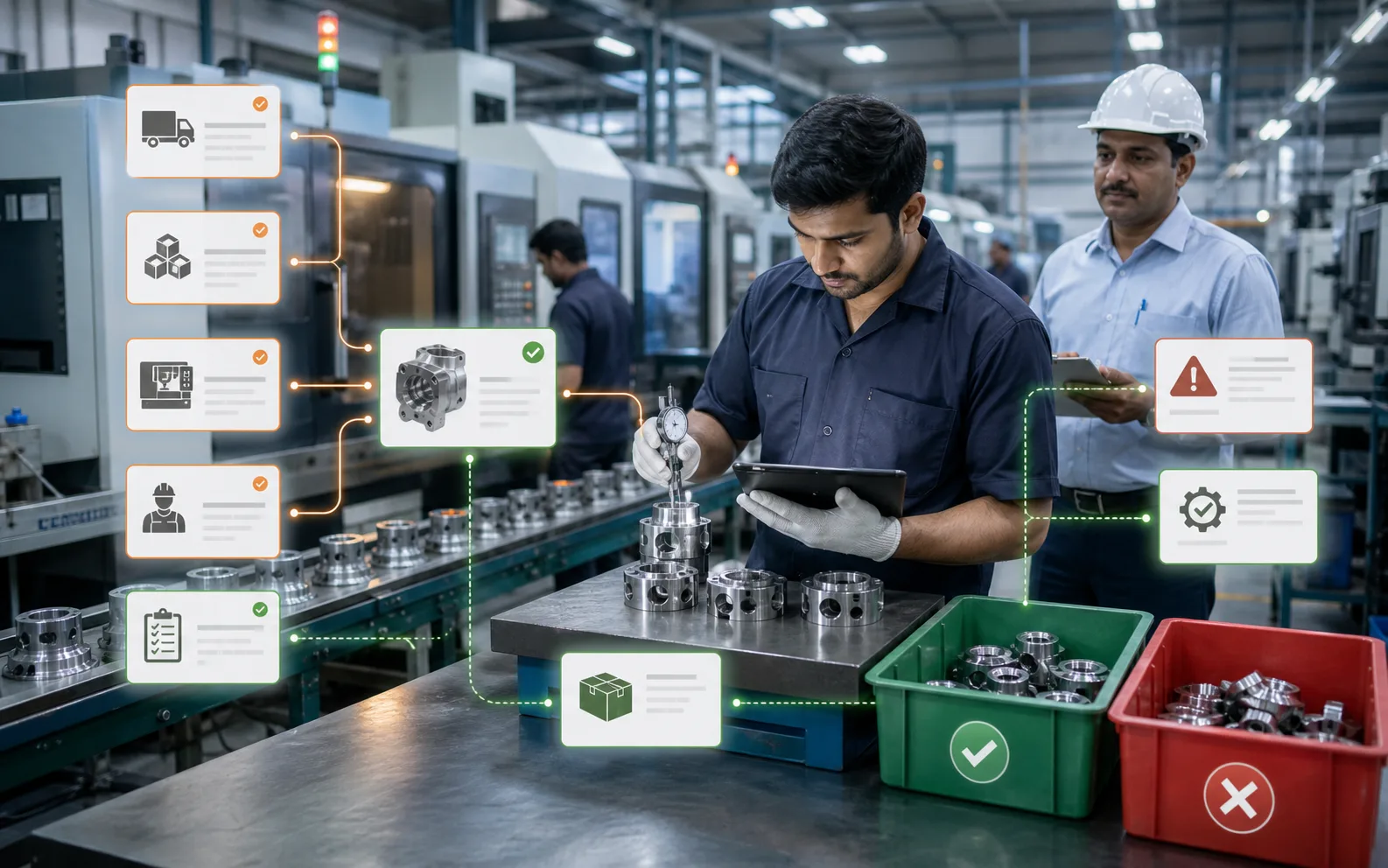
AI for manufacturing process improvement is not about replacing proven methods like lean, Kaizen, root-cause analysis, or daily production review. It is about giving these methods better information. Many factories already know they need to improve, but they struggle to see exactly where the process is leaking time, material, capacity, or margin.
Artificial intelligence in manufacturing helps by finding patterns in production, inventory, quality, maintenance, purchase, and dispatch data. It can show which bottlenecks repeat, which defects return, which machines cause delays, which materials create risk, and which orders are likely to miss commitments.
The result is a more focused improvement process. Teams stop arguing from memory and start improving from evidence.
Identify Bottlenecks Faster
Every factory has bottlenecks, but they are not always obvious. AI can analyse production flow, cycle times, downtime, work-in-progress, changeovers, and order delays to identify where work repeatedly slows.
This helps managers decide whether the issue is capacity, scheduling, material readiness, manpower, machine reliability, or process design.
Reduce Repeat Defects
AI can compare defects across suppliers, machines, shifts, product types, and process stages. When patterns appear, quality teams can investigate root causes faster.
This supports continuous improvement because the factory learns from defects instead of only sorting them.
Improve Standardization
Process improvement requires consistency. AI-ready systems help standardize updates, reason codes, approvals, inspection records, and reporting. Once information is consistent, improvement becomes measurable.
Without standardization, teams spend more time debating numbers than fixing processes.
Prioritize the Right Improvements
Factories often have too many improvement ideas. AI helps prioritize based on impact: which issue affects delivery most, which defect costs most, which downtime repeats most, and which material blocks production most often.
This keeps improvement practical.
Where AICAN Optiwise Fits
AICAN Optiwise connects production, inventory, purchase, sales, finance, reporting, IoT readiness, and AI workflows so manufacturers can see process performance across departments. This connected view helps teams understand whether a problem begins in planning, material, machine, quality, or coordination.
Explore aican.co.in and About AICAN to learn more about AICAN’s shopfloor-first approach.
Founder’s Note
AICAN’s founder-led view is that process improvement should be grounded in the daily truth of the factory. AI becomes valuable when it helps teams see that truth faster and act on it with discipline.
Good improvement is not louder reporting. It is fewer repeated problems.
FAQ
How does AI improve manufacturing processes?
AI identifies patterns in delays, defects, downtime, inventory, scheduling, and dispatch so teams can improve the right areas.
Does AI replace lean manufacturing?
No. AI supports lean and continuous improvement by providing better data and earlier signals.
What process should I improve first with AI?
Start with a repeated issue that is measurable and financially meaningful, such as stockouts, defects, downtime, or scheduling delays.
Can small factories use AI for process improvement?
Yes. Small factories can begin with connected workflows and basic analytics before moving into advanced AI.
Final Thought
AI helps manufacturing process improvement by making problems visible earlier and clearer. The real improvement still comes from people who act on those insights consistently.
Next step: Explore AICAN Optiwise to see how connected workflows can support practical process improvement.

Related Posts
Is AI Worth the Investment for My Factory?
Learn how to decide if AI is worth the investment for your factory by evaluating use cases, data readiness, costs, risks, ROI, and operational impact.
13 Jun 2026Read more →Manufacturing AI Mistakes to Avoid Before You Start
List manufacturing AI mistakes and controls for unclear use case, messy data, unsafe automation, no owner, weak security and unreviewed recommendations.
13 Jun 2026Read more →What's the Difference Between AI and Regular Automation?
Understand the difference between AI and regular automation in manufacturing, with practical examples for workflows, decisions, alerts, and predictive operations.
13 Jun 2026Read more →What Are the Risks of Using AI in Manufacturing?
Understand the risks of AI in manufacturing, including bad data, wrong recommendations, safety issues, security, job fear, over-automation, and implementation failure.
13 Jun 2026Read more →