
Can AI Help Me Optimize My Production Line?
Learn how AI can help optimize production lines by identifying bottlenecks, reducing waste, improving schedules, analyzing quality, and supporting decisions.
Can AI Help Me Optimize My Production Line?
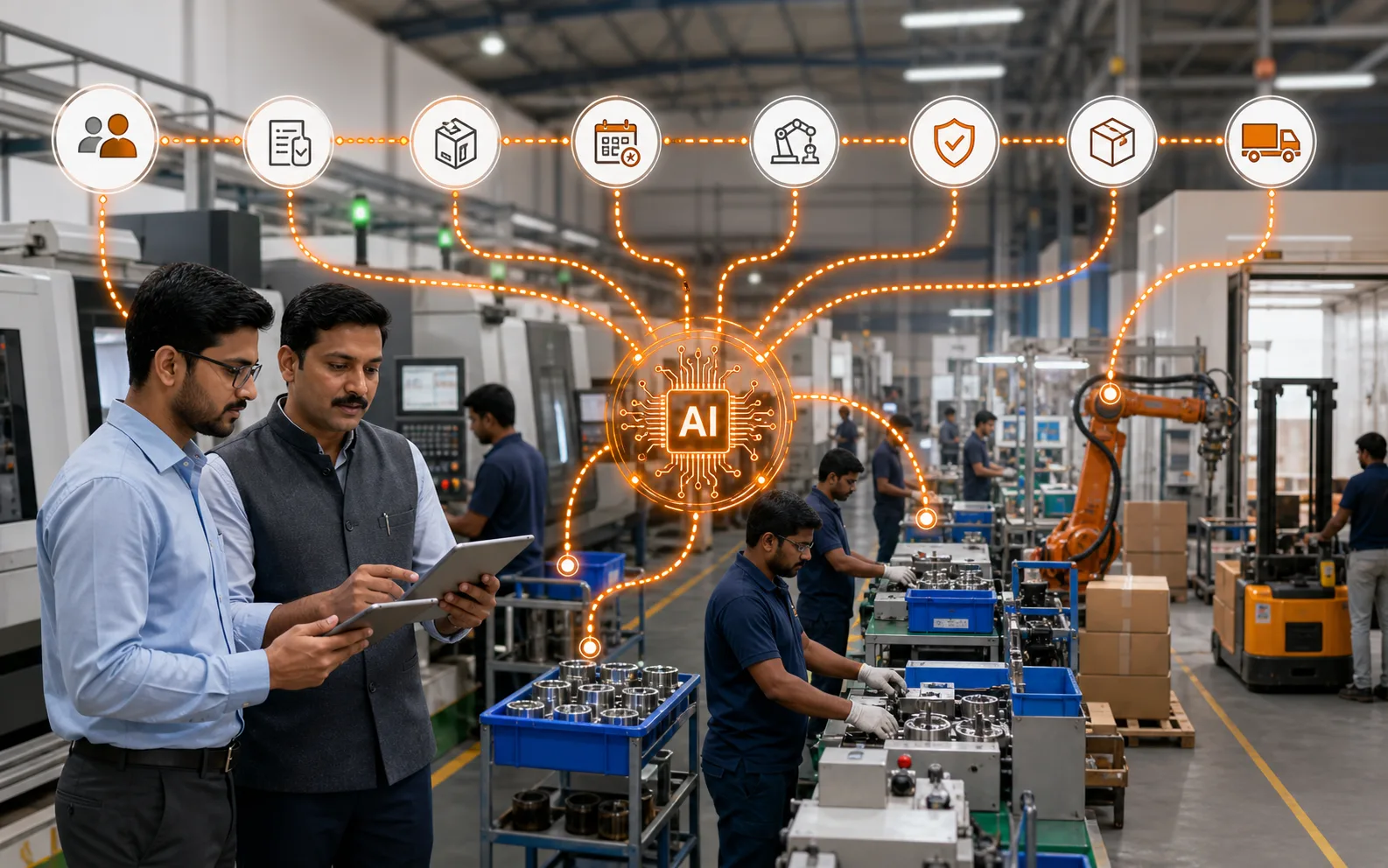
AI can help optimize a production line by analyzing data that is difficult for people to review manually every day. It can highlight bottlenecks, delays, quality issues, downtime patterns, and material constraints.
But AI works best when the production line already captures useful data.
Find Bottlenecks
AI can compare planned output with actual output across machines, shifts, or stages. If one process repeatedly slows the line, AI can help identify it.
Reduce Waste
By analyzing rejection, rework, scrap, and abnormal consumption, AI can help teams find where material or time is being wasted.
Improve Scheduling
AI can help compare order priority, material availability, machine capacity, and due dates. This supports better production sequencing.
Improve Quality
AI can review defect trends and inspection notes to identify repeated quality risks at specific stages.
Support Continuous Improvement
AI can summarize performance trends and suggest areas for review. The final improvement plan still needs human judgment and shopfloor knowledge.
Where AICAN Optiwise Fits
AICAN Optiwise connects production with inventory, quality, dispatch, and finance visibility. AI becomes more useful when production line insights are connected to material availability, order commitments, and quality outcomes.
FAQ
Can AI run a production line automatically?
Not in most factories. It usually supports decisions before full automation.
What data is needed?
Production output, downtime, quality, material consumption, machine capacity, and schedule data are useful.
Is AI optimization only for large plants?
No. Smaller factories can use AI to identify delays and improvement opportunities.
Final Thought
AI helps optimize production when it turns daily data into clear improvement signals. The best results come when teams combine AI insights with practical shopfloor action.

Related Posts
Is AI Worth the Investment for My Factory?
Learn how to decide if AI is worth the investment for your factory by evaluating use cases, data readiness, costs, risks, ROI, and operational impact.
13 Jun 2026Read more →Manufacturing AI Mistakes to Avoid Before You Start
List manufacturing AI mistakes and controls for unclear use case, messy data, unsafe automation, no owner, weak security and unreviewed recommendations.
13 Jun 2026Read more →What's the Difference Between AI and Regular Automation?
Understand the difference between AI and regular automation in manufacturing, with practical examples for workflows, decisions, alerts, and predictive operations.
13 Jun 2026Read more →What Are the Risks of Using AI in Manufacturing?
Understand the risks of AI in manufacturing, including bad data, wrong recommendations, safety issues, security, job fear, over-automation, and implementation failure.
13 Jun 2026Read more →