
Can AI Planning Tools Work with Different ERP Systems?
Learn how AI planning tools can work with different ERP systems through APIs, connectors, exports, middleware, and workflow alignment.
Can AI Planning Tools Work with Different ERP Systems?
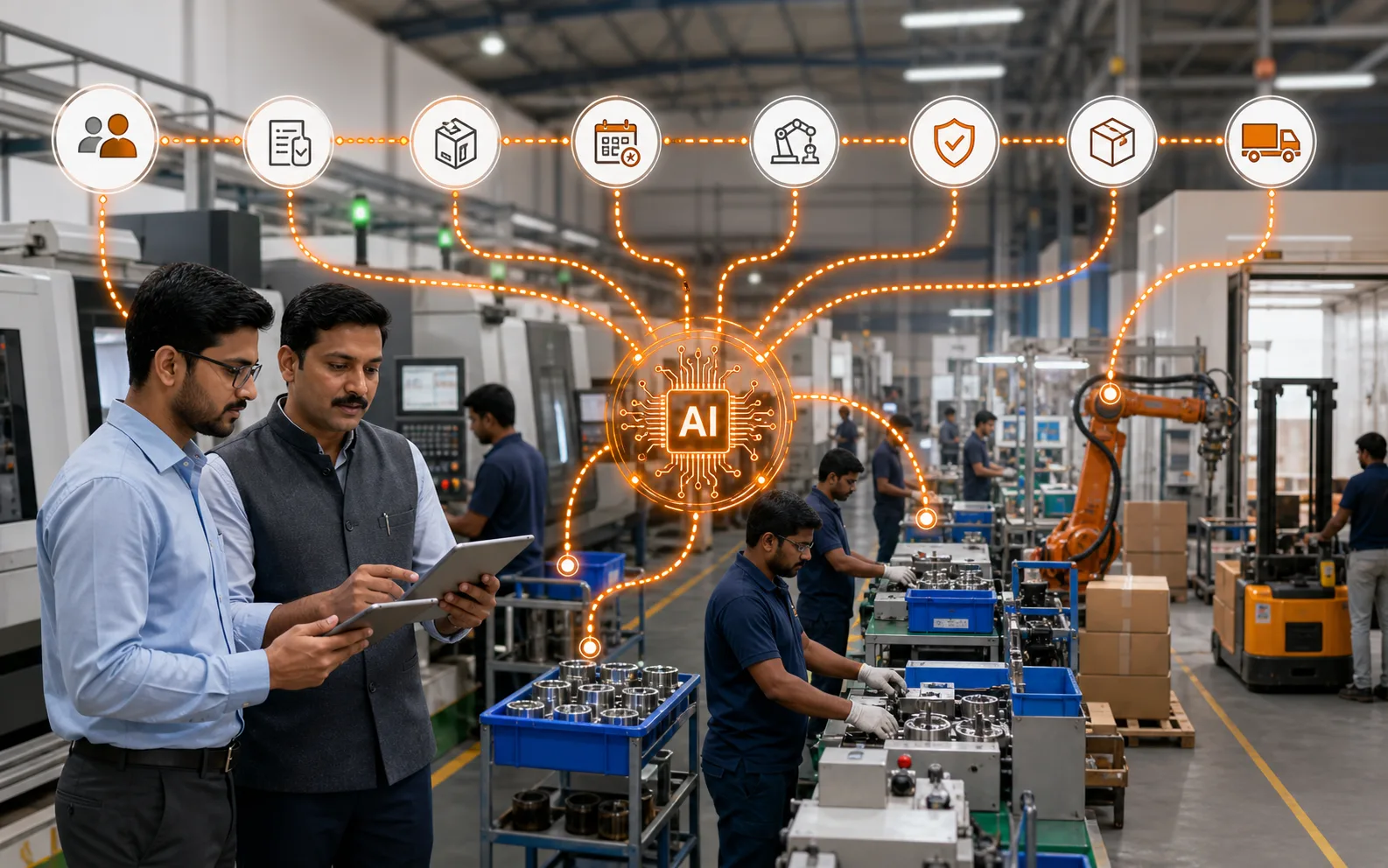
AI planning tools can often work with different ERP systems if the required data can be accessed, mapped, and updated reliably. The integration method may vary: APIs, connectors, middleware, database access, scheduled exports, or custom integration. What matters most is whether the planning tool receives accurate and timely operational data.
AI for production planning needs information from sales, inventory, purchase, production, quality, and dispatch. If this data sits inside an ERP, integration can make AI planning more useful. If the ERP data is incomplete or delayed, integration alone will not solve the problem.
Compatibility is both technical and operational.
What Data Needs to Flow?
Important data includes sales orders, item masters, BOMs, stock, purchase orders, production orders, routing, work centers, quality holds, and delivery dates.
The planning tool must understand how these records map to real workflows.
Integration Options
Modern ERPs may support APIs. Older systems may need exports, middleware, or custom connectors. Some integrations can be near real-time, while others update periodically.
The required frequency depends on planning urgency.
Avoid Duplicate Systems
If AI planning produces recommendations but the ERP remains the system of record, teams need clarity on where updates happen. Duplicate entries create confusion and data mismatch.
Define the operating workflow before integration.
Data Quality Still Matters
Connecting to an ERP does not guarantee clean data. If BOMs are wrong or stock is not updated, AI planning will still struggle.
Integration should be paired with data discipline.
Where AICAN Optiwise Fits
AICAN Optiwise connects production planning with inventory, purchase, sales, finance, reporting, IoT readiness, and AI workflows. Manufacturers using existing ERP systems can discuss integration, workflow replacement, or connected operating-layer options with AICAN.
Explore AICAN Optiwise and About AICAN.
Founder’s Note
AICAN’s founder-led view is that integration should reduce friction, not create a second source of confusion. AI planning should fit the manufacturer’s system reality while improving daily decisions.
Connected planning is useful only when teams know where truth lives.
FAQ
Can AI planning integrate with any ERP?
It depends on the ERP’s data access, APIs, export options, and integration permissions.
What if my ERP is old?
Integration may still be possible through exports, middleware, or custom connectors, but data freshness and reliability must be checked.
Does ERP integration guarantee AI success?
No. Data quality, workflow ownership, training, and adoption still matter.
Should AI planning replace ERP planning?
Not always. It may integrate with, extend, or replace specific planning workflows depending on current system limitations.
Final Thought
AI planning tools can work with different ERP systems when data flows reliably and workflows are clearly owned. Integration should make planning clearer, not more fragmented.
Next step: Visit AICAN Optiwise to discuss ERP compatibility for AI production planning.

Related Posts
Is AI Worth the Investment for My Factory?
Learn how to decide if AI is worth the investment for your factory by evaluating use cases, data readiness, costs, risks, ROI, and operational impact.
13 Jun 2026Read more →Manufacturing AI Mistakes to Avoid Before You Start
List manufacturing AI mistakes and controls for unclear use case, messy data, unsafe automation, no owner, weak security and unreviewed recommendations.
13 Jun 2026Read more →What's the Difference Between AI and Regular Automation?
Understand the difference between AI and regular automation in manufacturing, with practical examples for workflows, decisions, alerts, and predictive operations.
13 Jun 2026Read more →What Are the Risks of Using AI in Manufacturing?
Understand the risks of AI in manufacturing, including bad data, wrong recommendations, safety issues, security, job fear, over-automation, and implementation failure.
13 Jun 2026Read more →