
Step-by-Step AI Readiness Checklist for Factories
Use this AI readiness checklist for manufacturing, covering use cases, data quality, ERP connection, security, training, ownership, pilots, and ROI measurement.
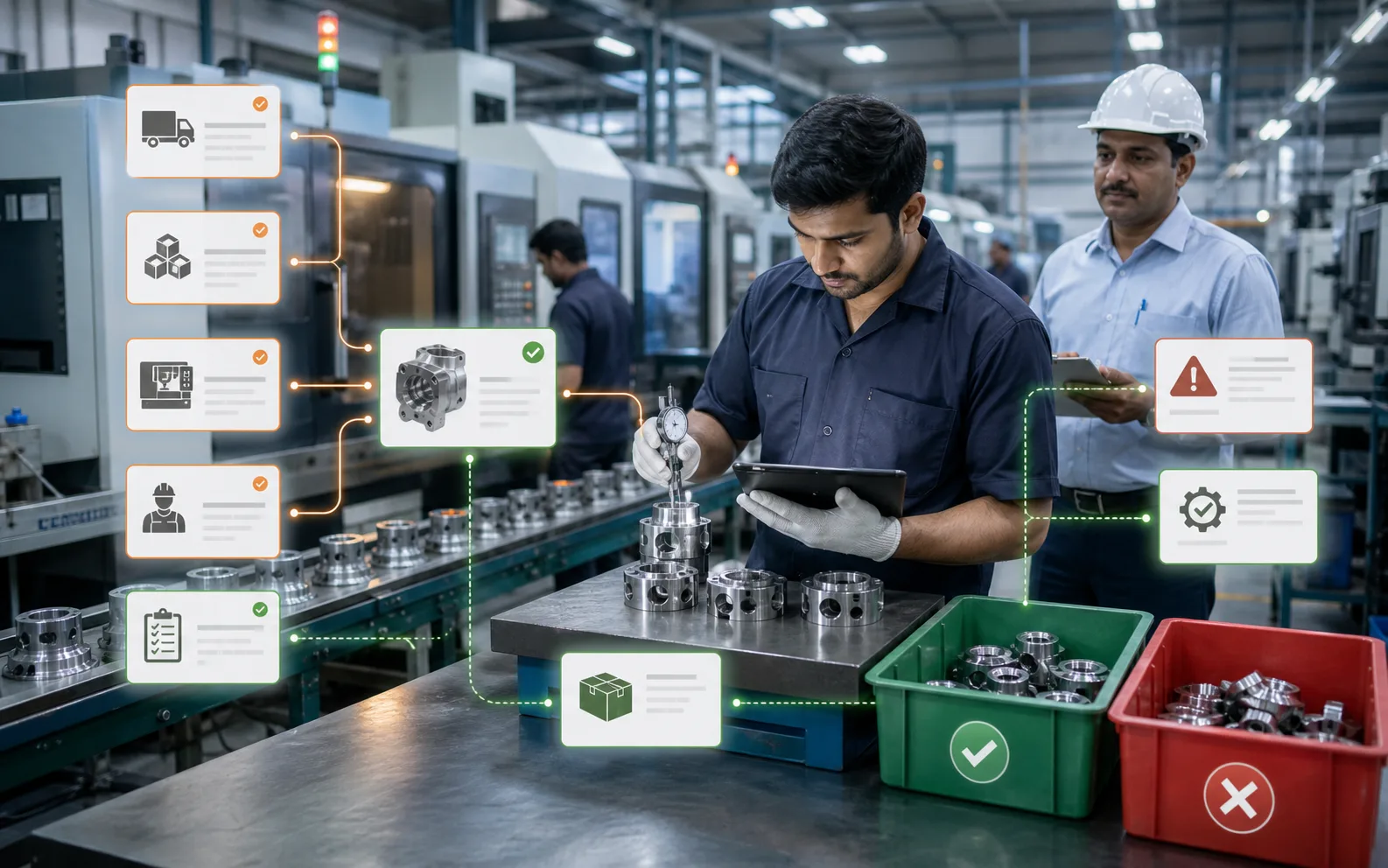
Step-by-Step AI Readiness Checklist for Factories
AI readiness is not about being perfect. It is about being prepared enough to start with the right use case, the right data, and the right controls.
Use this checklist before launching an AI project in your factory.
Step 1: Choose the Use Case
Define one problem clearly. Examples include reducing downtime, improving inventory alerts, speeding up reports, reducing scrap, or improving customer order visibility.
A clear use case keeps the project focused.
Step 2: Identify Required Data
List the data needed for that use case. Include source systems, owners, data quality issues, and missing fields.
Do not clean everything. Clean what matters first.
Step 3: Check Workflow Ownership
Decide who will act on AI outputs. Alerts and recommendations need owners.
If no one owns the response, the AI workflow will fail.
Step 4: Review System Connectivity
Check whether production, inventory, purchase, sales, finance, quality, and maintenance data are connected or scattered.
AI performs better with connected systems.
Step 5: Define Security Controls
Clarify who can access data, how sensitive information is protected, and what vendors can use.
Security should be part of readiness from day one.
Step 6: Train Users
Train people by role. Operators, supervisors, planners, stores, purchase, quality, maintenance, sales, and management need different views.
Training should include AI limitations and review responsibility.
Step 7: Run a Pilot
Start small. Use real data, real users, and a measurable outcome.
A pilot should create evidence before scaling.
Step 8: Measure and Improve
Track time saved, downtime reduced, scrap reduced, stockouts avoided, delivery improvement, or adoption.
Use results to decide the next step.
Where AICAN Optiwise Fits
AICAN Optiwise helps manufacturers prepare for AI by connecting core workflows across production, inventory, purchase, sales, finance, and reporting.
AICAN supports practical AI readiness based on real manufacturing needs. Learn more at About AICAN.
Founder’s Note
Readiness is not paperwork. It is respect for the factory’s reality.
AI works better when people know the problem, the data, the owner, and the result they want to improve.
FAQ
Do factories need full readiness before AI?
No. They need enough readiness for the chosen use case.
What is the first checklist item?
Choose a specific use case tied to a measurable problem.
Why is ownership important?
AI alerts only create value when someone acts on them.
How do I know I am ready to scale?
Scale when the pilot shows measurable improvement and users trust the workflow.
Final Thought
AI readiness is built step by step. Choose the right problem, prepare the right data, involve the right people, and measure the result.

Related Posts

Is AI Worth the Investment for My Factory?
Learn how to decide if AI is worth the investment for your factory by evaluating use cases, data readiness, costs, risks, ROI, and operational impact.
13 Jun 2026Read more →Manufacturing AI Mistakes to Avoid Before You Start
List manufacturing AI mistakes and controls for unclear use case, messy data, unsafe automation, no owner, weak security and unreviewed recommendations.
13 Jun 2026Read more →What's the Difference Between AI and Regular Automation?
Understand the difference between AI and regular automation in manufacturing, with practical examples for workflows, decisions, alerts, and predictive operations.
13 Jun 2026Read more →What Are the Risks of Using AI in Manufacturing?
Understand the risks of AI in manufacturing, including bad data, wrong recommendations, safety issues, security, job fear, over-automation, and implementation failure.
13 Jun 2026Read more →