
What Happens When AI Software Doesn't Match Real-World Conditions?
AI software can fail when it does not match real shop floor conditions. Learn how manufacturers can handle mismatch, exceptions, feedback, and rollout risk.
What Happens When AI Software Doesn't Match Real-World Conditions?
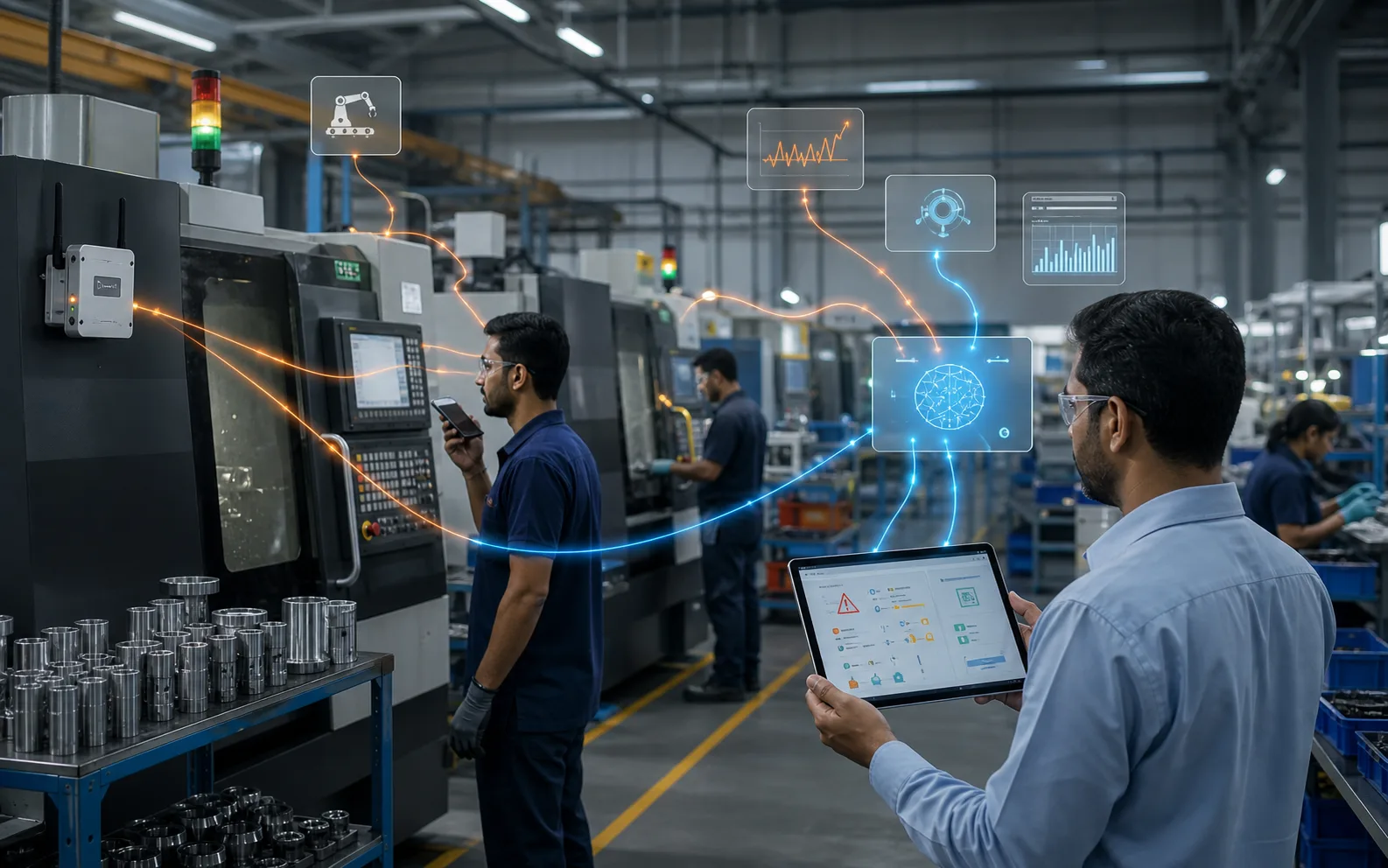
When AI software does not match real-world factory conditions, teams lose trust quickly.
The system may recommend a production schedule that ignores machine issues, flag the wrong priority, miss a material constraint, or produce alerts that do not fit what operators see. This does not always mean AI is useless. It often means the system needs better data, better configuration, and stronger feedback from the shop floor.
AI must be trained by reality, not wishful process maps.
Why Mismatch Happens
Mismatch can happen for many reasons.
The software may be configured from ideal workflows instead of actual workflows. Data may be incomplete. Operators may not update downtime reasons accurately. Machines may behave differently than expected. Material constraints may not be connected.
The system may be technically correct but operationally incomplete.
What It Looks Like in Practice
Common signs include irrelevant alerts, unrealistic schedules, wrong shortage signals, repeated manual overrides, user complaints, or teams returning to spreadsheets.
These signs should be treated as feedback, not ignored.
Do Not Blame Users First
If workers resist the software, ask why.
They may be seeing real issues that the system does not capture. Experienced operators and supervisors can help improve AI accuracy by explaining exceptions.
AICAN Optiwise supports connected workflows across production, inventory, purchase, sales, finance, reports, IoT readiness, and AI, which helps reduce mismatch when data is maintained properly.
Build Feedback Loops
Users should be able to flag incorrect recommendations, update reasons, and explain exceptions.
AI improves when feedback is captured and reviewed.
Start With Pilot Areas
A focused pilot helps detect mismatch before full rollout.
Test one line, one workflow, or one department first. Fix gaps, then expand.
Where AICAN Optiwise Fits
AICAN Optiwise helps manufacturers align software with real operations by connecting shop floor activity with inventory, purchase, sales, finance, and reporting. Connected context makes AI recommendations more practical.
You can learn more at About AICAN.
Founder’s Note
A factory is not a perfect diagram. It is a living operation with exceptions, urgency, people, and constraints.
Good AI listens to the floor. Good implementation makes room for that feedback.
FAQ
Does mismatch mean AI failed?
Not always. It may mean data, setup, or process mapping needs improvement.
What should teams do first?
Identify where recommendations differ from reality and capture operator feedback.
Should users be allowed to override AI?
Yes. Overrides should be allowed and documented.
How can mismatch be prevented?
Use pilots, clean data, workflow mapping, user feedback, and phased rollout.
Final Thought
AI software must fit real factory conditions to be trusted.
The best systems improve through feedback, data discipline, and practical rollout. That is the factory-first approach AICAN supports with Optiwise.

Related Posts
Is AI Worth the Investment for My Factory?
Learn how to decide if AI is worth the investment for your factory by evaluating use cases, data readiness, costs, risks, ROI, and operational impact.
13 Jun 2026Read more →Manufacturing AI Mistakes to Avoid Before You Start
List manufacturing AI mistakes and controls for unclear use case, messy data, unsafe automation, no owner, weak security and unreviewed recommendations.
13 Jun 2026Read more →What's the Difference Between AI and Regular Automation?
Understand the difference between AI and regular automation in manufacturing, with practical examples for workflows, decisions, alerts, and predictive operations.
13 Jun 2026Read more →What Are the Risks of Using AI in Manufacturing?
Understand the risks of AI in manufacturing, including bad data, wrong recommendations, safety issues, security, job fear, over-automation, and implementation failure.
13 Jun 2026Read more →