
Can AI Help Me Find and Fix Equipment Problems Faster?
Learn how AI helps manufacturers find and fix equipment problems faster through downtime history, fault patterns, spare visibility, maintenance alerts, and root cause support.
Can AI Help Me Find and Fix Equipment Problems Faster?
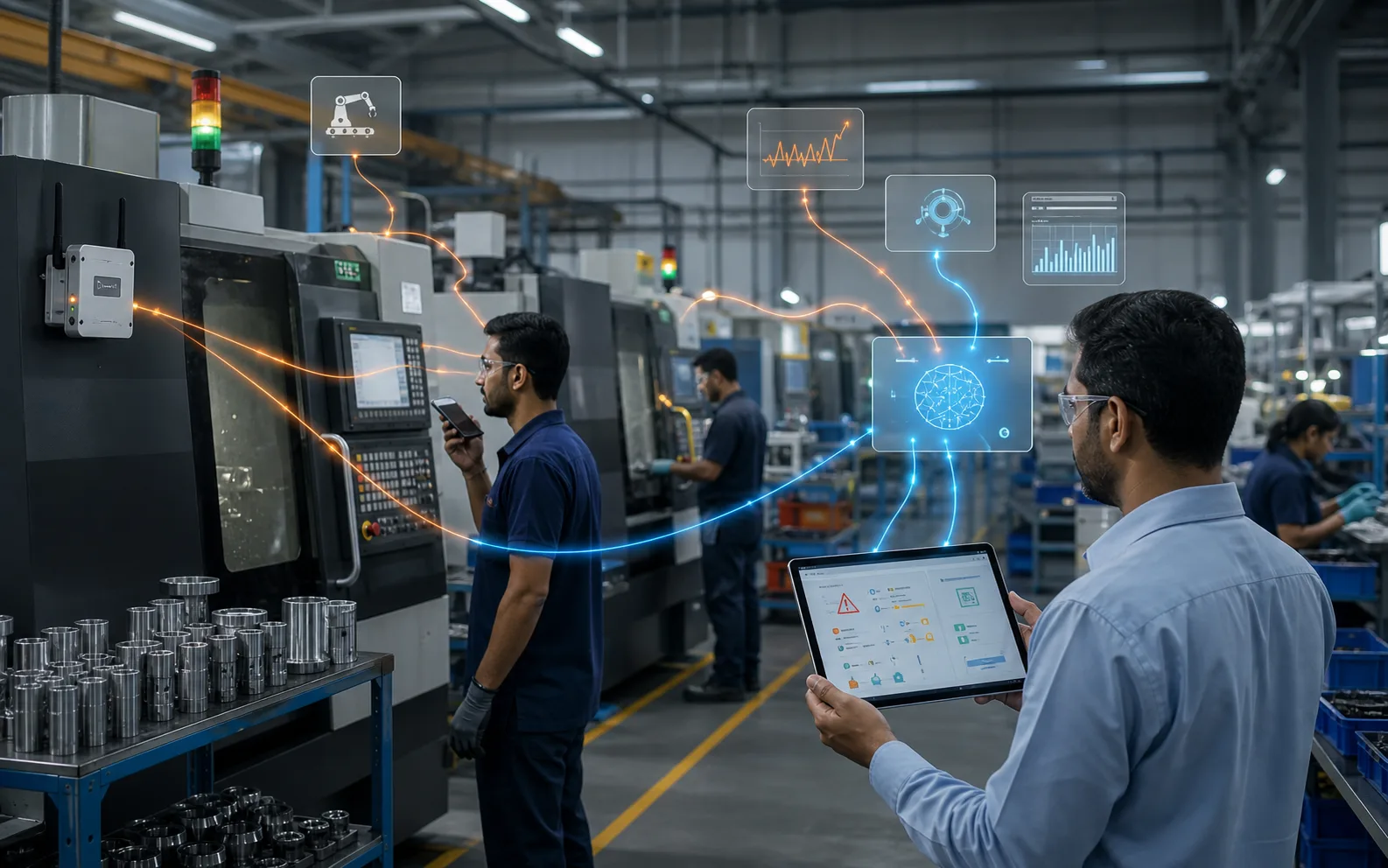
Yes, AI can help maintenance and production teams find equipment problems faster by organizing signals that are often scattered across logs, reports, machine history, spare usage, and operator notes.
AI does not replace the technician who understands the machine. It helps that technician start from a better place. Instead of searching through old records manually, the team can see patterns, past failures, likely causes, and related operating conditions.
The result is faster troubleshooting and better maintenance planning.
Bring History Into the Diagnosis
When a machine fails, teams often depend on memory: Has this happened before? Which part failed last time? Who fixed it? Was the root cause electrical, mechanical, tooling, lubrication, or operator-related?
AI can summarize previous breakdowns, corrective actions, spare replacements, and recurring symptoms. That history helps teams avoid repeating the same investigation from zero.
Detect Similar Failure Patterns
AI can compare current symptoms with past problems. If a machine shows a familiar pattern such as rising stoppage frequency, repeated alarms, or similar quality defects, the system can suggest areas to inspect first.
This does not guarantee the answer, but it narrows the search.
Connect Equipment Issues to Production Impact
A machine problem matters more when it affects urgent orders, critical batches, or bottleneck operations. AI can connect equipment risk with production schedules and customer commitments.
This helps maintenance teams prioritize work based on business impact, not only technical urgency.
Improve Spare Readiness
Troubleshooting is slower when the likely spare is unavailable. AI can support spare planning by linking failure history with spare consumption and current stock.
If the system shows a likely part and whether it is available, maintenance response becomes faster.
Capture Better Learning After Repair
After a problem is fixed, the repair record should include the real cause, action taken, spare used, downtime duration, and follow-up recommendation. AI becomes stronger when it learns from accurate post-repair data.
Good maintenance history compounds over time.
Where AICAN Optiwise Fits
AICAN Optiwise connects operational workflows so equipment issues can be viewed alongside production, inventory, purchase, sales, finance, and reporting context. This makes troubleshooting more practical because teams can see both technical and business impact.
AICAN helps manufacturers move toward faster, more informed maintenance decisions. Learn more at About AICAN.
Founder’s Note
A breakdown is stressful because every minute feels expensive. The technician needs useful context quickly, not another dashboard full of noise.
AI is valuable when it reduces the search time and helps skilled people reach the right action faster.
FAQ
Can AI diagnose machine problems automatically?
AI can suggest likely causes based on data, but technicians should inspect and confirm the diagnosis.
What data helps AI troubleshoot?
Downtime logs, failure reasons, maintenance actions, spare usage, machine history, alarms, quality issues, and production load.
Does this require sensors?
Sensors help, but useful troubleshooting support can begin with maintenance and downtime records.
How can factories improve AI troubleshooting?
Capture clear failure reasons and corrective actions after every maintenance event.
Final Thought
AI helps fix equipment problems faster by making history, patterns, and impact visible. It gives maintenance teams a better starting point and helps the factory recover sooner.

Related Posts
Is AI Worth the Investment for My Factory?
Learn how to decide if AI is worth the investment for your factory by evaluating use cases, data readiness, costs, risks, ROI, and operational impact.
13 Jun 2026Read more →Manufacturing AI Mistakes to Avoid Before You Start
List manufacturing AI mistakes and controls for unclear use case, messy data, unsafe automation, no owner, weak security and unreviewed recommendations.
13 Jun 2026Read more →What's the Difference Between AI and Regular Automation?
Understand the difference between AI and regular automation in manufacturing, with practical examples for workflows, decisions, alerts, and predictive operations.
13 Jun 2026Read more →What Are the Risks of Using AI in Manufacturing?
Understand the risks of AI in manufacturing, including bad data, wrong recommendations, safety issues, security, job fear, over-automation, and implementation failure.
13 Jun 2026Read more →