
Can AI Help Me Meet Tight Production Deadlines?
Learn how AI helps manufacturers meet tight production deadlines through material readiness, capacity planning, risk alerts, rescheduling, and coordination.
Can AI Help Me Meet Tight Production Deadlines?
AI can help you meet tight production deadlines by showing constraints earlier and helping planners choose the best recovery path. It cannot create capacity or material that does not exist, but it can reduce the time lost to confusion, late discovery, and poor coordination.
AI for production planning is useful when deadlines are tight because every delay matters. Planners need to know whether material is ready, which machine is available, which orders can move, what quality checks remain, and whether dispatch can still happen on time.
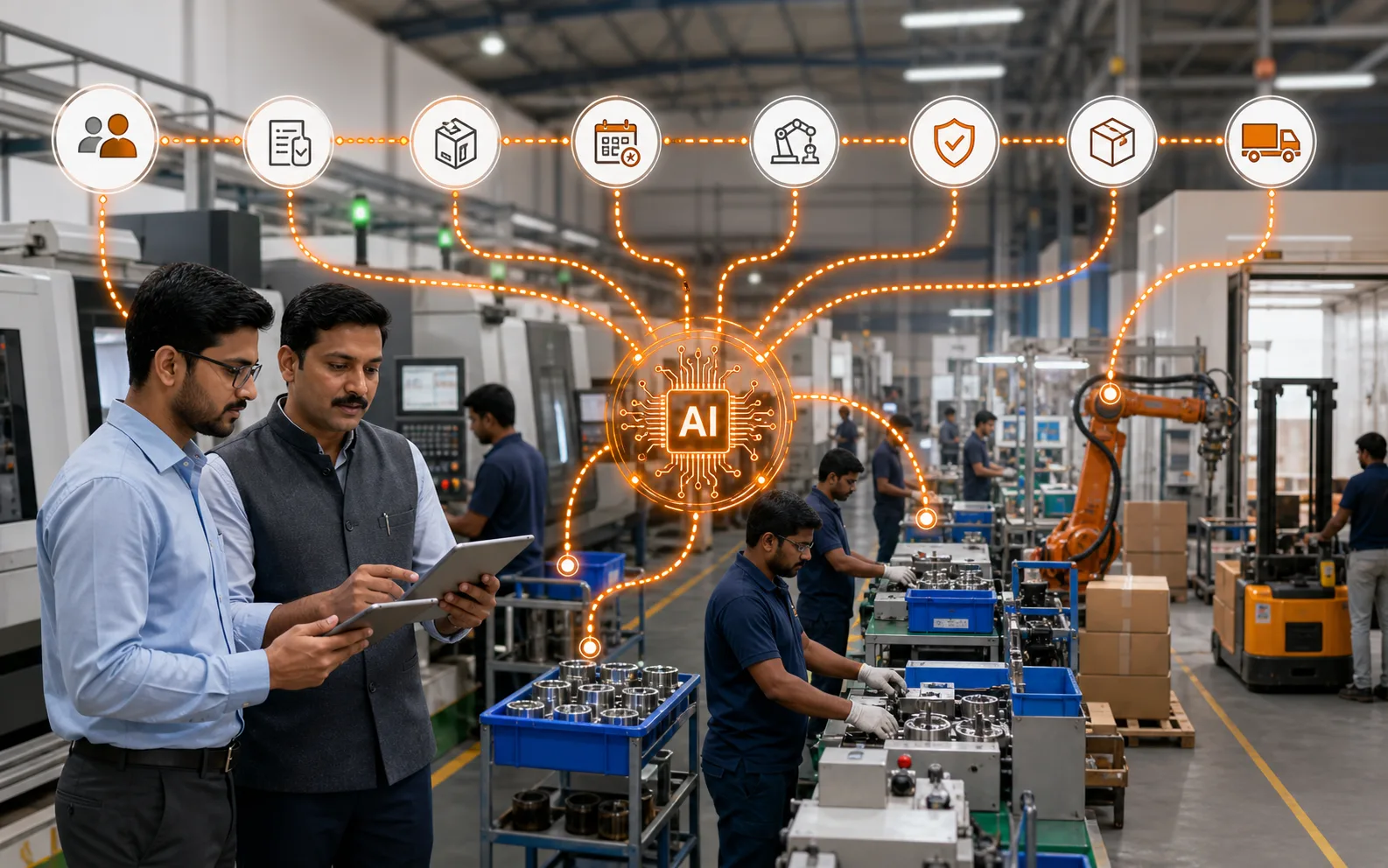
AI helps by making the deadline visible across departments.
Material Readiness
The first question for any tight deadline is whether material is available. AI can check BOMs, stock, purchase orders, and expected receipts to flag shortages quickly.
This prevents planners from committing to schedules that cannot start.
Capacity and Bottleneck Review
AI can show overloaded machines, process bottlenecks, changeover impact, and workload conflicts. This helps planners decide whether overtime, alternate routing, or priority changes are needed.
Tight deadlines need realistic capacity checks.
Faster Rescheduling
When something changes, AI can help identify alternative jobs, affected orders, and schedule options. This reduces the time spent manually rebuilding the plan.
Speed matters when recovery windows are short.
Cross-Department Coordination
Sales, purchase, stores, production, quality, and dispatch must work from the same urgency. AI-supported planning helps create one shared view of what is at risk and what action is needed.
Deadlines are missed when departments discover urgency at different times.
Where AICAN Optiwise Fits
AICAN Optiwise connects production planning with inventory, purchase, sales, finance, reporting, IoT readiness, and AI workflows. This gives teams a shared view of urgent orders, material readiness, production status, and dispatch risk.
Explore AICAN Optiwise and About AICAN.
Founder’s Note
AICAN’s founder-led view is that tight deadlines should be handled with visibility, not panic. AI should help teams see the real constraint quickly so they can act with discipline.
Urgency works better when everyone sees the same plan.
FAQ
Can AI guarantee tight deadlines?
No. AI can improve visibility and planning, but deadlines still depend on material, capacity, quality, and execution.
What helps most during urgent planning?
Material readiness, capacity visibility, quality status, and shared department communication help most.
Can AI help prioritize urgent orders?
Yes. AI can show the impact of moving an urgent order ahead of others.
What if material is not available?
AI can identify the shortage early and help planners choose alternate jobs or escalation paths.
Final Thought
AI helps meet tight deadlines by reducing blind spots. It gives planners and teams more time to respond, which is often the difference between recovery and delay.
Next step: Explore AICAN Optiwise to manage urgent production deadlines with connected planning workflows.

Related Posts

Is AI Worth the Investment for My Factory?
Learn how to decide if AI is worth the investment for your factory by evaluating use cases, data readiness, costs, risks, ROI, and operational impact.
13 Jun 2026Read more →Manufacturing AI Mistakes to Avoid Before You Start
List manufacturing AI mistakes and controls for unclear use case, messy data, unsafe automation, no owner, weak security and unreviewed recommendations.
13 Jun 2026Read more →What's the Difference Between AI and Regular Automation?
Understand the difference between AI and regular automation in manufacturing, with practical examples for workflows, decisions, alerts, and predictive operations.
13 Jun 2026Read more →What Are the Risks of Using AI in Manufacturing?
Understand the risks of AI in manufacturing, including bad data, wrong recommendations, safety issues, security, job fear, over-automation, and implementation failure.
13 Jun 2026Read more →