
Can AI Work the Night Shift Better Than Humans?
Learn how AI supports night shift factory operations, what it can monitor better than humans, and where human supervision remains essential.
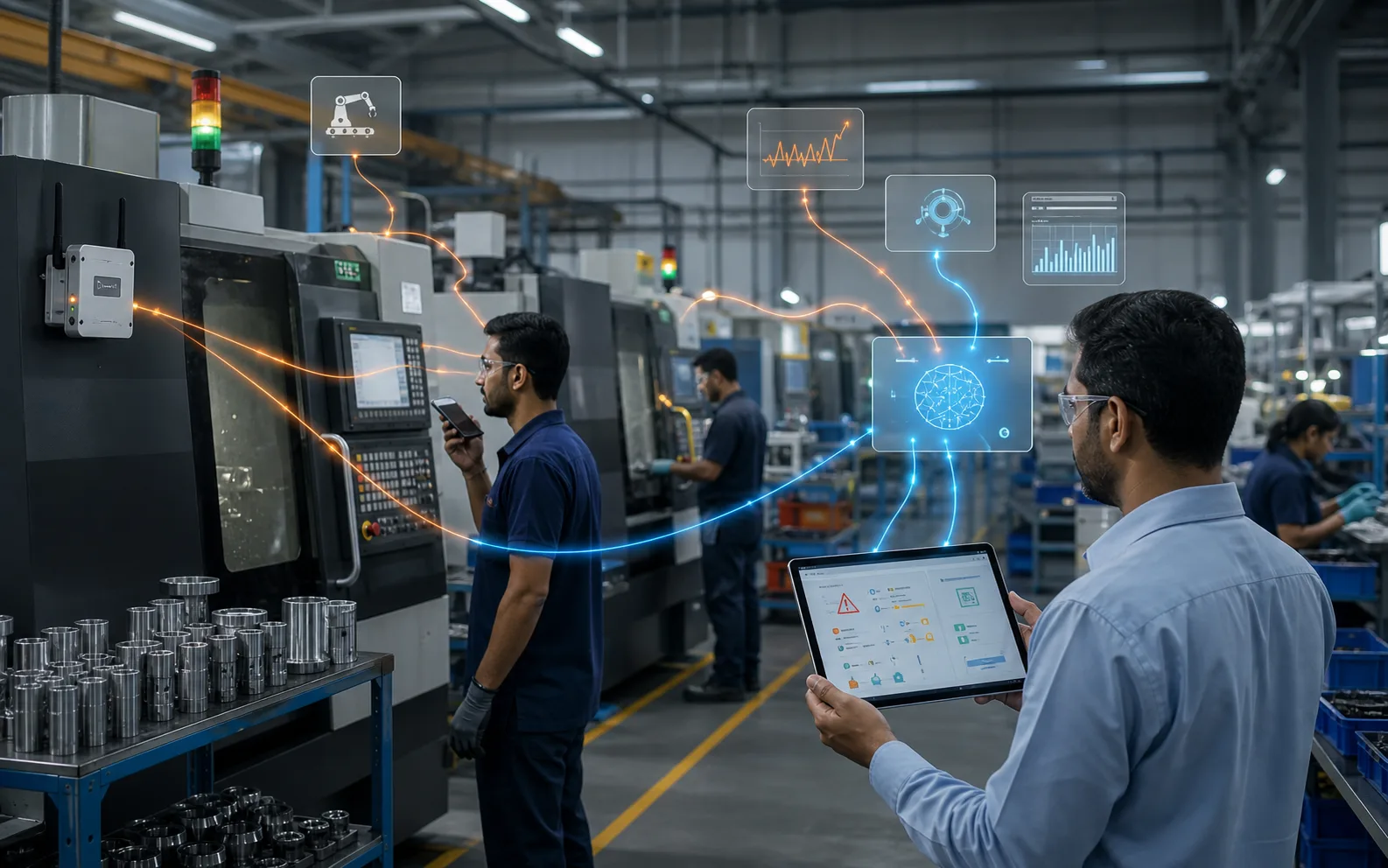
Can AI Work the Night Shift Better Than Humans?
AI can support the night shift better than humans in some specific ways: it does not get tired, it can monitor dashboards continuously, it can flag unusual patterns, and it can send alerts when production, quality, or machine conditions move outside expected limits. But AI cannot replace the practical judgement of night shift supervisors, operators, maintenance teams, and quality staff.
AI driven factory management is useful at night because visibility often drops after senior managers leave. Decisions may depend more heavily on a smaller team, and problems may not be discovered until morning. AI helps by keeping operations observable even when fewer people are present.
The best night shift model is not AI instead of people. It is AI helping people catch issues earlier.
What AI Can Monitor Well at Night
AI can monitor production output, downtime, material consumption, quality exceptions, dispatch status, machine signals, and process deviations. It can alert supervisors if output falls below plan, a machine stops repeatedly, or quality rejection increases.
This continuous monitoring is valuable because night shift issues can otherwise remain hidden for hours.
Where Humans Remain Essential
Night shift workers handle real-world exceptions: machine noise, material handling, operator safety, urgent repairs, quality judgement, and production trade-offs. AI can tell the team something is unusual, but people must verify and act.
Human responsibility remains central, especially for safety and quality decisions.
AI Reduces Morning Surprises
One of the biggest benefits is cleaner handover. If the system records downtime, production status, quality issues, and pending actions during the night, morning teams can start with facts instead of confusion.
This improves accountability without relying only on memory.
AI Can Improve Night Shift Safety
Where sensors and alerts are available, AI can support safety by flagging abnormal machine conditions, repeated stoppages, or process deviations. But safety systems should be validated and backed by human procedures.
AI should support safety discipline, not replace it.
Where AICAN Optiwise Fits
AICAN Optiwise connects production, inventory, purchase, sales, finance, reporting, IoT readiness, and AI workflows so night shift activity can be visible to the wider factory team. This helps reduce gaps between shifts and improves operational continuity.
Explore AICAN Optiwise and About AICAN to learn more.
Founder’s Note
AICAN’s founder-led view is that factory systems should support every shift, not only office hours. Night shift teams deserve the same clarity and decision support as day shift teams.
AI is valuable when it helps people stay informed even when management is not physically present.
FAQ
Can AI run the night shift alone?
No. AI can monitor and alert, but human workers remain essential for operation, safety, quality, and maintenance decisions.
What night shift problems can AI reduce?
AI can reduce delayed reporting, unnoticed downtime, quality surprises, poor handover, and late escalation.
Does AI improve shift handover?
Yes. Connected records make handover more factual and less dependent on memory or informal notes.
Is AI useful for 24/7 factories?
Yes. Continuous operations benefit strongly from real-time visibility and exception alerts.
Final Thought
AI can watch the night shift with consistency, but humans still run the factory. The value is earlier warning, better handover, and fewer surprises by morning.
Next step: Explore AICAN Optiwise to see how AI driven factory management can support 24/7 operations.

Related Posts
Is AI Worth the Investment for My Factory?
Learn how to decide if AI is worth the investment for your factory by evaluating use cases, data readiness, costs, risks, ROI, and operational impact.
13 Jun 2026Read more →Manufacturing AI Mistakes to Avoid Before You Start
List manufacturing AI mistakes and controls for unclear use case, messy data, unsafe automation, no owner, weak security and unreviewed recommendations.
13 Jun 2026Read more →What's the Difference Between AI and Regular Automation?
Understand the difference between AI and regular automation in manufacturing, with practical examples for workflows, decisions, alerts, and predictive operations.
13 Jun 2026Read more →What Are the Risks of Using AI in Manufacturing?
Understand the risks of AI in manufacturing, including bad data, wrong recommendations, safety issues, security, job fear, over-automation, and implementation failure.
13 Jun 2026Read more →