
Can AI Work With My Existing Factory Management System?
Learn how AI can work with existing factory management systems through integration, data cleanup, phased rollout, and workflow alignment.
Can AI Work With My Existing Factory Management System?
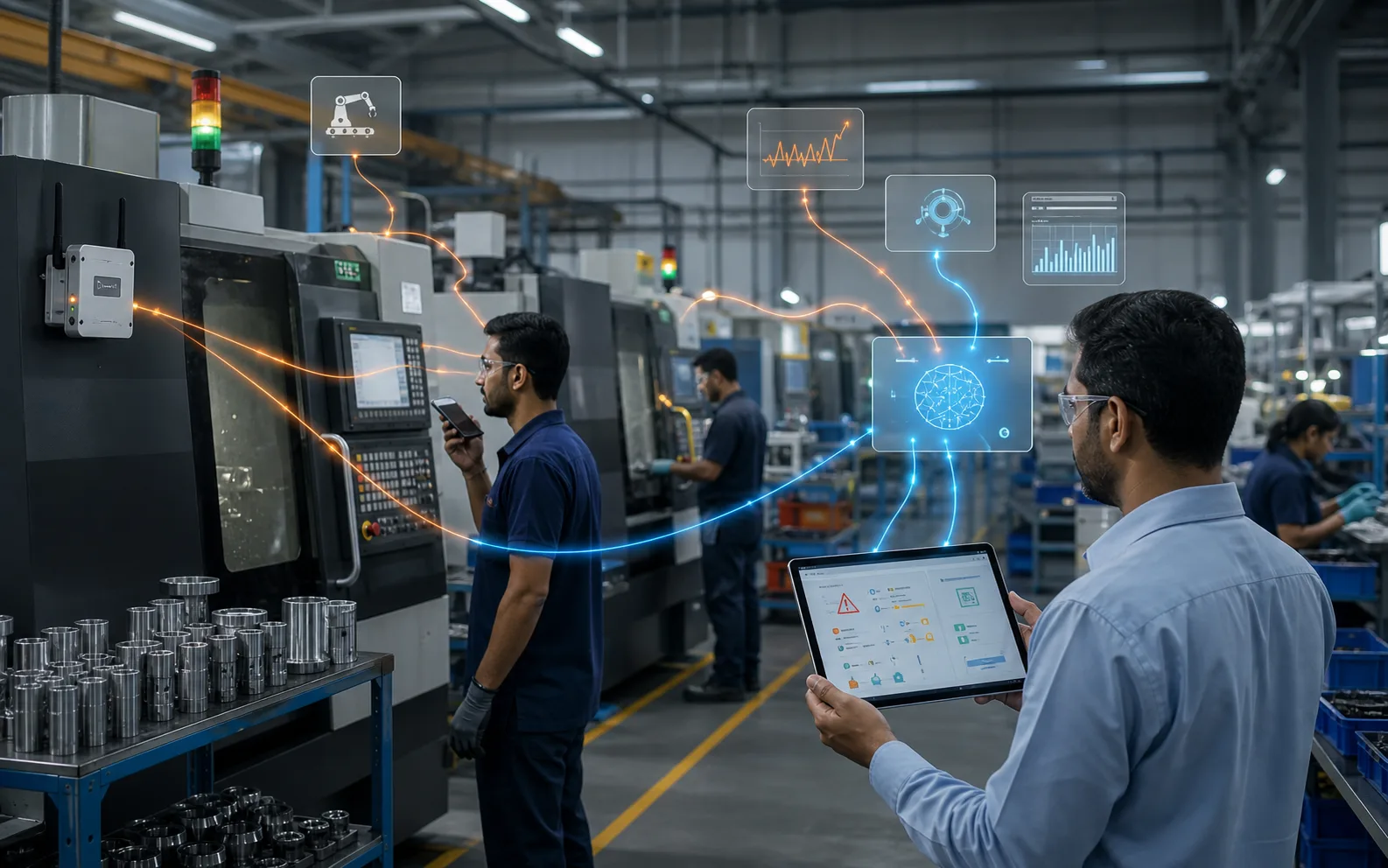
AI can work with your existing factory management system if the system has usable data, integration options, and workflows that can support AI decisions. In some factories, AI can be added as an intelligent layer. In others, the existing system is too disconnected or outdated, so the factory may need to upgrade workflows first.
AI driven factory management does not always require replacing everything. But it does require reliable operational context. If your current system does not capture production, inventory, purchase, quality, and dispatch data accurately, AI will have limited value.
The right approach is to assess before deciding.
Check What Your Current System Captures
Does it hold item masters, BOMs, stock movements, purchase orders, sales orders, production status, quality results, downtime, and dispatch information? Is the data updated on time? Do teams trust it?
If yes, AI integration may be practical. If no, you may need workflow improvement first.
Check Integration Options
AI tools may connect through APIs, database access, exports, connectors, or middleware. The cleaner the integration, the better the result.
Manual exports can work temporarily, but they are not ideal for real-time factory decisions.
Avoid Building Another Data Island
One risk is adding an AI tool that sits outside the main workflow. It may create insights, but teams still have to act elsewhere. This can create duplicate work.
The AI layer should connect to action: alerts, tasks, approvals, reports, or workflow changes.
Consider Whether Replacement Makes More Sense
If the existing system is too limited, poorly adopted, or disconnected from daily operations, replacing or upgrading may be better than forcing AI on top of it.
Do not protect old software if it is the reason visibility is weak.
Start With One Integrated Use Case
Choose one use case such as inventory risk, reporting, quality trends, or production delays. Test whether data can flow reliably and whether users can act on insights.
A focused integration proves feasibility before deeper investment.
Where AICAN Optiwise Fits
AICAN Optiwise is built as an AI-native manufacturing operating system connecting production, inventory, purchase, sales, finance, reporting, IoT readiness, and AI workflows. Depending on the factory’s current setup, Optiwise can help replace scattered workflows or become the connected operating layer for AI-ready management.
Manufacturers can explore aican.co.in and About AICAN, then discuss integration needs with the AICAN team.
Founder’s Note
AICAN’s founder-led view is that AI should fit the factory’s reality, not force unnecessary disruption. But existing systems should also be judged honestly. If they cannot support visibility and action, the factory needs a better operating base.
AI works best where workflows are connected and trusted.
FAQ
Can AI integrate with old ERP systems?
Sometimes, if data can be accessed reliably through APIs, exports, databases, or connectors. The quality of integration matters.
What if my current system has poor data?
Clean the data required for one use case first, or consider improving the underlying workflow system.
Should I replace my current system?
Only if it cannot support your operational needs, adoption, data accuracy, or AI goals.
What is the safest first step?
Run a focused assessment around one use case and evaluate data availability, integration, and workflow ownership.
Final Thought
AI can work with existing factory systems, but only if the data and workflows are strong enough. Integration should create better decisions, not another disconnected layer.
Next step: Explore AICAN Optiwise to assess whether your factory needs integration, upgrade, or a connected AI-native operating system.

Related Posts
Is AI Worth the Investment for My Factory?
Learn how to decide if AI is worth the investment for your factory by evaluating use cases, data readiness, costs, risks, ROI, and operational impact.
13 Jun 2026Read more →Manufacturing AI Mistakes to Avoid Before You Start
List manufacturing AI mistakes and controls for unclear use case, messy data, unsafe automation, no owner, weak security and unreviewed recommendations.
13 Jun 2026Read more →What's the Difference Between AI and Regular Automation?
Understand the difference between AI and regular automation in manufacturing, with practical examples for workflows, decisions, alerts, and predictive operations.
13 Jun 2026Read more →What Are the Risks of Using AI in Manufacturing?
Understand the risks of AI in manufacturing, including bad data, wrong recommendations, safety issues, security, job fear, over-automation, and implementation failure.
13 Jun 2026Read more →