
Can Small Factories Afford AI Automation?
Learn how small factories can afford AI automation through phased adoption, focused use cases, connected workflows, and measurable ROI.
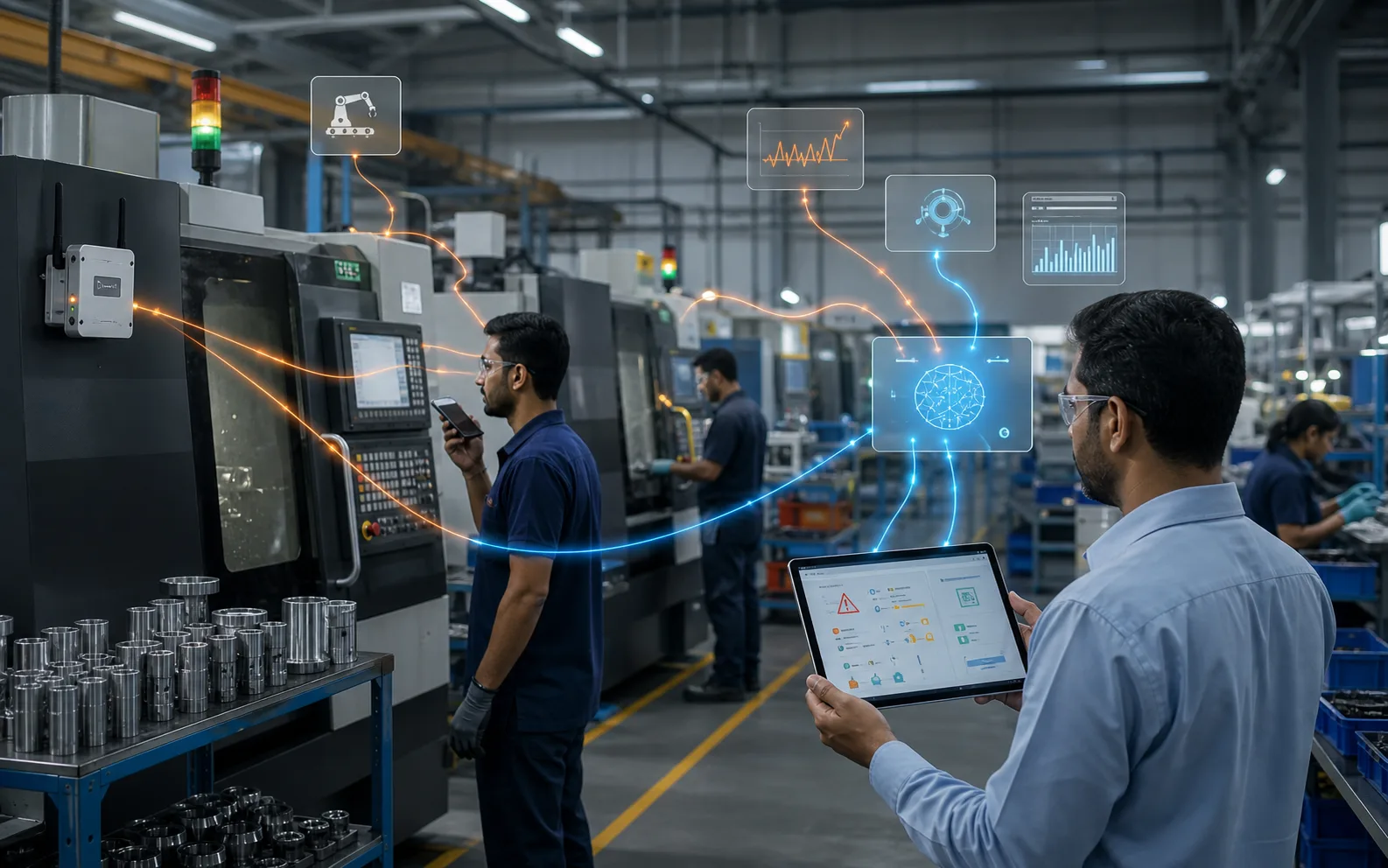
Can Small Factories Afford AI Automation?
Small factories can afford AI automation when they start with the right scope. The problem is not always that AI is too expensive. The problem is that many manufacturers imagine AI as robots, sensors everywhere, complex systems, and a huge transformation budget. Practical AI adoption can be much more focused.
AI driven factory management can begin with connected workflows for production, inventory, purchase, quality, sales, and dispatch. These areas often create immediate pain in small factories because owners are personally involved in too many daily decisions.
The best approach is phased: solve one costly problem, prove value, and expand.
Start With Visibility, Not Full Automation
Small factories do not need to automate everything on day one. They can begin by improving visibility: which orders are delayed, which materials are short, which purchases need follow-up, which quality issues repeat, and which dispatches are at risk.
Visibility alone can save time and reduce mistakes because decisions happen earlier.
Choose High-Impact Use Cases
Affordable AI adoption starts with problems that are repeated and measurable. Inventory shortages, manual reporting, delayed production updates, quality rework, and dispatch confusion are common starting points.
Avoid paying for advanced features that the team is not ready to use.
Control Implementation Cost
Small factories can control cost by keeping the first phase focused, preparing clean data, avoiding unnecessary customization, and training only the relevant roles first.
Trying to implement every module at once can increase cost and reduce adoption.
Measure ROI Early
Track time saved, stockouts reduced, rework reduced, reporting speed, order visibility, and fewer urgent follow-ups. These early wins help justify further investment.
Small factories need confidence from practical results, not long strategy documents.
AI Can Help Small Factories Compete
Larger companies often have better systems and reporting discipline. AI driven factory management can help smaller manufacturers close that gap by improving responsiveness, delivery reliability, and control.
This does not require becoming a giant company. It requires running with better visibility.
Where AICAN Optiwise Fits
AICAN Optiwise is built for Indian manufacturers and connects production, inventory, purchase, sales, finance, reporting, IoT readiness, and AI workflows. Small factories can use this connected approach to start with practical operational improvements instead of expensive over-automation.
Learn more at aican.co.in and About AICAN.
Founder’s Note
AICAN’s founder-led belief is that AI should be accessible to manufacturers who are serious about improving, not only to large plants with large budgets. Small factories deserve systems that match their reality and grow with them.
Affordability comes from focus, not compromise on usefulness.
FAQ
Is AI automation only for large factories?
No. Small factories can start with focused workflows such as inventory, production visibility, quality trends, and reporting.
How can small factories reduce AI cost?
Start in phases, avoid unnecessary customization, clean critical data, and choose measurable use cases.
What should small factories automate first?
Begin with repeated pain points: stockouts, manual reporting, purchase follow-ups, production delays, or quality rework.
Can AI help small factories grow?
Yes. Better visibility and control can help small manufacturers handle more orders without adding the same level of manual overhead.
Final Thought
Small factories can afford AI when they buy the right first step. Start with practical visibility and measurable outcomes. Automation can grow as confidence grows.
Next step: Visit AICAN Optiwise to explore a practical AI driven factory management path for small manufacturers.

Related Posts
Is AI Worth the Investment for My Factory?
Learn how to decide if AI is worth the investment for your factory by evaluating use cases, data readiness, costs, risks, ROI, and operational impact.
13 Jun 2026Read more →Manufacturing AI Mistakes to Avoid Before You Start
List manufacturing AI mistakes and controls for unclear use case, messy data, unsafe automation, no owner, weak security and unreviewed recommendations.
13 Jun 2026Read more →What's the Difference Between AI and Regular Automation?
Understand the difference between AI and regular automation in manufacturing, with practical examples for workflows, decisions, alerts, and predictive operations.
13 Jun 2026Read more →What Are the Risks of Using AI in Manufacturing?
Understand the risks of AI in manufacturing, including bad data, wrong recommendations, safety issues, security, job fear, over-automation, and implementation failure.
13 Jun 2026Read more →