
How Does AI Improve Production Speed?
Learn how AI improves production speed by reducing delays, improving planning, identifying bottlenecks, preventing downtime, improving quality, and speeding decisions.
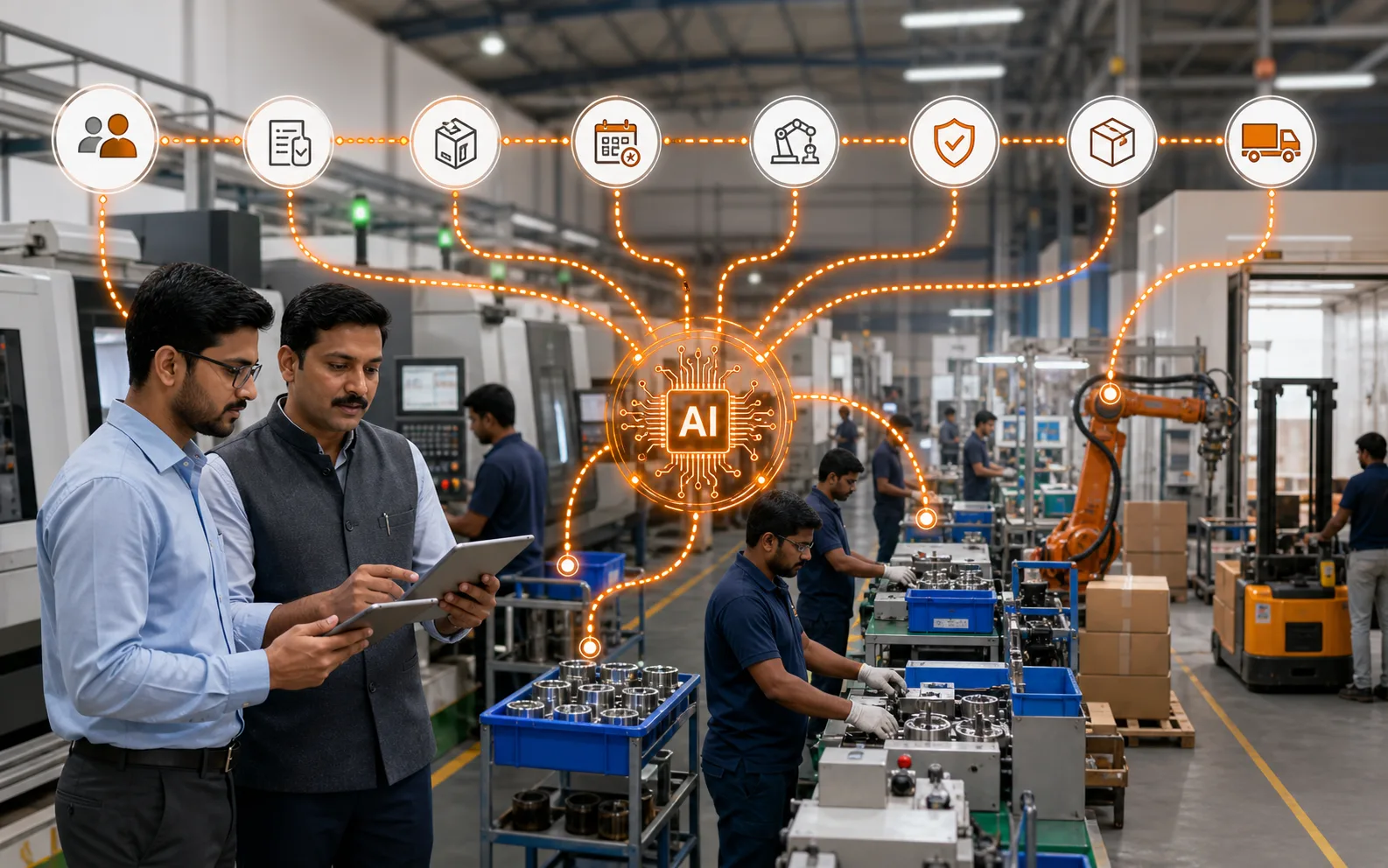
How Does AI Improve Production Speed?
AI improves production speed by reducing the delays that slow factories down. It does not simply make machines run faster. It helps teams plan better, avoid shortages, identify bottlenecks, reduce downtime, prevent defects, and make decisions sooner.
In manufacturing, speed is usually lost between departments. AI helps when it connects the signals.
Production Speed Is Not Only Machine Speed
Many factories assume production speed depends only on machine capacity. But production often slows because of:
- Missing material
- Late purchase orders
- Machine downtime
- Quality holds
- Wrong priorities
- Unclear schedules
- Rework
- Waiting for approvals
- Dispatch confusion
- Poor communication
AI improves speed by helping teams see these problems earlier.
AI Helps with Material Readiness
A production job cannot move if material is missing. AI can compare production plans with inventory, open purchase orders, expected inward dates, and supplier delays.
This helps planners avoid scheduling jobs that cannot start.
AI Identifies Bottlenecks
AI can analyze production data to show which machine, process, shift, product, or inspection step repeatedly slows output.
Instead of guessing, teams can focus improvement efforts on the real bottleneck.
AI Reduces Downtime Impact
AI can analyze machine data and maintenance history to identify risk earlier. If a critical machine is likely to fail, teams can plan maintenance before production is disrupted.
Even when downtime cannot be avoided, AI can help show which orders will be affected.
AI Reduces Quality Delays
Quality issues slow production through rejection, rework, inspection holds, and customer complaints. AI can analyze defect patterns and help teams prevent repeated issues.
Fewer defects means smoother flow.
AI Supports Better Scheduling
AI can help planners compare due dates, customer priorities, material availability, machine capacity, WIP, and dispatch commitments.
This helps teams decide what should run first and what needs attention.
AI Speeds Up Management Decisions
If managers wait until the end of the day for updates, decisions come late. AI can summarize production status, delays, quality issues, and material risks during the day.
Faster visibility leads to faster action.
AI Helps Standardize Work Instructions
Unclear instructions slow work and create mistakes. AI can help create SOPs, setup instructions, checklists, and training guides.
This is especially useful when new workers join or when a process depends on senior operator knowledge.
What Data Is Needed?
To improve production speed, AI needs:
- Sales orders
- Production plans
- BOMs
- Inventory
- Purchase status
- Work orders
- Machine capacity
- WIP
- Downtime data
- Quality records
- Dispatch dates
The more connected the data, the better the speed insights.
What AI Cannot Do
AI cannot fix poor discipline if teams do not update the system. It cannot make unavailable material appear. It cannot remove machine constraints without process action.
AI improves speed by helping people act sooner. The factory still needs execution.
Where AICAN Optiwise Fits
AICAN Optiwise connects the workflows that affect production speed: sales, purchase, inventory, production, shopfloor, quality, dispatch, and finance visibility. Its AI agents can help manufacturers see delays, material risk, bottlenecks, and dispatch pressure in one operating system.
This is important for MSME manufacturers because speed is often lost due to disconnected information, not lack of effort.
Learn more at aican.co.in and About AICAN.
Founder’s Note
AICAN’s view is that manufacturers do not need more pressure on teams; they need clearer systems. Production speed improves when people stop chasing information and start acting on it.
Optiwise is built to give teams that connected visibility, with AI helping surface what needs attention before delays become normal.
FAQ
Does AI make machines run faster?
Not directly. AI improves production speed by reducing delays, downtime, quality issues, and planning gaps.
What is the fastest AI use case for improving production speed?
Material readiness checks, delayed job summaries, and bottleneck analysis are good starting points.
Can AI replace production planners?
No. AI supports planners by reducing manual checking and highlighting risks.
Does AI need shopfloor data?
Yes, production speed insights become stronger when AI has production, WIP, downtime, and quality data.
Can small manufacturers use AI to improve speed?
Yes. They can start with production summaries, inventory checks, and delay analysis.
Final Thought
AI improves production speed by making delays visible earlier. Faster production comes from better planning, fewer surprises, and quicker decisions.
Next step: Explore AICAN Optiwise if your factory needs production speed supported by connected ERP and AI workflows.

Related Posts
Is AI Worth the Investment for My Factory?
Learn how to decide if AI is worth the investment for your factory by evaluating use cases, data readiness, costs, risks, ROI, and operational impact.
13 Jun 2026Read more →Manufacturing AI Mistakes to Avoid Before You Start
List manufacturing AI mistakes and controls for unclear use case, messy data, unsafe automation, no owner, weak security and unreviewed recommendations.
13 Jun 2026Read more →What's the Difference Between AI and Regular Automation?
Understand the difference between AI and regular automation in manufacturing, with practical examples for workflows, decisions, alerts, and predictive operations.
13 Jun 2026Read more →What Are the Risks of Using AI in Manufacturing?
Understand the risks of AI in manufacturing, including bad data, wrong recommendations, safety issues, security, job fear, over-automation, and implementation failure.
13 Jun 2026Read more →